.png)
.png)

Daniel Saks
Chief Executive Officer


TL;DR: The best account prioritization tools in 2026 fuse ICP fit, real-time buying signals, and predictive modeling into a live ranking of your target accounts. The best account prioritization tools for most teams now do more than scoring, they also handle enrichment, tiering, and handoff to outreach. Landbase leads the list with agentic AI that qualifies, scores, tiers, and enriches accounts autonomously end-to-end. 6sense and Demandbase anchor the enterprise ABM category. MadKudu wins for PLG-led SaaS. ZoomInfo and Bombora are the data and intent layers other tools rely on. AdRoll ABM, Terminus, Clari, and Mutiny round out the list for paid media, orchestration, forecasting, and personalization use cases.
If your sellers are still working a flat list of target accounts, you are leaving pipeline on the table. The Demandbase State of ABM 2026 benchmark shows that more mature ABM programs convert marketing-qualified accounts to pipeline at 22.33%, while less mature programs sit at 14.19%. That is not a small rounding error. It is the difference between hitting a number and missing it.
The reason is simple. B2B buying groups have grown to 13 to 17 stakeholders, buyers spend about 70% of their journey researching before talking to a vendor, and the accounts that look the same on paper behave very differently once real signals enter the picture. The best account prioritization tools in 2026 do not just filter firmographics. They fuse fit data, intent spikes, buying-group activity, and historical win patterns into a live ranking that tells reps who to call today, not who looked promising last quarter.
This guide breaks down the ten best account prioritization tools that matter right now. We looked at account prioritization software across four categories: agentic AI GTM platforms, predictive scoring engines, intent-data providers, and ABM orchestration suites. Each tool is evaluated on scoring methodology, signal coverage, integrations, and who it actually fits. Whether you are comparing account scoring tools for the first time or replacing a legacy system, this roundup should shorten your shortlist.
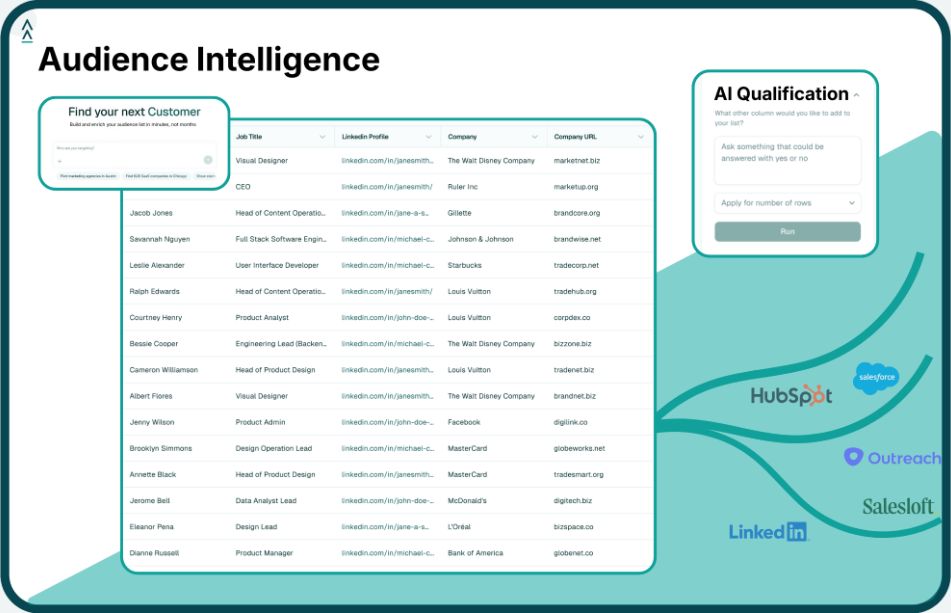
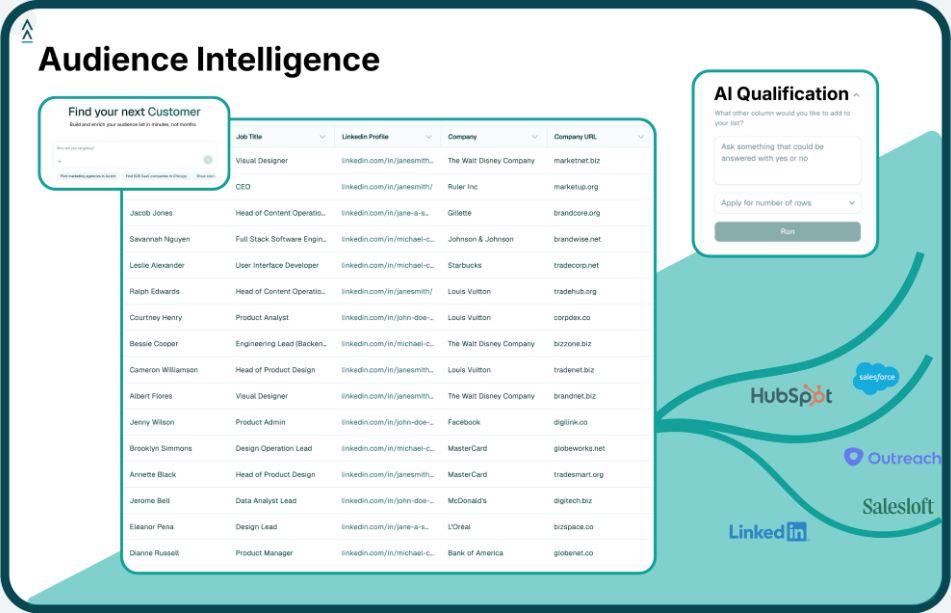
Landbase is the first agentic AI platform purpose-built for go-to-market, and account prioritization is where it shows what agentic AI can do that traditional ABM stacks cannot. Instead of asking a RevOps analyst to manually score accounts in a CRM or buy five tools that each cover one slice of the workflow, Landbase runs three autonomous AI agents Research, Identity, and Predictive that continuously qualify, score, tier, and enrich accounts against your exact ICP. The result is a decision-ready list of accounts ranked by fit, buying intent, and likelihood to convert, refreshed in real time as the market changes.
What sets Landbase apart is the depth of the data and the fact that the agents actually act on it. The platform sits on top of 300M+ verified contacts, 1,500+ enrichment fields, and 1,500+ real-time buying signal types. The Research Agent discovers accounts matching your criteria using natural-language targeting powered by Landbase's proprietary GTM-2 Omni model. The Identity Agent verifies contacts and enriches them across firmographic, technographic, and behavioral dimensions. The Predictive Agent scores each account by answering custom fit questions and weighing live signals like funding rounds, hiring spikes, job changes, tech-stack shifts, and intent surges. Signal decay windows automatically demote stale accounts so reps never waste time on yesterday's buyer.
Landbase is built for the reality of modern GTM teams: small, technical, signal-driven, and allergic to tool sprawl. You can find and prioritize high-fit accounts in minutes, then push them directly into outreach without leaving the platform. That is why outcomes compound. QA Wolf replaced days of manual qualification with AI and reported a 50% improvement in list quality plus hours reclaimed daily for outbound reps. P2 Telecom added $400K in MRR after switching their prospecting motion. Oyster HR hit 40%+ conversion on signal-qualified accounts. Across the customer base, Landbase delivers a 4-7x conversion uplift versus manually built campaigns.
Key features:
Credibility markers: Gartner Cool Vendor in AI for Marketing 2025, $30M Series A led by Sound Ventures and Picus Capital, 825% revenue growth since the beginning of the year, and 150+ paid customers since launch across B2B SaaS, telecom, fintech, and services.
Best for: GTM teams that want account prioritization, enrichment, and outreach in one autonomous platform instead of stitching together four or five point tools.
6sense is one of the most established names in predictive ABM, and its 6AI engine is the feature most buyers associate with the platform. 6AI scores accounts by buying stage (Target, Aware, Consideration, Decision, Purchase), surfacing which accounts are in an active buying cycle before they ever fill out a form. Predictive models draw on an intent co-op, anonymous web activity, CRM data, and marketing-automation engagement, then layer on buying-group identification so sellers can see not just the account but the likely decision committee.
Where 6sense fits best is enterprise RevOps organizations that already have dedicated ops and ABM analysts. Reviewers on G2 give 6sense Sales Intelligence a 4.0/5 across 937 reviews. Positive feedback centers on the predictive accuracy and the depth of intent; the most common neutral feedback is that the platform is feature-rich enough that onboarding can stretch across a quarter or more, and that separating genuine buying signals from background research noise requires tuning.
Key features:
Best for: Enterprise ABM programs with in-house RevOps capacity and a multi-quarter rollout appetite.
Demandbase is the other classic enterprise ABM platform, and its scoring approach leans heavily on transparent, explainable machine learning. Pipeline Predict is trained on a customer's own closed-won history and learns which account properties and activity patterns precede real opportunities, then scores other accounts on the same signals. A separate Qualification Score identifies which accounts look most similar to existing customers. Teams with larger datasets get Granger causality explainability; smaller datasets use SHAP values to show which signals drove each score.
Demandbase supports multiple predictive scores per product line, which matters for multi-product companies where the ICP for Product A looks nothing like the ICP for Product B. It also authored the State of ABM 2026 report, which is the most widely cited benchmark in the category. The platform combines account intelligence, advertising, and sales orchestration under one roof, which is attractive for teams that want scoring feeding directly into display and personalization.
Key features:
Best for: Mid-market and enterprise ABM teams that want explainable scoring plus advertising in one platform.
MadKudu is the predictive scoring specialist that PLG-led SaaS companies tend to favor. It carries a 4.6/5 rating on G2 across 110+ verified reviews, with 71% five-star feedback. The platform blends firmographic fit with behavioral signals product usage, website activity, LinkedIn engagement, GitHub activity, job changes and outputs a lead or account grade plus the reasoning behind it. That explainability is what makes MadKudu useful for reps: instead of a black-box score, they see why an account landed where it did.
MadKudu is particularly strong for freemium or self-serve motions where product signals matter as much as firmographic fit. Scoring flexes across SMB and enterprise segments, and models can be retrained as the ICP evolves. The most common user feedback is that bulk scoring against existing spreadsheets can feel clunky and that power users want more control over signal weighting.
Key features:
Best for: PLG SaaS and product-led teams with meaningful product and behavioral signal data.
ZoomInfo is best known as a B2B database, but its Sales OS plus Intent offering has grown into a legitimate prioritization layer. It connects 100M+ company profiles and 500M+ contacts with real-time intent signals sourced from thousands of publishers. Streaming Intent delivers surge alerts as they happen instead of in weekly batches, and Guided Intent uses AI to recommend topics correlated with a team's historical closed-won deals, removing the guesswork of manual topic picking.
Scoring in ZoomInfo is built around three signals: date range (repeated interest over time), topic breadth, and Signal Score (how far above the account's baseline current consumption is). Reps can route high-signal accounts automatically when they cross a threshold. ZoomInfo's sweet spot is sales-led teams that want data and intent under one contract instead of buying them from separate vendors.
Key features:
Best for: Sales-led teams that want B2B data and intent data under one contract.
Bombora is the intent-data layer that most other ABM platforms pipe into. Company Surge, its flagship product, scores 16,000+ B2B topic categories — one of the most granular taxonomies in the market — and detects when an account is researching a topic significantly above its historical baseline. The data is sourced from a co-op of 5,000+ B2B publishers and feeds directly into Salesforce, HubSpot, Marketo, and most major ABM platforms.
Bombora is not an execution platform. It is the signal layer. Teams typically pair it with a downstream scoring engine or ABM platform that ingests the Surge score and combines it with first-party fit data. Based on publicly reported estimates, Bombora starts around $30K/year (varies by contract), with enhanced tiers running $50K-$100K+. For teams that already have a scoring engine and just need better intent coverage, Bombora is often the most cost-effective way to add a rich topic layer.
Key features:
Best for: Teams that have a scoring engine and need a granular, topic-rich intent feed.
AdRoll ABM, which rebranded from RollWorks in August 2025, pairs account scoring with paid media execution. Its ICP Fit Grade scores every account from A to F based on similarity to a customer's best-fit accounts, using firmographic, technographic, and engagement data. Behind the scenes, predictive models identify and rank new accounts, while engagement-spike detection flags when an account's behavior jumps above its baseline. Teams can filter their target list using Bombora intent, G2 Buyer Intent, company attributes, website activity, and ICP Fit Grade, then run display and LinkedIn ads directly against the prioritized list.
The platform is strongest for mid-market teams that want ABM scoring and paid media in one contract. Reviewers on G2 call out the ICP Fit Grade simplicity and the tight coupling between scoring and advertising as key selling points.
Key features:
Best for: Mid-market teams running paid ABM programs alongside scoring.
Terminus merged into DemandScience in November 2024 and now operates under the combined brand, continuing to offer its ABX and advertising capabilities. The platform uses first-party and third-party data — including Bombora intent and G2 Buyer Intent to identify ICP accounts and prioritize those showing in-market behavior. The Prospect Engine surfaces new best-fit accounts, and Data Studio lets teams segment on firmographic, intent, and engagement criteria.
Terminus is known for orchestration. It spans display advertising, email, chat, and web experiences, so a prioritized account can be engaged across multiple channels from a single workflow. Like most enterprise ABM tools, pricing is quote-based.
Key features:
Best for: Teams wanting multi-channel ABM orchestration tied to account prioritization.
Clari approaches account prioritization from the revenue lifecycle rather than cold-list scoring. It focuses on pipeline inspection, forecasting, and deal-level prioritization inside the revenue lifecycle. Opportunity-level scoring draws on historical win patterns, deal activity, and engagement data; account health and whitespace surfacing help sellers expand existing relationships. The 2024 Salesloft merger added sales engagement workflows, and Clari was named a Leader in Gartner's 2025 Magic Quadrant for Revenue Action Orchestration (published December 2025).
For revenue teams that already have a scoring engine for cold accounts, Clari is what prioritizes the accounts once they enter pipeline. It is complementary to most of the tools on this list rather than a direct replacement.
Key features:
Best for: Revenue teams that need forecasting plus in-pipeline prioritization in one platform.
Mutiny takes the prioritized account list from any of the tools above and turns it into a personalized experience. The platform uses a tiered model — P1 accounts get fully personalized 1:1 web experiences, P2 accounts are clustered into segments with shared personalization — and can dynamically swap headlines, images, case studies, social proof, and CTAs based on account, industry, persona, or account-specific context. It integrates with 6sense and Demandbase on the intent side.
Mutiny's best-known case study is Snowflake, which reported an 80% higher average customer value and 150% more sales-qualified pipeline after deploying 1:1 website personalization against its target account list. Mutiny does not replace a scoring engine it sits on top of one and executes the personalization side of the prioritized motion.
Key features:
Best for: ABM teams that want to personalize web and campaign experiences against a prioritized list.
The right account prioritization software depends on where your team is today and what you are trying to change.
The best account prioritization tools in 2026 are no longer static scoring spreadsheets. The winning teams are the ones that combine ICP fit, real-time buying signals, and predictive modeling into a live, decision-ready list — and then act on it fast. The market has plenty of capable tools, and the best account prioritization tools now range from specialist scoring engines like MadKudu to enterprise suites like 6sense and Demandbase to signal layers like Bombora.
For most GTM teams evaluating the best account prioritization tools today, Landbase is the strongest overall fit. It is built to treat prioritization as an autonomous, end-to-end workflow: agentic AI agents continuously qualify against your ICP, score using 1,500+ real-time signal types, enrich from a 300M+ contact database and 1,500+ fields, and hand reps a ranked list that is ready for outreach, all without stitching three or four tools together. That is why QA Wolf improved list quality by 50%, P2 Telecom added $400K in MRR, and customers average a 4-7x conversion uplift versus manually built campaigns. Prioritization stops being a monthly RevOps project and becomes something your GTM system does continuously, in the background, while your reps focus on the conversations that close revenue.
Book a Demo to see how agentic AI prioritizes, enriches, and routes your best-fit accounts automatically.
Account prioritization is the process of ranking your target accounts by how likely they are to convert into pipeline and revenue, so sellers spend time on the highest-probability opportunities first. Modern prioritization combines ICP fit, firmographic and technographic data, buying-group identification, and real-time intent signals into a single score or tier. The Demandbase State of ABM 2026 benchmark found that more mature programs convert marketing-qualified accounts to pipeline at 22.33%, versus 14.19% for teams without structured prioritization.
Lead scoring ranks individual people based on behavior and fit, while account scoring ranks the entire company as a unit. Account scoring is a better match for B2B purchases because buying groups — now 13 to 17 stakeholders on average — make decisions collectively, and a single hot lead does not predict an account-level outcome. The best predictive account scoring tools look at buying-group behavior across the whole account, not just one contact.
AI-driven prioritization moves beyond rule-based filters. It continuously learns which account properties, activity patterns, and signal combinations precede closed-won revenue in your specific business, then scores new accounts on those learned patterns. Agentic AI platforms go further by autonomously qualifying accounts against custom ICP questions, checking live signals, refreshing scores as the market changes, and handing reps a decision-ready list.
The highest-signal data points are combinations of fit and behavior. Firmographic and technographic fit define who belongs on your list. Buying signals funding rounds, hiring spikes, job changes, tech-stack shifts, content engagement, repeated topic research tell you which of those fit accounts is actually in-market now. Signal recency matters too; stale signals should decay so reps are not calling last quarter's buyer.
Not necessarily. Some teams start with a CRM plus a scoring engine (like MadKudu) or a data-plus-intent vendor (like ZoomInfo or Bombora) and layer on execution later. Full ABM platforms make sense when scoring, advertising, personalization, and orchestration need to live in one system. Agentic AI platforms like Landbase collapse the full workflow scoring, enrichment, prioritization, and outreach into a single platform so teams can skip the tool-stitching step entirely.
Tool and strategies modern teams need to help their companies grow.