.png)
.png)

Daniel Saks
Chief Executive Officer


.png)

After raising a Series A, many B2B startups hit an unexpected wall in their go-to-market: the Total Addressable Market (TAM) they thought would fuel growth isn’t converting into pipeline. RevOps managers and SDR teams find that the static TAM lists and rigid filters that guided early growth are now yielding diminishing returns. What looked like a clear target universe on paper is often outdated or too broad in reality – missing the signals that indicate which accounts are truly ready to engage. The result is a lot of wasted outreach on “ideal” accounts that aren’t biting, and a pressing need for a better way to identify the right next customers.
A static TAM defined by broad early assumptions can quickly turn into a liability. By the time you try to scale, it’s often out of sync with reality. The market moves fast, and your static spreadsheet “knows none” of those changes. Your team ends up chasing a lot of fake-fit accounts with no real buyer or pain – essentially pipeline mirages. This is a major reason go-to-market momentum stalls after Series A.
To operationalize TAM, many teams use B2B data platforms like ZoomInfo or Apollo, applying filters (industry, size, keywords, etc.) to pull a list. This yields volume, but you only get what you know to ask for. A strict filter approach misses nuance – it won’t reveal patterns you didn’t explicitly define. The data itself is often static. By the time you export a list, it’s already aging – roughly 22.5% of B2B contacts go bad each year due to job changes.
After Series A, companies usually need to expand beyond their initial niche. Simply reusing the early TAM definition won’t work, because new segments and use cases have different traits. As you widen the lens, timing and context become critical. It’s not just “who fits our ICP?” anymore, but “who fits our ICP and is signaling buying intent right now?” In a larger pool, you have to focus on the subset of accounts showing real activity or pain – which is why a static list must give way to a dynamic approach.
This is where AI-driven tools enter the picture. AI-powered TAM analysis can ingest countless data points and continuously highlight the best-fit, in-market accounts for you. Instead of relying on humans to pick filters, you give the AI a description of your ideal customer and it figures it out. It looks at everything – firmographics, technographics, intent signals, recent news, you name it. For example, if a target account’s CEO publicly complains about a problem your product solves, an AI system can catch that and immediately flag the company as a hot prospect – something no static list would notice. By stacking signals like surging intent data, new hiring or funding events, and technology installs, AI models score and prioritize accounts much like a skilled researcher, but at machine speed.
The results are tangible. Companies using AI-driven lead scoring and signal stacking see higher conversion rates and faster sales cycles. Yet only about a quarter of businesses currently leverage these advanced intent signals, creating a huge competitive gap. Early adopters who do embrace signal-driven TAM can engage potential buyers months earlier than rivals, simply because they know exactly when an account is showing buying intent and can reach out at that moment.
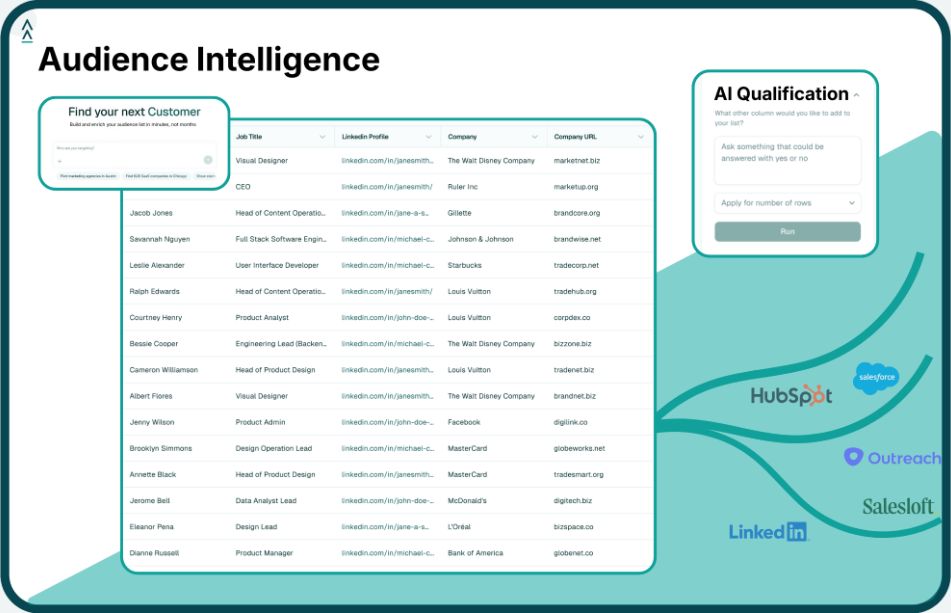
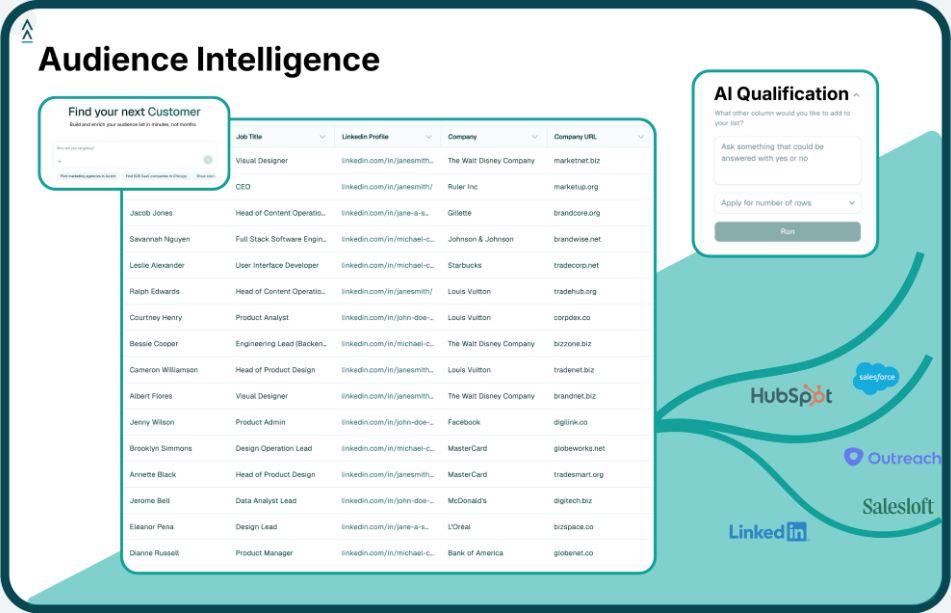
Landbase is one example of this approach – it uses an agentic AI to build dynamic TAMs from natural language prompts. You can simply describe your ideal customer (e.g. “Series B fintech companies hiring data scientists in Europe”) and the platform will generate a tailored list of accounts and contacts – complete with signal-based insights and an AI fit score. Under the hood, Landbase’s AI draws on a massive live dataset (tracking thousands of signals per company), so it evaluates each account on many dimensions rather than a handful of filters. It essentially acts as an automated researcher that not only finds companies but also qualifies them – flagging those that match your ICP and show recent intent signals (say a funding round or key hire). And because it continuously crawls the web for new info, your TAM list stays up-to-date in real time.
Tool and strategies modern teams need to help their companies grow.