.png)
.png)

Daniel Saks
Chief Executive Officer


The landscape of B2B sales and marketing is evolving rapidly, driven by advances in artificial intelligence. Traditional go-to-market strategies – often reliant on manual prospecting, fragmented tools, and labor-intensive outreach – are being upended by AI agents that can autonomously plan, execute, and optimize campaigns. Companies that embrace these AI-driven GTM platforms are seeing dramatic boosts in pipeline and efficiency, while those that don’t risk being left behind. In fact, 85% of enterprises are expected to implement AI agents by the end of 2025(12), and early adopters report substantial gains – for example, AI agent users have achieved 55% higher operational efficiency and 35% cost reductions on average(12). At the same time, buyer engagement via traditional methods has become harder; cold email reply rates have fallen by ~50% over the past two years(6), underscoring the need for smarter, automated outreach.
AI agents (often called AI SDRs or virtual sales reps) act as an extension of your team – analyzing vast datasets, identifying high-intent prospects, personalizing outreach across multiple channels, and learning from every interaction to improve results. They don’t get tired or distracted, and they work 24/7. The result? Businesses leveraging these autonomous agents are seeing 3–15% revenue uplifts and up to 37% lower marketing costs according to recent research(12). Instead of spending months building outbound campaigns or hiring dozens of reps, organizations can deploy AI agents to generate pipeline in a matter of minutes. As one venture capitalist observed, the current generation of AI sales development startups have shown “stunning product-market fit,” with many achieving $1M ARR in <1 year due to high demand(6). In short, AI agents are revolutionizing GTM execution by automating the heavy lifting of prospecting and outreach, allowing human teams to focus on strategic and high-touch activities like closing deals.
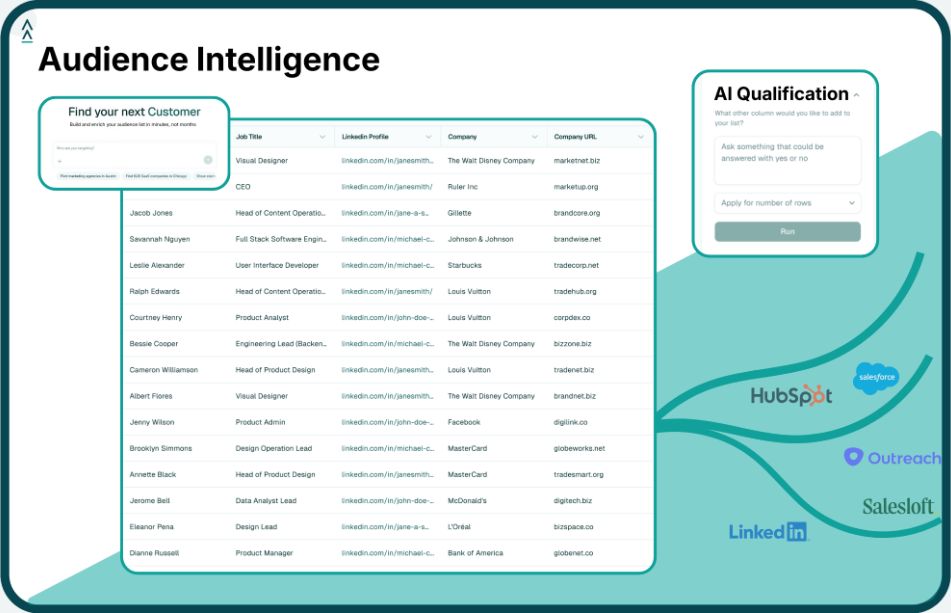
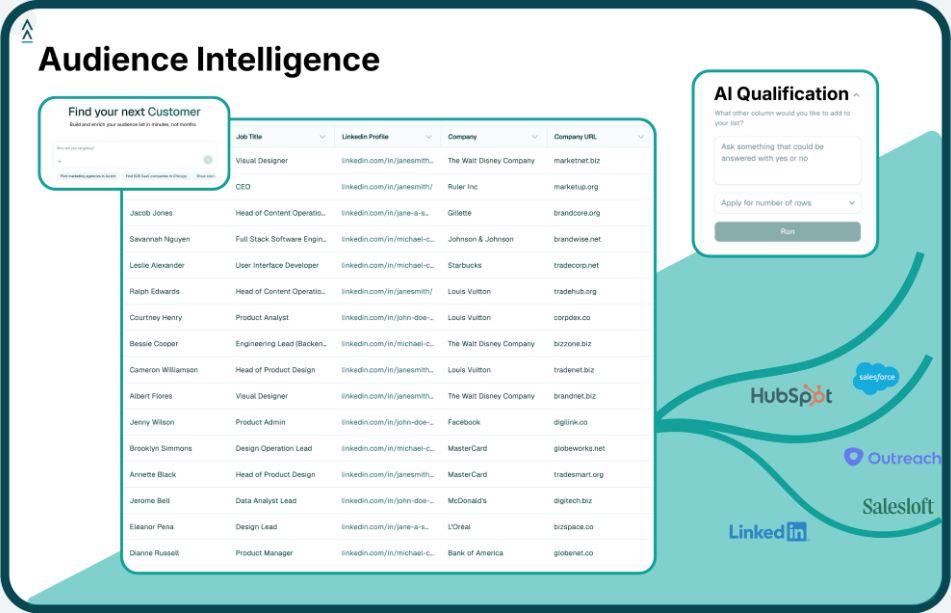
Landbase stands as the first truly agentic AI platform with complete autonomous workflow execution, introducing revolutionary AI agents that handle complex sales processes independently. Founded in 2024 by veterans from AppDirect and backed by $42.5M in funding, Landbase emerged from stealth to deliver the world’s first end-to-end AI GTM system built specifically for B2B sales. Its proprietary AI engine, GTM-1 Omni, is a domain-trained multi-agent model that doesn’t just generate content – it can orchestrate entire sales campaigns with minimal human input. Under the hood, GTM-1 Omni was trained on a massive dataset of successful GTM interactions (over 40 million B2B sales campaigns and billions of data points)(1), giving it an unrivaled understanding of what works in B2B outreach. The platform also boasts a built-in B2B contact database of 220+ million verified contacts (across 24M companies) and 10+ million real-time intent signals to feed the AI’s decision-making. In practical terms, using Landbase feels like hiring an elite SDR team that plans, writes, and sends campaigns for you 24/7.
Key Features:
Pricing Structure:
The platform’s greatest strength lies in its autonomous operation. You can “set it and forget it”: provide your ICP and goals, and Landbase’s agents do the rest. Sales teams that struggled with low outreach yield have seen reply rates jump from ~1% to 5%+ with Landbase – a 5x uplift that unlocked pipeline they never could attain before. On average, customers report 4–7x conversion rate improvements in terms of cold leads turning into qualified meetings. Critically, messages crafted by Landbase feel human and personalized (thanks to training on millions of real sales conversations), avoiding the spammy, templated vibe seen in some AI tools. By marrying AI intelligence with extensive B2B data and best-practice playbooks, Landbase ensures each outreach is contextually relevant and authentic. Users consistently highlight the freedom it gives them – one reviewer noted Landbase is truly “set it and forget it,” versus other platforms that still require constant tweaking and oversight.
For B2B SaaS companies, agencies, and even traditional industries like finance or telecom, Landbase’s agentic AI offers a compelling way to scale pipeline without scaling headcount. It particularly shines for resource-strapped teams: instead of hiring a squad of SDRs and waiting months for results, Landbase can launch omnichannel campaigns in minutes, driving meetings in days. The bottom line: Landbase delivers growth on demand, making it a top choice for organizations looking to automate outbound sales with confidence.
Apollo.io is a well-known sales intelligence and engagement platform that has increasingly infused AI into its prospecting toolkit. At its core, Apollo offers a massive B2B contact database of over 210 million contacts and 35 million companies(2) – one of the largest in the industry – paired with tools for email sequencing, dialing, and simple AI assistants. For go-to-market teams, Apollo functions as a do-it-yourself platform: it helps you find leads and engage them through automated sequences, with AI suggesting optimizations along the way. It’s not a fully autonomous “agent” like some others on this list, but it provides building blocks for reps to be more efficient.
Notable Features: Apollo’s strength lies in its data and all-in-one nature. Users get access to Apollo’s enormous “living” database (500,000+ users tap into this data globally(2)), which is continuously refreshed for accuracy. Advanced filters let you slice the database by title, industry, tech stack, hiring trends, etc., to pinpoint your Ideal Customer Profile. Apollo also includes a built-in sequencing engine for email, phone, and LinkedIn steps – meaning you can both source leads and contact them all within one platform. Recently Apollo added an AI Sales Email Assistant to help draft personalized emails or suggest next steps; in fact, Apollo was rated the #1 AI Sales Assistant tool for small businesses in G2’s Summer 2025 report(2). This AI can, for example, analyze past engagement data to recommend who to target next or the optimal time to send an email.
The platform emphasizes making GTM easier for small and mid-size businesses: “find your next customer” is a key motto. Apollo’s ease of use and affordability are big draws for startups and SMBs building outbound motion from scratch. Many teams use Apollo as a lower-cost alternative to hiring additional SDRs – you might have one rep using Apollo to achieve the output of several.
AI Impact: While Apollo doesn’t run fully on autopilot, its AI-driven features do improve efficiency. The company reports that customers using Apollo’s AI and automation see significant lifts in productivity – Outreach activities that once took hours can be done in minutes. According to Apollo, teams consolidating outreach on their platform have saved hours of manual work per week and boosted their prospecting output substantially(2). In G2 reviews, users frequently mention Apollo’s AI personalization as a “game-changer” for scaling outreach without sounding like a robot(2). One stat: Apollo’s own ROI benchmarks (from 5,000+ customers) suggest using the platform can lead to a 44% increase in meetings booked per month and 20% more opportunities created per month, compared to baseline(3). These gains come from the combination of better data, automation, and AI insights guiding reps.
Considerations: Unlike a true “AI SDR agent,” Apollo does require human operation – you need to select leads, set up sequences, and press go. It’s a highly effective tool in skilled hands, but it’s not “set and forget.” Some companies use Apollo’s data in conjunction with other AI platforms (even Landbase can ingest Apollo-exported contacts). Apollo’s sweet spot is often SMBs and cost-conscious startups; it delivers a lot of value for the price, though larger enterprises sometimes outgrow it in favor of more specialized AI or robust engagement platforms. Also, Apollo’s AI features are evolving – they help with content and timing, but strategy (whom to target, when to pivot) still largely relies on the user.
In summary, Apollo.io is a top choice for data-driven sales teams that want a bit of AI assistance but still prefer hands-on control. It’s like having an expansive leads database and a basic AI co-pilot in one. Users praise Apollo for its ROI – even calling it “the most powerful AI-driven outreach and prospecting platform” for the money(2). If your GTM team needs more leads and an efficient way to work them, Apollo’s AI-infused platform is a proven contender.
Outreach is the market-leading Sales Engagement Platform used by thousands of sales orgs to manage their outbound workflows. While Outreach is not an “AI agent” in the fully autonomous sense, it has aggressively added AI capabilities to augment its core platform, making it highly relevant for GTM teams seeking AI assistance. Outreach acts as the central cockpit for sales development reps: you create and execute multi-touch sequences (across email, calls, LinkedIn, etc.), track engagement, and analyze results. It’s known for its enterprise-grade features and has become standard at many high-growth companies to scale human-driven outreach.
AI Capabilities: In recent years, Outreach introduced its AI assistant, Kai, to enhance rep productivity. Kai can do things like suggest the next best action (e.g., which prospect to follow up with today) and even automatically draft follow-up emails or summarize call transcripts (leveraging conversational intelligence from Outreach’s acquisition of Chorus.ai). Essentially, Outreach’s AI helps reps be more effective rather than replacing them. For example, Outreach’s system may analyze past deals and recommend a sequence tweak that has improved reply rates, or alert a rep if an email’s tone might be off. Additionally, Outreach uses machine learning in features like Outreach Insights to identify patterns in what sequences or content are working best. All of this is built on top of the robust sequencing engine that Outreach pioneered.
Impact: Outreach has demonstrated that when sales teams fully adopt its platform (with AI features enabled), they can drive substantially better outcomes than manual efforts. A large dataset from Outreach’s users (5,000 customers over 13+ months) shows an average 44% increase in meetings booked per rep per month after implementing Outreach, along with a 20% increase in opportunities created(3). It also sped up sales cycles (deal velocity improved ~13%) and even bumped win rates by ~10% on average(3). These improvements reflect both the tool’s efficiency gains and the coaching that AI insights provide. Outreach often cites that it can make every rep as productive as your best rep, by standardizing best practices and automating tedious tasks.
One independent analysis (a Forrester Consulting TEI study) quantified Outreach’s value: companies using Outreach saw $12.4M in incremental profit and a 3.3x return on investment over three years(4). They also achieved a 50% increase in conversion from initial engagement to opportunity and a 20% higher response rate from buyers on average(4). These stats underscore that Outreach, when combined with good sales strategy, materially boosts pipeline generation and progression. The AI helps ensure no lead falls through the cracks – every inquiry is followed up, every task is logged – and provides data-driven coaching so that messaging continually improves.
Position in Market: Outreach is often the baseline against which newer AI SDR platforms are compared. It’s a rep-centric solution: extremely powerful for enabling an SDR team, but it assumes you have humans in the loop. Some risk-averse organizations prefer this model, as it offers more control – the AI may help draft an email, but a human approves and sends it. Outreach’s advantage is its maturity and integration: it has deep CRM integrations (Salesforce, etc.) and a rich feature set for team management, A/B testing, analytics, dialing, and more. For companies already using Outreach, adopting a tool like Landbase might mean running it in parallel to supplement the human team, rather than replacing Outreach entirely (at least initially). Outreach is also continuously evolving – while it hasn’t launched a fully autonomous agent, it’s plausible they could add more automated sequencing capabilities in the future.
In summary, Outreach remains a top solution for sales engagement, now enhanced with AI assistance. It’s ideal for teams that want to empower their sales reps with better tools and insights. You get the benefits of automation (scale and consistency) without losing the human touch, since reps still oversee the process. Many organizations find that Outreach **“helps your SDRs send more emails, faster,” whereas an agentic AI platform “can be the SDR for you” – the right choice depends on whether you want to augment humans or offload the function entirely. For those choosing the augmentation route, Outreach with AI is a proven path to higher efficiency and pipeline.
Salesloft is another heavyweight platform in the sales engagement arena, often mentioned in the same breath as Outreach. Like Outreach, Salesloft enables sales teams to execute and track multi-channel cadences, but it has also broadened into a Revenue Orchestration Platform that includes conversation intelligence, deal management, and AI-driven coaching. Salesloft has been rapidly integrating AI into its product, including the introduction of “GenAI” email and research agents to automate parts of the prospecting workflow(4). For GTM teams, Salesloft offers a balance of automation and control – it’s designed to maximize human sellers’ productivity, with AI working in the background to provide insights and even perform some tasks.
Key AI Features: Salesloft’s recent product updates have unveiled features like Account Research Agent and Opportunity “deal” AI. For example, the Account Research GenAI Agent can automatically gather insights on target accounts and even draft relevant messaging or talking points. A customer in Salesloft’s Summer 2025 beta reported that these GenAI Agents led to a 25% increase in meetings booked in just two weeks of use(4) – an impressive immediate impact. Salesloft also has an AI Email Assistant to help craft emails and a feature called “Ask Salesloft” where reps can query an AI for account info or playbook guidance(4). On the intelligence side, Salesloft’s platform uses AI to analyze call transcripts (from its Conversations product) and pipeline data to provide coaching recommendations and risk alerts to managers.
Results: Salesloft commissioned a Forrester Total Economic Impact study (2025) to quantify its value. The results: enterprises using Salesloft achieved 3.3x ROI and a 12% higher close rate on deals, compared to not using the platform(4). They also saw 50% more prospects converting from engagement to pipeline and created 2.5x more pipeline opportunities over three years(4). Furthermore, Salesloft helped teams drive 40% more sales activities without adding headcount and saved over $1.3M by consolidating tools(4). These stats highlight that Salesloft’s combination of engagement + AI insights yields both revenue growth and efficiency gains. The improved close rates and buyer response (+20% per the study) show Salesloft isn’t just about booking meetings – it influences later stages too by ensuring follow-through and multi-threaded engagement.
Salesloft consistently ranks as a leader: it’s been a Leader in the G2 Sales Engagement Grid 17 quarters in a row(4) and won accolades for its innovation. The platform is beloved for its usability (reps often praise its friendly UI) and depth of features. With the infusion of AI, Salesloft is positioning itself as a “Revenue Operating System” where AI helps orchestrate every interaction from first touch to closed deal(4). It’s not fully autonomous – you still need people executing – but it significantly augments what a rep or manager can do. For instance, AI can prioritize the hottest opportunities each day or flag deals that need attention, ensuring no revenue leakage.
Use Cases: Salesloft is popular in both mid-market and enterprise. Companies that have an established sales team and process benefit from Salesloft’s structure and analytics, while still gaining speed through automation. Some organizations choose Salesloft over Outreach due to subtleties in UI or specific integrations, but both are comparably powerful. Where Salesloft differentiates now is its vision of “guided selling” with AI – it not only enables activity, but guides reps on which activities to do and how to do them best. This human-in-the-loop but AI-accelerated model is ideal for teams that value data-driven coaching.
Overall, Salesloft provides a comprehensive platform that, with AI enhancements, acts like a digital COO for your sales development team – ensuring reps focus on the right tasks and messages to convert more leads. The success metrics (multiX ROI, pipeline lift, etc.) attest that Salesloft can dramatically improve a GTM team’s outcomes when properly implemented. It’s a top choice if you want to keep a person-centric approach but supercharge it with AI analytics and automation.
ZoomInfo is the industry’s leading B2B data intelligence provider, and while it’s not an outreach automation tool per se, it has stepped into the AI agent conversation by providing the fuel (data and insights) that drive AI sales agents. Many GTM teams use ZoomInfo’s SalesOS platform as a foundational data layer – it offers over 100 million company profiles and 260+ million contact records globally(5), along with technographic details, org charts, news (“Scoops”), and intent signals. In 2023–2025, ZoomInfo began adding its own AI features (like an email/news “Copilot”) to help users tap into this vast data more intelligently(6). While ZoomInfo doesn’t autonomously execute campaigns, it is often part of the stack for AI outreach: you might use ZoomInfo’s data to power an AI agent platform, or use ZoomInfo’s intent alerts to trigger agent actions.
Data and AI Strengths: ZoomInfo’s core advantage is data quality at scale. They invest heavily in keeping their database accurate and current – employing web crawlers, a community updates model, and a large operations team. For example, ZoomInfo provides verified direct dials, emails, org charts and even employee attributes for millions of contacts. As of 2025, its data cloud includes 110M+ companies and 410M individuals with deep firmographic and technographic info(5). On top of this, ZoomInfo has integrated third-party intent data (monitoring web research behavior), and acquired tools like Chorus (conversational intelligence) and Clickagy (intent) to enrich its offerings.
ZoomInfo’s new SalesOS Copilot (launched 2024) leverages generative AI to help users query this data and receive conversational answers(5). For instance, a rep can ask, “Who are the top 10 prospects in the fintech industry showing intent for cloud security?” and Copilot will output a list from ZoomInfo’s data, complete with contextual reasoning. It can also summarize key events about an account or suggest talking points pulled from its vast information stores(5). Essentially, ZoomInfo is melding its rich data with AI to act as a research assistant. The platform also provides real-time alerts (“Breaking Alerts”) via Slack or email when target accounts exhibit buying signals(5) – these can be used to prompt sales teams or even fed into external AI agent workflows (e.g., Landbase can take a ZoomInfo intent alert and launch a targeted email sequence).
Role in GTM AI Ecosystem: Many AI sales tools, including some on this list, integrate with or rely on ZoomInfo data. Landbase, for example, has its own data but can ingest ZoomInfo leads if a client uses ZoomInfo alongside. Some younger AI SDR startups that lack a data asset simply plug into ZoomInfo’s API. This makes ZoomInfo somewhat of an “arms dealer” in the AI arms race – its data helps any outreach AI perform better. ZoomInfo itself has not launched a fully autonomous outbound agent (their focus remains data and insight), but they are a critical enabler of those agents. A TechCrunch piece noted that ZoomInfo releasing a copilot essentially puts it in competition with AI SDR startups(6) – because with great data and some AI features, a company might question paying separately for an AI outreach tool. ZoomInfo’s counter-argument is that it provides the trusted data foundation others can’t match, which in AI, “is only as good as the data it’s built on” as CEO Henry Schuck put it(5).
Considerations: For a GTM team, ZoomInfo is often considered alongside or versus agentic AI platforms. One question for buyers: “Do we use ZoomInfo + our own team (or basic automation) to reach out, or do we use an autonomous platform that includes data?” Landbase, for instance, positions itself as ZoomInfo + Outreach + AI in one. The decision can come down to how much a company values having in-house control and flexibility (ZoomInfo data can be used in many ways) versus wanting a turnkey automated solution. Cost is a factor too: ZoomInfo is not cheap (often five-figure annual contracts), and if you still need to hire SDRs or buy an engagement tool on top, the total cost may rival an all-in-one AI service.
That said, ZoomInfo remains unparalleled in data breadth. Large enterprises often keep ZoomInfo even if they adopt AI agents, for the myriad of intelligence use cases beyond just emailing prospects. ZoomInfo’s intent data and analytics (e.g., identifying accounts “in market”) can complement an AI outreach engine like Landbase – you could prioritize who the AI should contact based on intent. In practice, some companies run ZoomInfo and an AI agent platform in tandem: ZoomInfo to feed strategic insights and target lists, and the AI agent to do the executing.
In summary, ZoomInfo is the data powerhouse that underpins modern go-to-market. Its value to AI agents is like fuel to an engine – high-octane fuel significantly boosts performance. While not an AI SDR itself, ZoomInfo deserves a spot in this list for how it amplifies what AI agents can do, and for its own ventures into AI-driven sales intelligence. Many GTM teams find that combining ZoomInfo’s accurate data with an AI engagement tool yields the best of both worlds: precision targeting and automated outreach. It’s not an either-or if budget allows. For any company serious about scaling outbound, ZoomInfo is either in your stack or in your competitor’s stack.
6sense is a leader in the Account-Based Marketing and predictive intelligence space, offering what it calls “Revenue AI.” Unlike an outbound sales agent that actively sends messages, 6sense’s platform functions as an AI analyst that identifies which accounts are in-market and what they care about, so your team (or other tools) can target them proactively. For GTM teams, 6sense acts as a force-multiplier by telling you where to aim your outreach for maximum impact. It uses AI models to analyze billions of buyer intent signals (web visits, research keywords, engagement with content, etc.) and scores accounts to predict stages of the buying journey. In short, 6sense’s AI finds the needles in the haystack – the accounts most likely to convert – and often integrates with engagement tools to act on those insights.
Key Capabilities: The hallmark of 6sense is its intent data and predictive analytics. It de-anonymizes website traffic and tracks behavioral data to detect when an account is “warming up” to a solution like yours. For example, if at Acme Corp multiple employees are reading about cloud security on various websites (including yours) and someone downloads a whitepaper, 6sense’s AI might flag Acme as being in a “Decision” stage for security products. It will then surface this account to your sales team with insights on what topics they’re interested in, recommending they reach out with a tailored message. 6sense also provides an AI-driven lead scoring and account ranking – focusing your sales reps on the highest propensity accounts. Additionally, it can orchestrate next-best actions: e.g., automatically trigger a targeted LinkedIn ad or personalized email via a marketing automation system when an account reaches a certain score.
6sense has started using AI agents (“Email AI” and others) to automate some engagements. For instance, 6sense Email AI can send introductory emails to known contacts at high-intent accounts (though this is more of a guided feature than a fully autonomous SDR). The platform primarily excels at aligning marketing and sales: marketing can run account-based campaigns (ads, website personalization) to the accounts AI identifies, while sales gets a prioritized to-do list.
Impact: Companies using 6sense often report significant improvement in focus and conversion metrics. By directing effort to the right accounts at the right time, wasteful cold outreach is reduced. According to 6sense, its clients have seen outcomes like 6X increase in opportunity volume and 40%+ increases in pipeline from ABM programs informed by its AI(7). Specific case studies: Corporate Visions achieved a 268% increase in marketing pipeline after modernizing their GTM with 6sense’s intent data and AI(7). Another customer, Expereo, saw a 6x jump in opportunities and a big boost in deal values by using 6sense to focus their marketing efforts(7). Many users also cite improved win rates – because sales is engaging accounts already predisposed to buy, the close rates go up. While 6sense itself doesn’t “close deals,” it tees up higher-quality at-bats.
It’s worth noting a synergy: 6sense’s insights can feed into an autonomous agent like Landbase. For example, you might use 6sense to pinpoint 50 hot accounts, then have Landbase’s AI agents craft and send outreach specifically to those accounts, combining the best of both platforms (brains from 6sense, brawn from Landbase). In fact, some large enterprises do exactly this, using 6sense for intelligence and another tool for execution.
Fit: 6sense is ideal for organizations embracing an account-based approach, where marketing and sales coordinate tightly. It shines for mid-market and enterprise companies with longer sales cycles, multiple buyers per deal, and significant inbound traffic to monitor. If you have a huge Total Addressable Market, 6sense helps narrow the field. It may be less crucial for very small businesses or very short sales cycles where intent is harder to detect. Also, the platform requires some investment in tuning and integration (with CRM, marketing automation, etc.), so it’s often used by more mature RevOps teams.
In the context of AI agents, 6sense is somewhat complementary. It’s not going to replace an SDR or send out mass emails autonomously. But it dramatically enhances the effectiveness of outbound efforts by ensuring you focus on accounts ready to engage. As one comparison put it, “6sense delivers the data and timing (who to go after and when), whereas Landbase delivers the automatic outreach and meetings”. Together, they can turbocharge pipeline. On its own, 6sense delivers clear ROI by boosting marketing conversion rates and sales productivity – clients have reported metrics like 30% higher sales productivity after using 6sense to prioritize efforts(6).
Conversica is a pioneer in the AI virtual sales assistant space, known for its AI-powered two-way conversations that nurture leads via email (and SMS) as if a human assistant were sending the messages. For GTM teams, Conversica acts like a tireless follow-up specialist: once you have a list of leads (often marketing-generated or dormant leads), Conversica’s AI agent will reach out, engage them in a human-like email thread, and determine who’s interested, handing off hot leads to your sales reps. It’s like having an SDR that only focuses on prompt, polite persistence in following up – an important job since many inbound leads never get a proper follow-up.
How it works: Conversica assigns an AI persona (with a human-sounding name like “Alex”) to your company. This AI agent sends a series of personalized emails to each lead, asks questions, answers simple inquiries, and keeps the conversation going. For example, after someone downloads a whitepaper, the AI might email them: “Hi, this is Alex from [Company]. Thanks for checking out our guide on X. Would you be interested in a free consultation on how we can help with Y?” If the lead responds, the AI can parse the response and reply accordingly (e.g., answering a question about pricing, or politely nudging again if the lead says “not now”). If the lead says they want to talk to sales or asks something complex, the AI flags it as a hot lead for the human team to take over. Conversica’s system comes with many pre-built conversation flows (for various scenarios like event follow-up, re-engaging old leads, customer success check-ins, etc.) and it uses NLP to handle common responses. It essentially ensures every lead is touched multiple times promptly, which humans often fail to do consistently.
Impact: Conversica has published case studies showing its AI assistant can significantly improve lead conversion from marketing funnel to sales pipeline. According to one case study, a Conversica client (Marketforce) was able to increase their qualified leads by 25% using Conversica’s automated follow-ups(8). Conversica often cites that their AI engages ~100% of leads and never forgets to follow up, whereas human reps might only reach out to a fraction. The persistence and consistency lead to more appointments. Additionally, Conversica users have seen reductions in response times to near-instant (the AI reaches out within minutes of an inquiry, capitalizing on the moment of interest). A compilation of reports suggests Conversica’s platform can yield a 30% shorter sales cycle for nurtured leads, since warm leads are identified and passed to sales faster(8). Conversica’s AI is also quite adept at maintaining a human tone – many prospects don’t realize they’re talking to an AI, which is a testament to the conversational quality.
Use Cases: Conversica is typically used for inbound lead qualification, event follow-ups, and re-engaging stale leads in CRM. It’s not usually used for pure cold outbound (contacting someone who has never heard of you) – other tools handle that better. Instead, Conversica shines when you have leads who have shown some interest (attended a webinar, stopped responding in a trial, etc.). It’s like an automated SDR that can handle the volume of thousands of inquiries simultaneously, ensuring each one gets a human-like touch. This makes it popular in industries with lots of inbound leads (education, automotive dealerships, software companies with many trial signups, etc.).
Integration: The Conversica AI can integrate with CRM/marketing systems so that once it qualifies a lead (e.g., lead says “Yes, I’d like a demo”), it updates the status and alerts a salesperson. It essentially fills the gap between marketing and sales by conversing with leads in that gray area of “interested but not yet engaged by sales.”
In context of other AI agents, Conversica addresses a piece of what full GTM agents do – mainly the lead nurturing and follow-up piece – but it doesn’t do prospect research or multi-channel outreach on cold accounts. It’s a narrower scope. However, within that scope, it’s quite advanced and has years of refinement. Some companies might use Conversica alongside a platform like Landbase: Landbase to generate new meetings from cold outbound, and Conversica to maximize conversion of warm inbound leads. In fact, businesses that implemented Conversica often report 10–30% more opportunities from their lead pool that would have otherwise been lost to no follow-up. One stat: Conversica’s clients have seen on average a 25% increase in qualified lead volume and a 30% reduction in time-to-engage leads after using the AI assistant(8).
Clari is the leading Revenue Operations and Intelligence platform that leverages AI to improve sales forecasting accuracy, pipeline management, and deal execution. While Clari is not an outbound prospecting tool, it plays a crucial AI agent role for the mid-to-late stages of the GTM cycle – ensuring that once you have pipeline, you execute on it efficiently and predictably. In essence, Clari’s AI acts like an analytical coach and co-pilot for sales leaders and reps, analyzing all the signals in your sales process (emails, CRM updates, meetings, etc.) to answer: Are we going to hit our number? Which deals might slip? What actions do we need to take? By doing so, Clari helps GTM teams prevent deals from falling through and spot growth opportunities in the pipeline.
Features and AI: Clari ingests data from CRM, email/calendar, marketing automation, and more to create a real-time revenue snapshot. Its AI then identifies “forecast categories” and risk factors. For example, it can flag that a deal has had no activity in 2 weeks (risking push), or that an opportunity lacks a key stakeholder engagement. Clari’s dashboard gives sales teams a way to inspect pipeline health at every level (rep, region, product) with AI insights guiding where to focus. One of Clari’s lauded features is its ability to predict forecast outcomes more accurately than legacy spreadsheet methods – it uses historical patterns and current deal progress to project where you’ll land for the quarter. By 2025, Clari integrated conversational intelligence (through its Groove acquisition) and other AI to also recommend next best actions and to automatically update CRM fields, reducing admin work.
Value and Stats: A Forrester TEI study (2025) quantified Clari’s impact on large organizations: it showed a 398% ROI over three years with Clari, and payback in under 6 months(9). This staggering ROI came from both revenue uplift and cost savings. Specifically, enterprises using Clari saw a 6% increase in win rates (translating to millions in extra revenue) and a 3.5% increase in customer retention, thanks to better visibility and proactive management(9). They also reduced administrative time by 50% (Clari auto-capturing data and reducing manual forecasting work) – saving $22.7M worth of sales capacity in the composite analysis(9). Forecast accuracy improved significantly (variance down to ~5%, from ~9% prior)(9), leading to greater leadership confidence and less surprise misses. One director quoted noted Clari increased their renewal rate by 20 percentage points, showing Clari’s impact beyond new sales(9).
Clari has effectively become the “system of record for revenue” at many growth-oriented companies. It’s used by leaders to run pipeline reviews, by managers to coach reps (AI highlights where a deal might need multi-threading or more activity), and by reps to prioritize tasks. The platform’s AI features like Clari Pulse send alerts (“Deal X has no next meeting scheduled, and close date is 2 weeks away”) and even can auto-generate updates or next steps. It’s not engaging with customers directly, but it’s an AI agent working internally for your sales org.
Why it matters for GTM: Think of it this way – tools like Landbase, Apollo, etc. fill the funnel; Clari makes sure you close what’s in the funnel. It addresses a different stage of the GTM process: execution and forecasting. A well-oiled GTM machine often uses both types – one set of AI to bring in opportunities, another to maximize conversion of those opportunities to revenue. If you generate a ton of pipeline with AI SDRs, you’ll want something like Clari to ensure your sales team can handle it and capitalize effectively.
Clari competes loosely with the likes of People.ai and Salesforce’s embedded AI in CRM, but it’s generally seen as the best-of-breed for forecasting and pipeline analytics. It has also expanded its scope by acquiring Groove (sales engagement) to incorporate activity capture and even some outreach, though its primary use is still analytics, not automated outbound.
In summary, Clari is the AI “guardian angel” for your revenue operations – it won’t prospect for you, but it will make sure nothing in your active pipeline goes unnoticed or unmanaged. The result is more reliable forecasts (no more end-of-quarter surprises) and more efficient growth. Companies that implement Clari often report more confidence in their sales process and identify levers to improve, driven by data rather than gut feel. In the context of AI agents, Clari represents how AI can augment the management and strategy side of GTM, complementing the AI agents that handle the front-line outreach.
People.ai is a revenue intelligence platform that functions like an AI assistant for your sales org’s productivity and CRM data. It automatically captures and analyzes sales activities (emails, meetings, calls) and uses AI to derive insights about deal progress, rep effectiveness, and next steps. In essence, People.ai acts as an AI sales coach and data steward, ensuring CRM is always up-to-date and providing guidance to close more deals. For GTM teams, People.ai addresses the perennial challenge of incomplete data and uneven sales execution – it makes sure all interactions are logged and then surfaces what differentiates wins from losses, so you can scale best practices.
Core Functions: People.ai’s first value-add is activity capture and CRM automation. It connects to email and calendar systems and logs every customer interaction to the appropriate contact/opportunity in CRM (eliminating the need for reps to manually log emails or meetings). This yields a rich dataset of “who talked to whom, when, and about what.” On top of this, People.ai provides AI-driven analytics: for example, it can show that deals where the champion is Director level or higher have a 1.5× higher win rate, or that a certain product line hasn’t had any executive-level touches in open deals (risking churn). It creates “scorecards” for opportunities and accounts – highlighting gaps like missing stakeholders or low activity. The platform also offers AI-based coaching recommendations, such as alerting a manager if a deal isn’t following the MEDDIC sales process correctly.
People.ai’s AI can even predict deal outcomes by comparing patterns of engagement to historical wins. It will score the health of each opportunity (often called an “Opportunity GPA” or similar), helping reps prioritize where to focus. Additionally, by aggregating data across the team, it identifies what the top performers do differently – e.g., top reps engage with 3+ contacts per account on average, versus 1 contact for low performers – and turns that into coaching moments.
Results: By using People.ai, organizations typically see improvements in data hygiene and sales effectiveness. One major impact is increasing rep capacity: People.ai claims to save reps and sales ops hundreds of hours by auto-logging data. For instance, Forcepoint saw thousands of hours of seller time given back because reps no longer spent time on data entry(10). More importantly, by illuminating where deals stand and what’s needed, People.ai helps drive up win rates. A striking case is Red Hat, an early People.ai customer, which “reclaimed thousands of hours and increased win rates by 50%” after automating forecasting and deal management with People.ai(10). That 50% win rate increase is exceptional – it reflects how better data and process can directly translate to more deals closed. Another example: Seismicused People.ai’s ClosePlan and saw a 6% higher close rate on deals that followed the guided process vs those that didn’t(10), and they captured 150,000 additional contacts into CRM that their reps hadn’t logged(10)(ensuring a bigger reach for future campaigns).
People.ai essentially ensures no deal is left behind and no insight is lost. It boosts alignment between sales and other teams (since everyone trusts the data and sees the same activity). From a GTM perspective, deploying People.ai means your expensive leads and opportunities are managed optimally – making the most of what marketing and SDRs generate.
Integration in GTM Stack: People.ai often works alongside engagement tools and CRMs. It’s complementary to the likes of Clari (Clari also captures activity, especially after acquiring Groove, putting it in more direct competition now). Some companies choose one or the other or use a mix. In any case, People.ai is focused on making sales teams more productive and effective through AI analysis, rather than creating pipeline directly. If you have a sizable sales force or lengthy sales cycles, People.ai provides the data-driven visibility to improve outcomes. It’s effectively an AI that whispers in sales leadership’s ear, “Here’s what’s going on and what to do about it.”
In summary, People.ai fills a critical gap by acting as the AI agent that watches and learns from your sales process itself. It’s less about the customer and more about your team’s behavior. By mastering that, it helps you replicate success patterns and fix weaknesses. Organizations that invest in People.ai typically achieve higher sales productivity (some report 15-20% improvements in sales productivity metrics) and more reliable growth. It ensures that when your marketing and SDR AI agents bring in leads, your sales team handles them in the best possible way.
Regie.ai is an AI-powered writing assistant specialized for sales and marketing content, making it akin to an AI copywriting agent for GTM teams. Its primary function is to automatically generate personalized sales emails, sequences, LinkedIn messages, and other outreach content at scale. While Regie doesn’t itself send the emails or select targets (it often plugs into your engagement tool), it solves the huge pain point of writing high-quality outreach copy quickly. For teams running outbound campaigns or content marketing, Regie.ai can save countless hours and improve messaging effectiveness by using AI (trained on successful sales copy) to craft tailored communications.
Capabilities: Regie.ai allows users to input parameters – e.g., target persona, product value prop, tone, and any personalization details – and then it produces email templates or entire multi-step sequences in seconds. It uses large language models (like GPT variants) fine-tuned for sales contexts, so it tends to produce copy that resonates with prospects. One of Regie’s strengths is inserting personalization nuggets pulled from public data: for instance, it can scan a prospect’s LinkedIn or news about their company and incorporate a relevant opener (“Congrats on the funding…”, “Noticed you’re expanding your team in data science…”) seamlessly. It can also adjust tone and style; users can specify if they want an email to sound more casual vs. formal, etc.
Regie’s platform often integrates with sales engagement tools like Outreach, Salesloft, HubSpot, or email clients – you can push the AI-generated content directly into sequences with a click. It also has a library of proven copy frameworks and plays for different scenarios (cold outbound, follow-ups, follow-up after no response, etc.), which the AI can customize to your offer. The goal is to eliminate the “blank page syndrome” for SDRs and marketers. Instead of spending 30 minutes writing a cold email, a rep might use Regie to generate 5 options in one minute, tweak the best one slightly, and send it.
Impact: By using Regie.ai, teams drastically reduce the time spent on content creation and can run more campaigns or more touches as a result. This directly can improve pipeline. For example, a SaaS company case study (via DoneForYou) reported that after implementing Regie.ai for their outbound follow-ups, within 6 months they saw 50% higher email open rates and 35% more demo bookings, while also cutting their sales cycle by 30%(11). The higher open and reply rates come from the improved quality and personalization of emails – prospects are more likely to engage when the message feels relevant and well-crafted. Regie basically enables a small team to achieve personalization at scale, which was previously very labor-intensive.
Another stat from a Persana research: Regie’s AI-driven personalization was shown to boost email response rates significantly – some users observed 25% increases in conversion rates on their campaigns when using AI-crafted messaging versus generic templates(8). In G2 and other reviews, users frequently mention that Regie helped them triple their outreach volume without sacrificing quality, and even new SDRs ramp faster because they have good messaging out-of-the-box.
Use Cases: Regie.ai is used by sales development teams for outbound campaigns, by marketers for writing nurture emails and social posts, and even by customer success teams for renewal or upsell communications. It’s versatile anywhere you need written content that is engaging. It’s also a great equalizer for non-native English speakers or less-experienced writers on a team – the AI ensures a baseline of quality.
Limitations: Regie focuses on content, so you still need a strategy of who to send to and a system to send (it’s like the brain that writes, but not the arms that execute). Some organizations use Regie in conjunction with an Outreach or Apollo: first use Regie to create sequences, then load them into the engagement tool to send. Also, while Regie’s content is good, it may not capture extremely nuanced technical details without guidance, so a human review is often done (but this is much faster than writing from scratch).
In the context of AI agents, if we consider an AI SDR’s responsibilities, Regie covers the “writing personalized messages” part exceptionally well. It doesn’t decide who to contact or actually reach out on its own (unless via integration scripts), so it’s a component rather than a full solution. However, it’s a component that can dramatically amplify an outbound team’s capability. In fact, some companies combine Regie with human SDRs to increase their output (each SDR becomes as effective as multiple SDRs). And as mentioned, it can complement a system like Landbase too – although Landbase has its own generative AI, some may still use Regie for specific content or channels.
Overall, Regie.ai has established itself as a top AI tool for GTM content creation. By ensuring every touch is hyper-personalized and well-written, it boosts engagement metrics, which ultimately means more leads and meetings. It essentially automates creative personalization at a scale and speed impossible for humans alone.
Drift is a conversational marketing platform known for its AI chatbots (virtual sales reps) on websites that engage visitors in real-time. In terms of AI agents, Drift provides an AI chat agent that can qualify website traffic, answer questions, and even schedule meetings with human reps – effectively functioning as an always-on SDR for inbound interest. For GTM teams, Drift ensures that when a prospect lands on your website, they don’t leave without engagement. It turns your website into an interactive, two-way channel rather than a static brochure. While not an outbound agent, Drift’s chatbot agent is crucial for capturing and converting the demand your marketing drives to your site.
How it works: When someone visits your site, a Drift chat window can pop up with a friendly greeting (often personalized – e.g., “Hi there! Looking into our analytics tool? I’m here to help.”). The AI chatbot uses playbooks to ask qualifying questions (“Can I ask your role? What are you looking for?”) and can answer common questions about your product (“What integrations do you have?”, pulling from a knowledge base). It’s conversational, meaning if the visitor asks something, the AI parses it and responds appropriately. Drift’s chatbots can also connect to backend data; for example, recognizing a repeat visitor or if the visitor is from a target account (and then routing to a specific message or even alerting the account’s sales rep). Critically, if the conversation indicates high interest, the bot will encourage the visitor to book a meeting or start a live chat with a human. Many companies integrate Drift with calendars so the bot can schedule sales meetings on the fly when a visitor says “Yes, I’d like a demo.”
Benefits: Drift essentially increases the ROI of your inbound web traffic by engaging more of them. The typical statistic is that only a small percentage of website visitors fill out forms – Drift changes that dynamic by proactively conversing. According to Drift, customers have seen significant lifts in pipeline from their website. For instance, deploying a chatbot can increase web lead conversion rates substantially; an often-cited stat is companies see Chatbot-driven leads convert 4-8x more frequently than traditional web leads. Drift has case studies where businesses achieved things like 15% of their marketing pipeline coming through the chatbot that previously would not have been captured. Additionally, Drift’s automation saves time – instead of BDRs manually following up on form fills hours later, the bot qualifies in real-time.
One reported figure: some Drift users have seen an increase in sales productivity by ~25% because the bot pre-qualifies leads, so reps spend less time on unproductive outreach(8). Another: companies using Drift have experienced up to a 30% reduction in their sales cycle time, as the immediate engagement accelerates the initial connection(8). It’s basically allowing you to strike while the iron is hot (when a prospect is live on your site). Also, Drift captures transcripts and data which feed into your CRM, so you get insight into what prospects ask most often, etc.
Use Cases: Drift is best suited for businesses with decent web traffic and those offering products that might require some education or demo. SaaS companies use it extensively, as do B2B services. It might be less useful for companies with very low web traffic (few opportunities to chat) or primarily outbound motion (where capturing inbound isn’t the challenge). But even those often have some traffic to convert.
Comparison: In the universe of AI GTM agents, Drift covers inbound conversational engagement, whereas many others here cover outbound. They are complementary. As noted in competitive discussions, an org might use Drift to engage incoming demand and Landbase (or others) to generate demand externally. If one has to choose, companies with large inbound interest might prioritize Drift, while those needing pipeline growth might prioritize outbound AI. Ideally, a mature GTM uses both: Drift to capture those already knocking on your door, and an outbound AI agent to go knock on doors for you.
Drift has inspired similar chatbot offerings (like Intercom’s Fin, HubSpot’s chat, etc.), but it remains a category leader and innovator.
In sum, Drift’s AI chat agent ensures you don’t miss out on opportunities that are right in front of you. It provides a friendly, instant touch that today’s buyers appreciate (no one likes filling a form and waiting days). By handling initial conversations, it scales your team’s ability to handle inquiries. Many Drift customers report that their sales team can focus on engaged, qualified prospects while the AI handles tire-kickers or basic FAQs. The outcome is more meetings booked from the same web traffic and a smoother experience for prospects.
Beyond the established players above, the AI-for-GTM space is extremely vibrant with new startups and big tech entrants introducing their own “AI agents.” It’s worth noting a few emerging AI SDR startups that have gained traction, as well as moves by incumbents, to complete the picture:
For now, the top AI GTM agents we detailed are among the best solutions available, with proven ROI and growing customer bases. They each tackle different pieces of the GTM puzzle (from prospecting to engagement to analytics). Some companies will use several in harmony – for example, using 6sense to find intent-rich accounts, Landbase to autonomously contact them, Drift to capture any inbound interest, and Clari to track it all to close. The ultimate goal is a tech-augmented go-to-market engine that’s efficient, data-driven, and can scale without linear headcount growth.
The landscape of sales and marketing is changing faster than ever. Businesses that fail to adapt risk getting left behind. Traditional GTM strategies – with their slow, manual processes and patchwork of tools – simply can’t keep up with today’s speed of business. In contrast, agentic AI is enabling organizations to execute go-to-market motions with unprecedented efficiency and intelligence. Autonomous AI agents can now plan, execute, and optimize omni-channel campaigns with minimal human intervention. Instead of relying on disjointed systems and repetitive human tasks, AI agents operate as an extension of your team – analyzing vast datasets, identifying high-intent prospects, orchestrating personalized outreach across multiple channels, and continuously learning from every interaction to improve engagement and conversion rates.
Landbase is at the forefront of this transformation with GTM-1 Omni, the world’s first agentic AI action model built specifically for go-to-market execution. Unlike basic automation or generic AI add-ons, GTM-1 Omni doesn’t just assist with isolated tasks – it autonomously drives the entire GTM process, from prospect discovery and data enrichment to multi-channel outreach and pipeline optimization. The results speak for themselves: businesses leveraging Landbase’s agentic AI have experienced 4–7x higher conversion rates (turning leads into meetings), up to 70% lower customer acquisition costs, and campaign launch times reduced from weeks or months to mere minutes. One customer even added $400k in new MRR in a traditionally slow quarter using Landbase, and had to pause the system because their sales team couldn’t handle the influx – a good problem to have!
Powered by a proprietary dataset of 220M+ contacts, 24M+ companies, and 10M+ real-time intent signals, Landbase ensures every touchpoint is hyper-personalized, contextually relevant, and timed for maximum impact. The platform eliminates the content quality issues that plague some AI tools by leveraging its massive training set of successful B2B communications – messages crafted by GTM-1 Omni maintain a human-like authenticity while achieving superior targeting. Users often describe Landbase as a “set it and forget it” system, especially compared to other platforms that require constant management and tweaking. It’s truly the next evolution of GTM execution: intelligent, autonomous, and outcome-focused.
In today’s competitive market, the ability to scale revenue operations without scaling headcount is a decisive advantage. Agentic AI lets you do more with less – reclaiming time for your sales and marketing teams to focus on high-value activities like building relationships and closing deals, while the AI handles the heavy lifting of prospecting and outreach. Whether you’re a fast-growing startup building your first outbound engine or an enterprise seeking to optimize a complex multi-segment GTM, agentic AI can adapt and deliver. The tools and platforms profiled in this blog show that every part of the funnel, from top to bottom, can benefit from AI agents. The technology is here, and the success stories are piling up.
Tool and strategies modern teams need to help their companies grow.