.png)
.png)

Daniel Saks
Chief Executive Officer




Building high-converting email lists requires moving beyond basic firmographics to identify prospects actively showing buying intent. Infinity signals—advanced behavioral, firmographic, and technographic indicators—reveal when companies are ready to engage with your solution. By leveraging real-time data points like funding rounds, technology adoptions, and hiring patterns, you can build AI-qualified lists that convert at significantly higher rates than traditional approaches.
Unlike static databases that quickly become outdated, infinity signals provide a dynamic layer of intelligence that captures prospects at their moment of highest buying intent. This approach transforms list building from a volume-focused numbers game into a precision targeting exercise focused on quality over quantity.
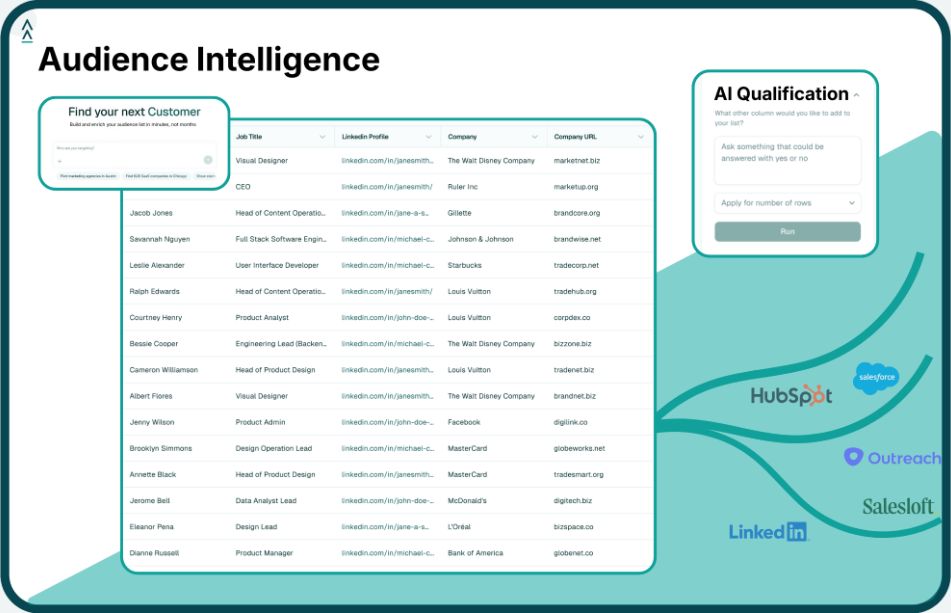
Platforms like Landbase's natural language audience discovery platform enable marketers to harness these signals through simple prompts, generating AI-qualified exports instantly without complex workflows or login requirements.
Infinity signals represent the evolution from static contact databases to dynamic, real-time intelligence about prospect buying readiness. These signals encompass numerous unique data points including firmographic changes, technographic adoptions, hiring patterns, funding events, and behavioral triggers that indicate active evaluation of solutions.
Traditional list building relies on basic filters like company size, industry, and job title—static attributes that don't reveal whether a prospect is actually in market. In contrast, infinity signals capture the digital body language of organizations as they research solutions, expand teams, adopt new technologies, or secure funding.
Industry experts note that intent signals transform list building from a numbers game into a precision targeting exercise. This shift enables marketers to focus resources on prospects demonstrating genuine buying intent rather than casting wide nets with generic outreach.
Static databases become outdated quickly—contacts change roles, companies shift strategies, and technology stacks evolve. B2B buyers typically consume 13+ pieces of content before making a purchase decision, creating multiple signal opportunities that static lists miss entirely.
Signal-based targeting addresses this limitation by continuously monitoring real-time indicators of buying intent. When multiple signals converge—such as a company posting jobs for relevant roles while simultaneously researching competitor solutions—the probability of successful engagement increases dramatically.
Organizations implementing signal-based approaches report more qualified opportunities entering their pipeline, demonstrating the tangible impact of this methodology on sales outcomes.
Effective infinity signals fall into several categories that work together to create comprehensive prospect profiles:
Firmographic Signals: Company growth indicators like recent funding rounds, rapid employee growth, geographic expansion, and executive appointments signal organizational readiness for new investments.
Technographic Signals: Technology stack changes, such as adopting marketing automation platforms or upgrading CRM systems, indicate active evaluation of complementary solutions.
Behavioral Triggers: Website visitor intelligence, content engagement patterns, and competitive displacement signals reveal specific pain points and research interests.
Market Events: Conference attendance, M&A activity, and regulatory changes create timely opportunities for relevant outreach.
The most effective list building strategies combine multiple signal types rather than relying on single data points. Multiple weak signals combined create a strong indicator of buying intent that single data points cannot.
High-intent buying signals provide clear indicators that prospects are actively evaluating solutions in your category. These signals fall into three main categories that work together to create comprehensive prospect qualification.
Growth signals indicate organizational readiness for new investments and include:
These signals correlate strongly with buying readiness because they represent concrete organizational changes that create immediate needs for supporting solutions.
Intent signals reveal specific research behaviors and technology evaluation patterns:
Companies leveraging multiple intent signals see improved email response rates compared to generic outreach, demonstrating the power of behavior-based targeting.
Engagement signals capture real-time prospect interactions with your brand and content:
Responding to inbound leads rapidly is critical; research shows contacting within 5 minutes yields dramatically higher contact and qualification odds.
Natural language targeting has democratized advanced list building by eliminating complex filter configurations and technical barriers. Instead of navigating dropdown menus and boolean logic, marketers can simply describe their ideal customer in plain English.
This approach leverages agentic AI models trained on billions of GTM data points to interpret intent, recognize ICP patterns, and qualify prospects using comprehensive signal analysis. The result is AI-qualified lists generated in seconds rather than hours or days.
Effective prompts combine specific criteria with contextual signals to generate highly qualified lists:
Example prompt: "CFOs at enterprise SaaS companies (1000+ employees) that raised funding in the last 30 days" generates a highly specific, qualified list.
AI qualification evaluates prospects using comprehensive signals to ensure audience fit and timing, while manual approaches rely on limited, often outdated criteria. The AI considers factors like:
This comprehensive evaluation process ensures that generated lists contain only prospects demonstrating genuine buying intent, reducing wasted outreach and improving conversion rates.
Modern platforms enable instant export of AI-qualified lists with verified contact information ready for immediate activation:
This frictionless activation process enables teams to move from audience discovery to outreach execution in minutes rather than days.
Effective signal-based list building requires seamless integration with existing email marketing and sales tools to enable immediate activation and campaign execution.
Modern platforms offer direct integrations with popular email clients and sales tools:
These native integrations eliminate manual data handling and reduce errors in contact information.
Signal-qualified lists integrate effectively with existing marketing technology stacks:
The key is ensuring that signal data flows seamlessly between systems to maintain data integrity and enable closed-loop reporting.
Signal-qualified lists enable sophisticated marketing automation workflows:
These automated workflows ensure that signal-qualified prospects receive timely, relevant outreach that matches their current research phase and buying intent.
Access to comprehensive contact databases with real-time signal intelligence enables sophisticated lead generation strategies that were previously only available to large enterprises with dedicated data teams.
Large databases provide complete market coverage for thorough TAM analysis:
This scale ensures that signal-based searches return comprehensive results rather than limited sample sizes.
Multi-source contact enrichment delivers complete prospect profiles essential for effective outreach:
Complete profiles increase outreach effectiveness by enabling personalized, contextually relevant messaging that resonates with prospects' specific situations.
Advanced validation processes maintain data accuracy and reliability:
High-quality data directly impacts campaign performance, with accurate contact information being essential for deliverability and engagement.
Creating targeted email lists in popular email clients requires proper formatting and organization to ensure deliverability and compliance with platform policies.
Gmail provides built-in tools for contact management and list creation:
Proper list hygiene includes removing bounced addresses, honoring unsubscribe requests, and maintaining engagement metrics to preserve sender reputation.
Outlook supports sophisticated contact management for targeted email campaigns:
Outlook's integration capabilities enable seamless campaign execution with signal-qualified lists.
Effective email client list management requires attention to technical and compliance details:
These practices ensure that signal-qualified lists maintain high deliverability and engagement rates when used in email clients.
Marketing agencies have embraced signal-driven list building to improve client outcomes and operational efficiency. The approach enables agencies to deliver higher-quality leads while reducing manual research time.
Agencies benefit from signal-based approaches in several key ways:
Agencies implementing signal-based approaches report significant improvements in campaign performance and client satisfaction.
AI qualification enables efficient management of diverse client requirements:
This capability allows agencies to serve multiple clients with varying ICPs without requiring extensive manual configuration for each account.
Real-world agency results demonstrate the effectiveness of signal-driven approaches:
These results validate the approach's effectiveness across different industries and campaign types.
Real estate professionals can leverage location-specific signals and growth indicators to build highly targeted prospect lists for specific markets and property types.
Location-based signal targeting enables precise geographic marketing:
These location-specific signals combine geographic constraints with business classification for precise targeting.
Growth signals enhance geographic targeting by identifying businesses actively expanding:
This combination ensures that outreach targets businesses showing both geographic relevance and growth momentum.
Practical real estate list building examples include:
These prompts generate highly qualified lists specific to real estate industry needs and market conditions.
Signal-based segmentation represents a fundamental shift in email marketing strategy, moving from demographic-based grouping to behavior-driven audience classification.
Effective signal-based segmentation follows these core principles:
These principles ensure that segments contain only prospects demonstrating genuine buying intent.
Industry-specific campaign examples demonstrate practical applications (example only; counts vary by filters and time):
These examples show how specific signal combinations create highly qualified target audiences.
Signal-based campaigns require specific performance metrics:
These metrics enable continuous optimization of signal-based segmentation strategies.
Landbase delivers a focused, frictionless audience building experience powered by GTM-2 Omni agentic AI and real-time signal intelligence. Unlike complex GTM suites requiring extensive setup and training, Landbase enables instant audience generation through simple natural language prompts.
The platform's core value proposition—type a prompt → get an AI-qualified export—eliminates technical barriers while delivering superior list quality through comprehensive signal analysis. Users can build and export AI-qualified contacts instantly without login requirements or complex configurations.
Landbase's Vibe interface provides immediate access to advanced audience building capabilities:
This frictionless experience enables teams to move from idea to qualified list in seconds rather than days.
Landbase's dynamic signal layer combines comprehensive data points for comprehensive prospect qualification:
This comprehensive signal intelligence ensures that generated lists contain only prospects demonstrating genuine buying intent.
Landbase customers consistently achieve measurable business outcomes:
These results demonstrate the platform's effectiveness across different industries, company sizes, and use cases.
Infinity signals are dynamic, real-time indicators of buying intent that capture prospects' digital body language across multiple channels. Unlike traditional data filters that rely on static attributes like company size and industry, infinity signals track behavioral patterns, firmographic changes, and technographic adoptions that indicate active evaluation of solutions. This approach transforms list building from volume-focused cold outreach to precision targeting of high-intent prospects. The dynamic nature of infinity signals ensures lists remain current and relevant, capturing prospects at moments of genuine buying interest.
Some platforms offer free, no-login access that accept natural language prompts to generate AI-qualified audiences instantly. Simply describe your ideal customer in plain English—combining firmographic constraints, behavioral triggers, and timing elements—and the AI interprets your intent to build and qualify prospects using comprehensive signal analysis. These platforms typically offer instant exports of verified contacts ready for immediate activation in your existing tools. The process eliminates complex filter configurations and technical barriers, enabling teams to move from idea to qualified list in seconds.
The most effective buying signals for B2B email list qualification include recent funding rounds, technology stack changes, hiring patterns for relevant roles, website visitor intelligence showing pricing page visits, and content engagement indicating solution research. Companies leveraging multiple intent signals see improved email response rates compared to generic outreach. Lists built with intent signals have lower unsubscribe rates because prospects receive more relevant communications. The approach can reduce customer acquisition costs by focusing resources on high-probability prospects demonstrating concrete organizational changes that create immediate needs.
Modern signal-based platforms offer CSV exports for seamless integration with Gmail, Outlook, and LinkedIn for immediate activation. These exports enable proper formatting for email client import, while API connectivity supports custom workflow automation and CRM synchronization for comprehensive pipeline management. The key is ensuring that signal data flows seamlessly between systems to maintain data integrity and enable closed-loop reporting. Most platforms support integration with popular CRMs and sales engagement tools, though specific integrations vary by platform.
Intent signals capture real-time behavioral indicators of active solution research, such as website visits, content downloads, and search queries, while firmographic data includes static company attributes like size, industry, and location. The most effective lead generation strategies combine both signal types—using firmographics to define the target universe and intent signals to identify prospects actively in market. Organizations that master this combination gain sustainable competitive advantages in increasingly crowded markets. Signal-based approaches transform list building from a numbers game into a precision targeting exercise focused on quality over quantity.
Tool and strategies modern teams need to help their companies grow.