.png)
.png)

Daniel Saks
Chief Executive Officer


The mobility technology sector demonstrated unprecedented investor confidence in 2024, with companies transforming how people and goods move through autonomous robotaxis operating without safety drivers to drone delivery networks spanning continents. These innovators are reshaping transportation across every dimension. For B2B companies targeting this high-growth sector, identifying and engaging with the right decision-makers requires precision audience intelligence. Platforms like Landbase enable go-to-market teams to find these fast-growing mobility companies using natural-language prompts and AI-qualified signals, ensuring outreach reaches the exact prospects driving industry transformation.
Waymo operates fully autonomous robotaxi services without safety drivers in San Francisco, Phoenix, and Los Angeles through its Waymo One service. The company also develops autonomous technology for commercial trucking under Waymo Via, serving as the commercialization arm of Alphabet's self-driving research.
Waymo operates the only commercial robotaxi service at scale without safety drivers, proving autonomous technology is ready for real-world deployment. The company commands the highest valuation in mobility tech and has raised over $5 billion in total external funding, demonstrating the strongest investor confidence in autonomy. Their commercial deployment sets the benchmark for the entire autonomous driving industry, with Alphabet's backing providing unmatched resources for scaling operations to additional US cities.
Applied Intuition provides B2B simulation software that enables automakers and autonomous vehicle developers to test and validate self-driving systems safely in virtual environments. The platform serves as critical infrastructure for the entire AV ecosystem.
Applied Intuition represents the critical "picks and shovels" opportunity in autonomous driving, providing essential infrastructure that accelerates development across the entire industry rather than competing in the crowded robotaxi market. The platform is used by the world's leading automakers as their "engineer's secret weapon," enabling them to test and validate autonomous systems safely. The company's B2B model avoids direct competition with OEMs while enabling their AV development at scale.
Bolt operates Europe's largest independent mobility super-app, offering ride-hailing across 500+ cities in 45+ countries, plus food delivery and e-scooter sharing in a single platform. The company recently launched Bolt Business for corporate mobility subscriptions.
Bolt demonstrates how regional champions can build massive scale by understanding local market dynamics better than global giants, achieving an $11 billion valuation as Uber's primary European challenger. The company has raised $2.3 billion from prestigious investors including the European Investment Bank and Sequoia Capital. Their super-app model integrating multiple mobility services creates stronger user retention and higher lifetime value compared to single-service competitors.
Bolt secured debt financing from the European Investment Bank, Citi, Sequoia Capital, Deutsche Bank, and International Finance Corporation. In 2025, the company launched corporate mobility subscriptions and expanded e-scooter operations into 20 new European cities.
Wayve develops deep-learning autonomy technology that teaches cars to drive anywhere without relying on pre-programmed maps or routes. Their AI-first approach focuses on creating vehicles that can learn and adapt to any driving environment.
Wayve's AI-based learning approach could solve the fundamental limitation of current autonomous systems that only work in pre-mapped areas, enabling truly global autonomous deployment without massive mapping infrastructure. The company raised $1.05 billion in Series C funding backed by Microsoft, SoftBank, and NVIDIA, validating their AI-first methodology. Their London-based team brings a European perspective to autonomous driving innovation.
Didi Chuxing operates China's largest ride-hailing platform with approximately $27.1 billion in revenue for 2023. The company is expanding into autonomous ride-hailing in Beijing and international markets like Mexico and Brazil.
Didi dominates the world's largest mobility market (China) with the highest growth rate among major ride-hailing platforms at 43.8% CAGR. The company's AI-powered fleet optimization reduces driver idle time by 18%, demonstrating how data-rich platforms can continuously improve operational efficiency. Their combination of massive scale and AI-driven efficiency sets the standard for platform optimization globally.
Didi launched a next-generation autonomous ride-hailing service in Beijing in 2025, expanding internationally to Mexico and Brazil while investing heavily in AI-powered fleet optimization.
Uber operates the world's largest ride-hailing platform across 70+ countries with $37 billion in 2024 revenue. The company is aggressively transitioning to electric vehicles and partnering with autonomous providers like Waymo.
Uber's transformation from basic ride-hailing to sustainable mobility platform shows how established leaders can reinvent themselves, achieving 39.5% CAGR despite massive scale. The company is working towards a zero-emissions fleet with aggressive EV adoption initiatives and autonomous partnerships with Waymo in major US cities. Their platform evolution positions them to lead the next phase of mobility transformation with a target of 100% electric fleet by 2030.
Nuro develops small, driverless electric pods purpose-built for last-mile delivery of groceries and retail goods. The company partners with major retailers like Kroger and Walmart to provide autonomous delivery services.
Nuro demonstrates that autonomous delivery of goods may be more immediately viable than passenger robotaxis, achieving a $6 billion valuation with purpose-built autonomous delivery vehicles rather than adapted passenger cars. The company has raised $2.3 billion in total funding, with strategic partnerships with America's largest retailers validating the commercial model. Their success shows a clear path to viability in the massive last-mile delivery market.
Zipline operates autonomous electric drones that deliver medical supplies and e-commerce packages across Africa, the US, and Asia. The company began with vaccine delivery in Rwanda and has expanded to commercial e-commerce.
Zipline pioneered commercial drone delivery at scale, achieving a $5.2 billion valuation by being the first company to achieve commercial drone delivery operations (Rwanda, 2016). Their multi-continental operations spanning humanitarian and commercial use cases demonstrate how appropriate technology can solve real-world delivery challenges in areas with poor infrastructure. The company proves that autonomous aerial logistics can serve both profitable commercial and profoundly purposeful humanitarian markets simultaneously.
Grab operates Southeast Asia's dominant super-app integrating ride-hailing, food delivery, and fintech services. The company serves as the primary mobility and financial services platform across the region.
Grab's super-app model represents the future of platform economics in emerging markets, achieving 41.7% CAGR in the high-growth Southeast Asian market. The company posted $2.2 billion in 2024 revenue with a 25% year-on-year increase in mobility revenue for 2025. By combining mobility, delivery, and fintech, they create stickier user relationships and higher lifetime value than single-service competitors.
Rapido operates India's largest two-wheeler mobility network, turning ordinary motorbikes into efficient, low-cost urban taxis and delivery vehicles. The platform leverages India's most common form of transport to provide affordable urban mobility.
Rapido exemplifies appropriate technology by using existing infrastructure (motorbikes) to solve local mobility challenges, achieving a $2.3 billion valuation from hyperlocal Indian market focus. The company has raised $825.4 million with its ultra-low cost model working where car-based ride-hailing struggles with traffic and expense. Their success shows how understanding regional dynamics can create massive value where global models fail.
The 15 companies profiled represent the vanguard of mobility transformation, collectively commanding billions in valuation and serving millions of customers worldwide. For B2B companies seeking to engage with these innovators, traditional prospecting methods fall short. These fast-growing companies operate at speed, with constantly evolving teams, technology stacks, and strategic priorities.
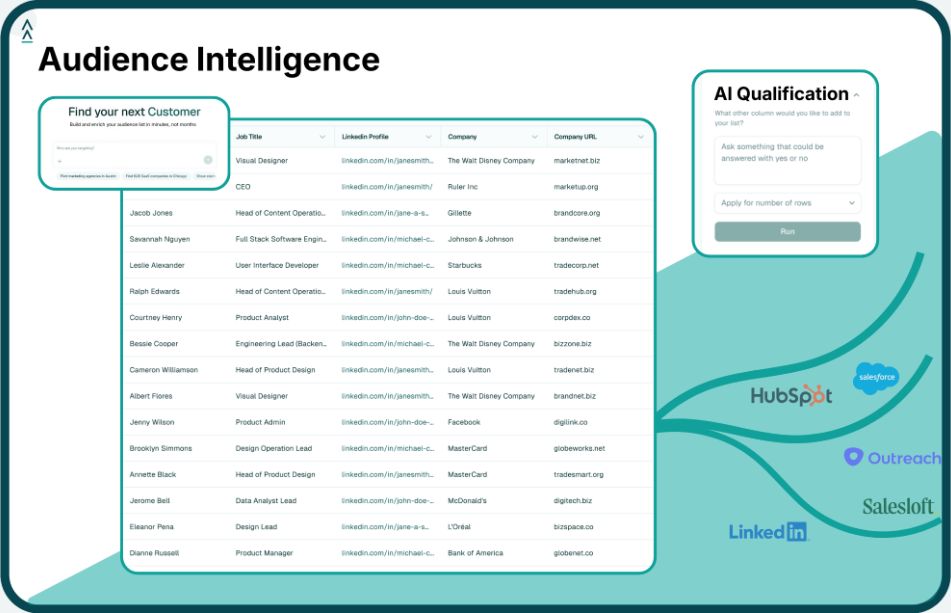
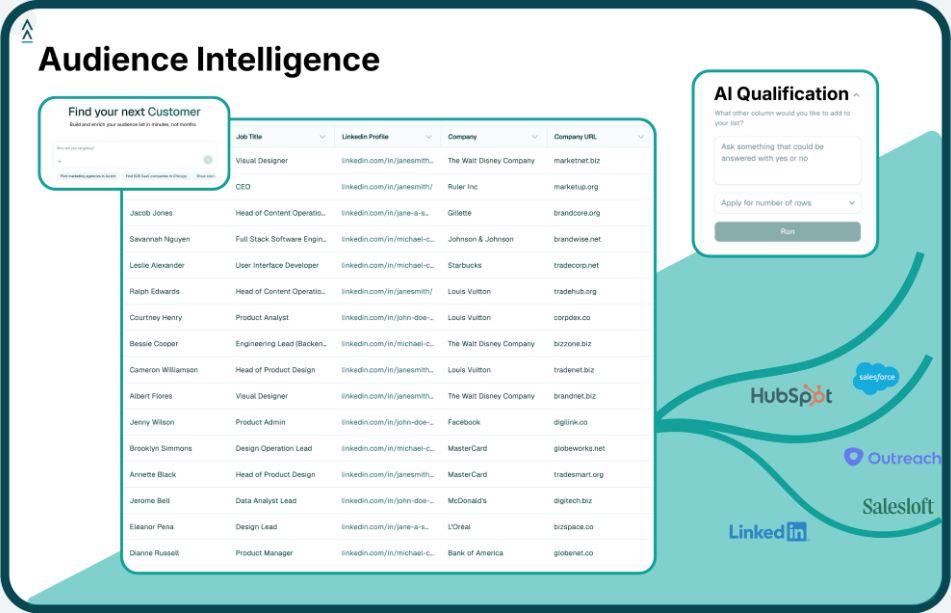
This is where AI-powered audience discovery becomes essential. Instead of manually researching each company's leadership changes, funding announcements, or technology deployments, go-to-market teams can use natural-language prompts to identify the exact decision-makers they need to reach. For example, a prompt like "C-suite executives at autonomous vehicle companies that raised Series C funding in 2024" instantly surfaces qualified prospects from Waymo, Nuro, and other relevant companies.
Landbase's GTM-2 Omni model analyzes 1,500+ unique signals including funding rounds, hiring activity, technology stack changes, and website behavior to deliver AI-qualified audiences. This approach ensures that outreach reaches prospects when they're most receptive – whether they're scaling teams after new funding, evaluating new technologies, or expanding into new markets.
For companies targeting the mobility sector, this precision is critical. The ability to identify and engage with the right prospects at the right time can mean the difference between winning a strategic partnership with a fast-growing mobility innovator or missing the opportunity entirely.
Fastest-growing mobility tech companies demonstrate strong performance across multiple dimensions including significant funding rounds (typically $100M+), high valuation or revenue growth (30%+ CAGR), successful market expansion, and clear technological or business model differentiation. The companies featured have raised substantial capital, achieved unicorn status ($1B+ valuation), or shown exceptional revenue growth in competitive markets. These metrics collectively indicate companies that are scaling rapidly and transforming their respective market segments.
Funding rounds provide the capital necessary for mobility startups to scale operations, develop technology, and expand geographically. Major rounds enable companies to accelerate autonomous deployment, expand into new markets, and invest in critical infrastructure. Companies like Waymo with over $5 billion in total funding can expand to additional US cities, while companies like Rapido with $825.4 million fund market expansion in high-growth regions like India. Strategic investors also bring valuable partnerships and expertise beyond capital.
AI is fundamental to modern mobility solutions, powering autonomous driving systems at companies like Waymo and Wayve, optimizing fleet efficiency at Didi Chuxing with 18% reduction in driver idle time, and enabling predictive maintenance and route optimization across the sector. AI-first approaches are becoming the standard for next-generation mobility platforms, enabling vehicles to learn and adapt to any driving environment without pre-mapped routes. The technology also powers simulation platforms like Applied Intuition that accelerate development for the entire industry.
Key challenges include regulatory approval for autonomous systems, infrastructure requirements for EV adoption, achieving profitability in competitive ride-hailing markets, and scaling autonomous technology beyond pre-mapped areas. Companies that successfully navigate these challenges demonstrate sustainable growth paths, such as Waymo with commercial robotaxi operations or Ola Electric with vertical integration addressing all barriers to EV adoption. Additional challenges include building consumer trust in autonomous systems and developing sustainable business models.
Companies can use natural-language targeting to identify ideal customers in the mobility sector by describing their target profile in plain English, leveraging real-time signals like funding rounds, hiring activity, technology stack changes, and geographic expansion. This approach surfaces prospects when they're most receptive to new solutions, ensuring go-to-market efforts are focused and effective. Platforms that analyze 1,500+ unique signals can identify decision-makers at fast-growing mobility companies operating at speed with constantly evolving priorities, making precision targeting essential for successful engagement.
Tool and strategies modern teams need to help their companies grow.