.png)
.png)

Daniel Saks
Chief Executive Officer


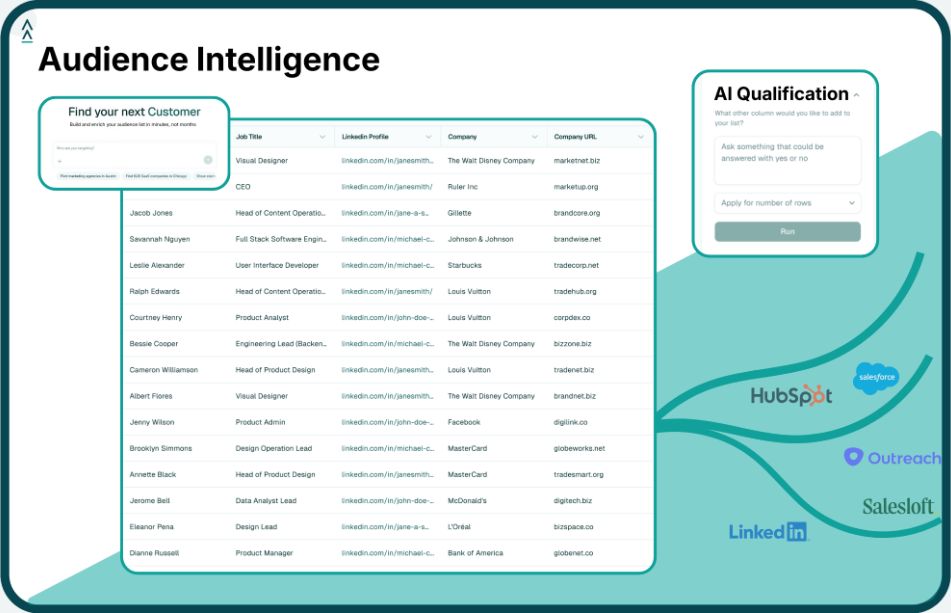
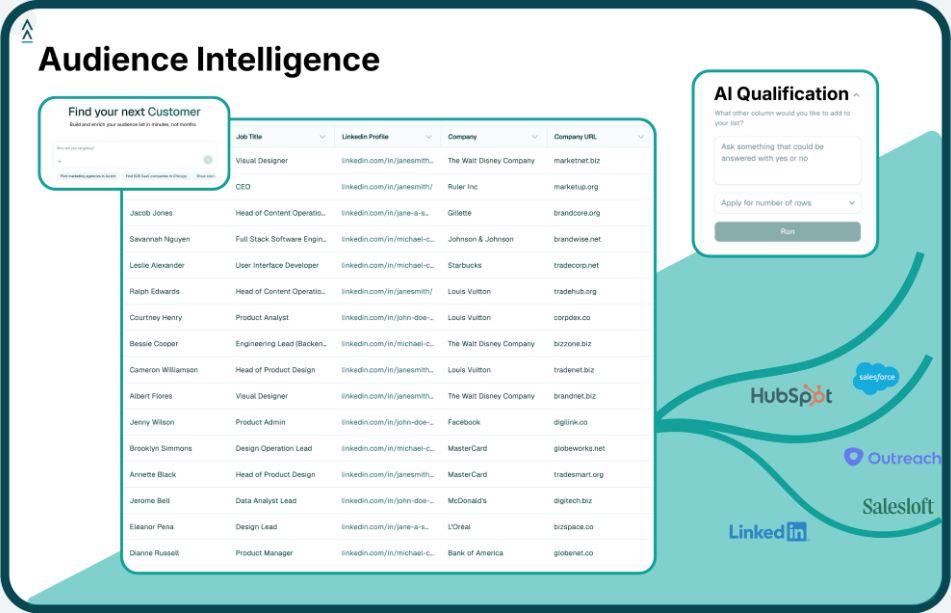
The collaboration technology industry has reached an inflection point, with the market valued at $69.2 billion in 2024 and projected to grow to $85.4 billion between 2025 and 2029. This explosive growth is fueled by the widespread adoption of agentic AI, which is transforming how teams communicate, collaborate, and engage with customers. From AI-powered coding assistants to autonomous customer service agents, these innovations are reshaping go-to-market strategies across industries. For sales and marketing teams looking to leverage these advances, platforms like Landbase's agentic AI offer a complementary approach by enabling natural-language audience discovery and qualification, helping teams identify and engage the right prospects at the right time.
Anysphere (Cursor) has developed an AI-powered code editor that transforms how software development teams collaborate. The platform provides intelligent code completion, real-time suggestions, code explanations, and refactoring assistance across 70+ programming languages. It functions as a complete IDE (Integrated Development Environment) that understands project context and enables developers to write code faster through AI-native workflows.
Notion creates an all-in-one workspace combining notes, tasks, wikis, and databases into a single flexible platform. The block-based editor allows teams and individuals to build custom systems for project management, knowledge sharing, and collaboration. Recently launched Notion 3.0 introduces Notion Agents—AI assistants that automate repetitive tasks, organize workspaces, and collaborate alongside human teams.
Zoom provides AI-powered video conferencing, phone, chat, and contact center solutions unified in Zoom Workplace. In 2025, Zoom unveiled agentic AI Companion 3.0 with 45+ new skills across Meetings, Team Chat, Docs, Phone, Whiteboard, and Contact Center. The platform introduced 16 third-party app integrations via Custom AI Companion add-on and self-service capabilities for partners.
RingCentral delivers unified communications suites — voice, messaging, meetings, contact center — with AI‑powered capabilities like RingEX, RingCX, and AI Receptionist.
Microsoft Teams is the world's largest collaboration platform, integrating chat, video, voice, file storage, and apps within Microsoft 365 ecosystem. In 2025, Teams updated its AI library with agentic memory, Agent2Agent Protocol (A2A), Model Context Protocol (MCP), and Meeting AI Insights API. Teams mobile enhanced agent experience for iOS/Android, allowing AI assistance without leaving workflows.
Otter.ai builds an AI-powered meeting assistant that automatically transcribes conversations, generates detailed notes, and identifies action items across all discussions. The platform offers specialized AI Notetakers for Sales, Education, Media, SDR, and Recruiting use cases. Features include real-time transcription, automated summaries, AI Chat for extracting insights, and voice-activated queries via "Hey Otter."
Talkdesk provides AI-powered contact center solutions with a focus on agentic AI automation. In spring 2025, Talkdesk launched AI Agents for Voice, enabling lifelike conversations where virtual agents independently handle customer queries by analyzing situations and making informed decisions. The Customer Experience Automation (CXA) platform replaces fragmented workflows with unified intelligent autonomous AI agents.
Mural provides a collaborative intelligence platform serving as a digital whiteboard for teams to think and work visually. Used for interactive workshops, project planning, and brainstorming, Mural enables better alignment and innovation for distributed organizations. In October 2024, Mural launched Innovation Workspace, an AI-powered platform helping teams move from brainstorming to execution with canvas-first approach.
TigerConnect builds a clinical collaboration platform to streamline communication and workflows for healthcare providers. The secure, HIPAA-compliant software connects care teams and integrates with existing clinical systems, improving patient care coordination. The platform enables secure messaging, care team coordination, and clinical workflow automation.
Five9 offers a cloud-based contact center platform with AI capabilities (Genius AI) for agent assistance, intelligent routing, and automated experience enhancements.
The companies profiled in this list demonstrate that collaboration technology has evolved far beyond simple communication tools. Today's platforms are intelligent, autonomous systems that can understand context, make decisions, and take action independently. This shift has profound implications for go-to-market strategies.
As these collaboration platforms generate rich signals about prospect intent, engagement, and buying readiness, sales and marketing teams need equally sophisticated tools to identify and prioritize the right accounts. This is where natural-language audience discovery platforms like Landbase become essential. By leveraging 1,500+ unique signals across firmographic, technographic, intent, hiring, and funding data, Landbase enables teams to build targeted lists in seconds using plain-English prompts.
For example, a sales team could use Landbase to identify "Sales VPs at mid-market consulting firms using RingCentral that are scaling outbound teams" or "Marketing Directors at healthcare technology firms that recently visited competitor pricing pages." This level of precision, combined with the collaboration intelligence from platforms like those profiled above, creates a powerful go-to-market engine that can identify, engage, and convert high-value prospects at scale.
This list highlights the 10 fastest-growing collaboration technology companies based on:
All companies included have demonstrated significant growth or innovation in 2024-2025, with verified funding rounds, product launches, or market metrics from the research input sources.
Fastest growing collaboration tech companies in 2025 are defined by explosive user adoption, significant funding rounds, and the successful integration of agentic AI capabilities. Companies like Anysphere (Cursor) achieved +1,000% YoY growth, while RingCentral deployed AI Receptionists to 2,000+ organizations. The shift from AI assistants to autonomous AI agents is the key differentiator separating leaders from laggards.
Modern collaboration tools enhance go-to-market strategies by providing rich signals about prospect intent and engagement. Platforms like Otter.ai generate meeting intelligence that saves 4+ hours weekly per user, while specialized tools like Wildix offer deep Salesforce integration for sales teams. These signals can be leveraged by natural-language targeting platforms to identify high-value prospects based on their collaboration patterns, technology stack, and engagement behaviors. The combination of collaboration intelligence and AI-powered prospecting creates more effective sales and marketing workflows.
AI has evolved from simple automation features to agentic capabilities that can reason, adapt, and take action independently. The collaboration software industry has shifted from AI assistants that respond to queries to AI agents that proactively manage workflows, customer interactions, and decision-making. This transformation is evident in platforms like Talkdesk's Customer Experience Automation and RingCentral's AI Receptionist, which can handle entire customer journeys without human intervention. AI is no longer a feature but the foundational infrastructure powering next-generation collaboration.
Vertical specialization has become increasingly important as generic collaboration tools struggle to address industry-specific workflows and compliance requirements. Companies like TigerConnect (healthcare) with $433.9 million funding and Wildix (sales teams) demonstrate that purpose-built solutions outperform horizontal platforms in specialized markets. This trend reflects the maturation of the collaboration market, where deep workflow integration and regulatory compliance trump broad feature sets. Industry-specific platforms deliver higher ROI by solving unique challenges that generic tools cannot address.
Yes, SMBs are often adopting collaboration technology faster than large enterprises due to simplified procurement and less legacy infrastructure. Additionally, freemium models from companies like Google (free Gemini AI) and Notion (100M+ users) make advanced collaboration technology accessible to organizations of all sizes. Cloud-based delivery and pay-as-you-grow pricing have democratized enterprise-grade collaboration tools for the SMB market.
Tool and strategies modern teams need to help their companies grow.