.png)
.png)

Daniel Saks
Chief Executive Officer


For InsurTech companies, lead generation isn't just about collecting contacts—it's about navigating complex regulatory environments, identifying the right stakeholders within intricate buying committees, and building trust in a risk-averse industry. Consistent pipeline development becomes mission-critical for sustainable growth. The challenge differs dramatically between established InsurTech firms targeting enterprise carriers and startups needing to prove product-market fit quickly.
Today's most effective B2B lead generation for InsurTech leverages advanced data signals, AI-powered qualification, and strategic targeting rather than volume-based approaches. AI-powered audience discovery platforms are transforming how companies identify prospects who are not just demographically aligned with their ideal customer profile, but actively showing buying intent through regulatory changes, technology stack upgrades, and expansion signals.
The science behind successful InsurTech lead generation has evolved significantly. Companies implementing Account-Based Marketing see 87% higher ROI than any other approach, while those using marketing automation experience a 451% increase in qualified leads. For InsurTech companies navigating heavily regulated markets, understanding these modern frameworks can mean the difference between predictable revenue growth and constant pipeline uncertainty.
B2B lead generation for InsurTech companies operates within a unique framework defined by regulatory complexity, longer sales cycles, and trust-based relationships. Unlike other B2B sectors, insurance technology sales must navigate compliance requirements, risk-averse buying behaviors, and multi-stakeholder decision-making processes.
The modern InsurTech buyer's journey involves multiple departments—underwriting, claims, compliance, IT, and finance—each with different concerns and evaluation criteria. IT focuses on security and integration capabilities, compliance officers evaluate regulatory alignment, underwriters assess risk management features, and finance teams scrutinize ROI metrics. This multi-threaded buying process demands coordinated outreach strategies that address diverse perspectives within target accounts.
77% of B2B buyers consider their purchases complex or difficult, highlighting the universal nature of these pain points in the insurance sector. The solution lies in moving beyond simple contact collection toward strategic audience building based on real-time buying signals and behavioral indicators specific to the insurance industry.
For enterprise InsurTech companies, the focus should be on quality over quantity—identifying accounts that match ideal customer profiles with precision. Startups, meanwhile, need speed and flexibility to test hypotheses quickly while conserving limited resources. Both require tools that can adapt to their specific go-to-market motions and scale with their growth.
The traditional approach of purchasing contact databases or running broad LinkedIn campaigns has given way to sophisticated, AI-powered platforms that combine vast data sets with intelligent qualification. Modern lead generation tools must integrate multiple data sources, including firmographic, technographic, intent, and behavioral signals, to identify prospects with genuine purchase intent.
Agentic AI represents the cutting edge of this evolution, moving beyond simple data aggregation to autonomous audience discovery and qualification. These systems can interpret natural-language prompts like "CFOs at insurance carriers that raised funding in the last 30 days" and instantly generate AI-qualified prospect lists ready for outreach.
The shift toward AI-driven platforms addresses a critical market need, with many companies preferring specialized expertise over building in-house capabilities. However, the most successful companies maintain control over their targeting strategy while leveraging external platforms for execution efficiency.
Free access to advanced lead generation capabilities has become increasingly important, especially for startups and growth-stage companies. Platforms offering no-login, instant audience generation allow teams to test targeting hypotheses quickly without lengthy procurement processes or significant upfront investment.
Traditional lead qualification based solely on company size and industry is insufficient for the complex InsurTech landscape. Modern AI-powered qualification systems evaluate both fit (does this prospect match our ideal customer profile?) and timing (are they actively showing buying intent?) using 1,500+ unique signals.
For InsurTech specifically, qualification must consider regulatory compliance requirements, existing technology stack, digital maturity levels, and specific insurance vertical focus. AI systems can identify companies that are actively researching insurance technology solutions, experiencing leadership changes, or expanding into new markets—all indicators of potential buying readiness.
Companies with well-defined Ideal Customer Profiles see 30% improvement in marketing ROI and are 67% more likely to exceed sales quotas. For InsurTech, this means creating ICPs that include specific insurance verticals, compliance requirements, existing platforms, and digital maturity levels.
AI qualification goes beyond demographic matching to evaluate real-time buying intent. AI systems can identify precise timing windows based on buying intent signals to maximize conversion probability.
The ability to rapidly build and activate qualified prospect lists is crucial for InsurTech companies operating in competitive markets. Agentic AI platforms enable teams to generate targeted audience lists instantly using natural-language prompts, eliminating the weeks of manual research traditionally required for complex targeting.
For InsurTech companies, this speed is particularly valuable when responding to market events like regulatory changes, new compliance requirements, or competitor announcements. The ability to quickly identify and reach prospects affected by these events provides a significant competitive advantage.
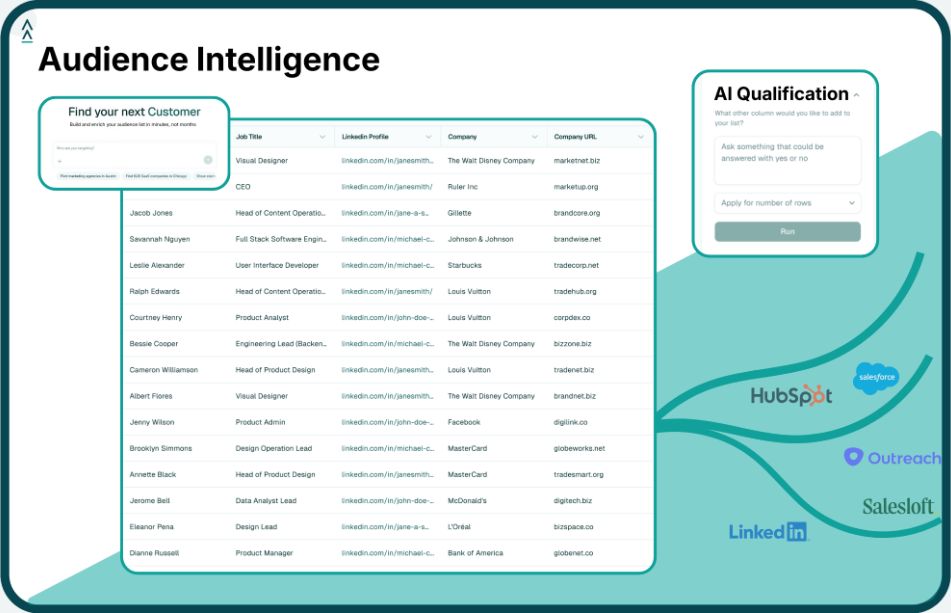
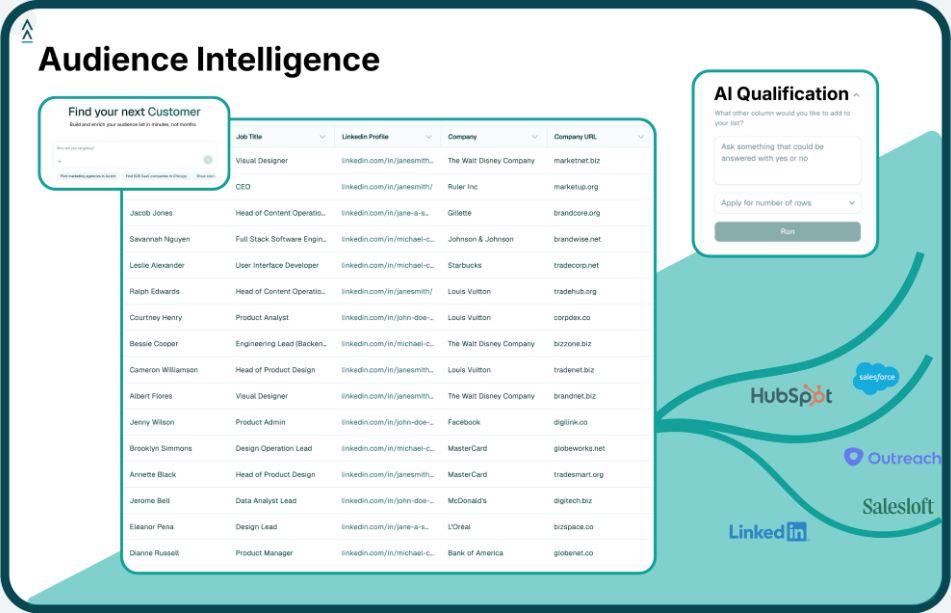
The VibeGTM Interface exemplifies this approach, allowing users to type a prompt and receive an AI-qualified export ready for activation in existing tools. This eliminates the technical barriers and time investment required for traditional filter-based audience building.
Multi-channel activation becomes essential for InsurTech outreach, with coordinated messaging across email, LinkedIn, and phone. However, personalization remains critical—generic mass outreach achieves less response rates, while personalized approaches leveraging behavioral and contextual signals see significantly higher response rates.
The most sophisticated B2B lead generation strategies for InsurTech leverage multiple data signals to identify prospects with genuine purchase intent. Beyond basic firmographic data like company size and industry, modern platforms track real-time indicators specific to the insurance sector.
These specialized signals enable much more precise targeting than traditional demographic approaches. For example, identifying "insurance carriers researching data governance solutions" provides a much higher probability of engagement than simply targeting "insurance carriers." The data governance research indicates active compliance concerns and potential buying intent.
The integration of these signals into AI-powered qualification systems enables unprecedented precision in audience targeting. Platforms with access to 1,500+ unique signals can evaluate both fit and timing, ensuring that outreach reaches the right prospects at the right time.
Real-time intent tracking becomes particularly valuable for InsurTech sales, where timing can be as important as fit. Identifying prospects who are actively researching solutions, visiting competitor websites, or engaging with relevant content allows for perfectly timed outreach that capitalizes on existing interest.
Successful InsurTech lead generation requires identifying and engaging the right stakeholders within complex buying committees. The insurance industry involves multiple decision-makers, each with different concerns and evaluation criteria.
For carriers, key stakeholders include Chief Risk Officers, Heads of Innovation, CTOs, and compliance officers. For brokers and MGAs, decision-makers might include owners, operations managers, and technology leaders. Each requires different messaging and value propositions tailored to their specific concerns.
Custom ABM campaigns targeting these specific roles with tailored messaging achieve significantly higher response rates than generic outreach. The key is understanding each stakeholder's unique pain points and how your solution addresses their specific concerns.
LinkedIn outreach ranks 9/10 in effectiveness with 2-4 week time-to-results, making it the primary channel for reaching insurance industry professionals. LinkedIn provides access to insurance executives, brokers, and enterprise decision-makers with precision targeting.
InsurTech startups operate under different constraints than enterprise companies, with limited resources, urgent need to prove product-market fit, and pressure to generate initial revenue quickly. Their lead generation strategies must emphasize speed, cost-effectiveness, and rapid iteration based on real-world feedback.
Founder-led sales often characterize the early stages of InsurTech startups, where the founding team personally handles outreach and relationship building. This approach allows for deep customer understanding and rapid product iteration based on direct feedback. However, founders need tools that enable efficient prospect identification without consuming excessive time on manual research.
The ability to generate qualified prospect lists instantly using natural-language prompts is particularly valuable for startups. Instead of spending weeks building complex filter combinations or purchasing expensive data licenses, founders can immediately test different targeting hypotheses and adjust based on response rates.
Rapid experimentation is the hallmark of successful startup lead generation. Teams should test different messaging, targeting criteria, and outreach channels quickly, measuring results and doubling down on what works while abandoning approaches that don't generate engagement.
Effective B2B lead generation requires clear metrics and continuous optimization based on performance data. The shift from simple MQL counts toward more sophisticated qualification frameworks demands equally sophisticated measurement approaches that track performance across the entire customer journey.
Key Performance Indicators (KPIs) should align with business objectives and revenue outcomes rather than just activity metrics. While MQL volume might indicate marketing activity, conversion rates, customer acquisition cost, and customer lifetime value provide more meaningful insights into lead generation effectiveness.
The complexity of modern buyer journeys—with prospects engaging across multiple touchpoints before purchase—makes attribution challenging but essential. Multi-touch attribution models that distribute credit across all interactions provide more accurate ROI measurement than last-touch models that only credit the final interaction.
Companies implementing marketing automation for lead nurturing experience a 451% increase in qualified leads, with nurtured leads making purchases 47% larger on average than non-nurtured leads. These metrics demonstrate the importance of consistent nurturing throughout lengthy InsurTech sales cycles.
When evaluating B2B lead generation partners or platforms, InsurTech companies should prioritize capabilities that align with modern buyer behavior and regulatory requirements. The days of simple contact databases are over—today's effective partners combine data accuracy with intelligent qualification and seamless integration.
Data quality remains the foundation of effective lead generation. Partners should maintain compliance with regulations like GDPR and SOC 2, ensuring that contact information is ethically sourced and regularly validated. The best platforms go beyond basic firmographic data to include real-time signals like hiring activity, funding rounds, and technology stack changes.
The rise of AI-powered platforms has raised the bar for what companies should expect from lead generation partners. Modern solutions should offer natural-language targeting, instant audience generation, and AI qualification that evaluates both fit and timing rather than just demographic alignment.
Agency partnerships can provide additional value for companies lacking internal expertise. Partners with deep domain knowledge can help refine ideal customer profiles, develop targeted messaging, and optimize outreach strategies based on industry-specific insights and best practices.
Landbase stands out in the crowded B2B lead generation landscape by combining agentic AI with instant, natural-language audience discovery specifically designed for InsurTech companies. The platform addresses the unique challenges faced by both enterprise companies and startups through its frictionless approach to finding qualified prospects.
The core innovation lies in GTM-2 Omni, Landbase's agentic AI model trained on 50M+ B2B campaigns and sales interactions. This allows users to simply type plain-English prompts like "Chief Risk Officers at insurance carriers researching data governance solutions" and instantly receive AI-qualified exports of up to 300M+ contacts ready for activation in existing tools.
Enterprise InsurTech companies benefit from Landbase's precision targeting capabilities, enabling ABM strategies that focus on high-value accounts showing real-time buying signals. Startups appreciate the speed and cost-effectiveness, with founder-led sales teams able to generate consistent pipeline without building complex in-house systems.
The platform's integration with existing tools like Gmail, Outlook, and LinkedIn ensures seamless workflow adoption, while the continuous learning from user feedback improves AI performance over time. For InsurTech companies navigating heavily regulated markets and complex buyer journeys, Landbase provides the precision, speed, and intelligence needed to find and qualify the right customers at the right time.
AI helps InsurTech companies by interpreting natural-language prompts to instantly generate and qualify audiences based on 1,500+ unique signals. This includes regulatory compliance needs, technology stack detection, intent signals, and market triggers specific to the insurance industry. AI systems can identify prospects who are not just demographically aligned with your ideal customer profile but actively showing buying intent through behaviors like researching data governance solutions or upgrading legacy systems. This reduces wasted outreach by 60-70% and ensures sales teams focus on high-intent prospects.
The most relevant signals for InsurTech include cybersecurity buyer signals (organizations researching data governance and compliance), technology stack detection (identifying legacy insurance platforms that need replacement), website visitor intelligence (engagement with pricing and compliance pages), and market event monitoring (funding rounds, regulatory changes, leadership appointments). Hiring patterns revealing new role creation in innovation or digital transformation departments are also critical indicators. These signals indicate both fit and timing, ensuring outreach reaches prospects when they're most receptive to insurance technology solutions.
InsurTech startups can implement effective strategies by leveraging free, no-login platforms that enable instant audience generation through natural-language prompts. Focus on rapid experimentation with different target markets and messaging, using founder-led sales in the early stages to build deep customer understanding. Concentrate on early adopter characteristics rather than trying to match enterprise companies' broad targeting approaches. Free tools that provide immediate access to qualified prospect lists allow startups to maintain consistent pipeline development while conserving limited resources, enabling them to test hypotheses quickly without significant financial commitment.
Traditional lead generation relies on basic demographic filters and manual research, often resulting in 60-70% wasted outreach on poor-fit prospects. AI-powered approaches use natural-language targeting to instantly generate audiences based on 1,500+ unique signals including intent data, compliance needs, and real-time market triggers. AI systems evaluate both fit and timing, ensuring prospects are not just demographically aligned but actively showing buying intent. This results in significantly higher conversion rates, with companies implementing AI-powered automation seeing a 451% increase in qualified leads.
Yes, Landbase is fully SOC II and GDPR compliant, ensuring data quality and regulatory adherence critical for the insurance sector. The platform maintains strict compliance with data privacy regulations while providing access to 300M+ verified contacts and 24M+ companies. This compliance ensures that InsurTech companies can confidently use Landbase's AI-powered lead generation capabilities without regulatory concerns. InsurTech firms can access the comprehensive data and advanced signals needed for effective targeting in the heavily regulated insurance industry while maintaining full compliance.
Tool and strategies modern teams need to help their companies grow.