.png)
.png)

Daniel Saks
Chief Executive Officer


The cybersecurity landscape has never been more critical or dynamic. With global cybercrime damages projected to hit $10.5 trillion annually and ransomware attacks surging by 126% in Q1 2025 compared to Q1 2024, organizations are investing heavily in advanced protection. The market responded with $4.2 billion in Q2 2025 funding, a 25% increase year-over-year, as investors backed companies using AI to fight AI-powered threats. From record-breaking acquisitions like Google's $32 billion purchase of Wiz to startups securing massive Series B rounds, these companies are reshaping how we protect digital assets. For go-to-market teams targeting the cybersecurity sector, platforms like Landbase enable precise audience discovery by identifying companies based on security stack, compliance needs, and risk profiles using natural-language prompts.
Palo Alto Networks provides a unified platform combining network security, cloud security, and security operations. Its comprehensive approach spans from traditional firewall protection to advanced cloud workload security and security operations center (SOC) capabilities. The company's Prisma Cloud and Cortex XDR platforms help enterprises secure their digital transformation initiatives across hybrid environments.
The company's unified platform approach eliminates security silos across network, cloud, and endpoints. Their aggressive acquisition strategy expands capabilities, most notably the $25 billion CyberArk acquisition. Prisma Browser surpassed 6 million enterprise seats in September 2025, showing massive adoption.
CrowdStrike delivers cloud-native endpoint security through its Falcon platform, using AI to analyze trillions of security events daily for real-time breach prevention. The platform has expanded beyond endpoints to include identity protection, cloud security, and threat intelligence. Its pioneering work in agentic AI enables autonomous security operations that can detect and respond to threats without human intervention.
The Falcon platform serves 29,000+ customers across 230 countries, including 50%+ of Fortune 1000 companies. CrowdStrike is leading the industry in agentic AI for autonomous threat response while pioneering cross-platform AI collaboration to defeat weaponized AI threats.
Wiz provides a cloud security platform that achieved unprecedented market validation through Google's $32 billion acquisition in March 2025, the largest cybersecurity deal in history. The platform addresses critical cloud and AI security needs for enterprises undergoing digital transformation. Wiz's technology identifies and remediates risks across cloud infrastructure, containers, and serverless environments.
The record-breaking $32 billion acquisition validates the strategic importance of cloud-native security. Wiz demonstrates a hypergrowth trajectory—founded in 2020, acquired for $32B by 2025—representing the premium that technology giants place on cloud security capabilities.
Quantinuum develops mathematical safeguards against quantum computing threats to current encryption standards like RSA and ECC. As quantum computers advance, they will inevitably break existing encryption, making post-quantum cryptography essential for long-term data protection.
Quantinuum provides the only mathematical safeguard against the inevitable collapse of current encryption under quantum computing. The company addresses a critical long-term security need that organizations must prepare for today, representing deep tech specialization that complements AI-driven security approaches.
Snyk provides a developer security platform that finds vulnerabilities in code, dependencies, containers, and infrastructure as code. The platform integrates directly into developer workflows, including IDEs and CI/CD pipelines, enabling shift-left security practices.
Snyk integrates security directly into developer workflows, eliminating security bottlenecks while serving 2,000+ customers including Google, Intuit, Salesforce, and MongoDB. The company won the 2025 Google Cloud Technology Partner of the Year for DevSecOps, and over 2 million developers use the product.
Abnormal Security provides cloud-based email security that protects against targeted attacks within Office 365 and G Suite environments. The platform detects email account compromises, blocks sophisticated phishing attempts, and provides automated incident response.
Abnormal Security addresses critical email security needs for organizations using cloud email platforms, showing explosive market adoption with 545% search growth over 5 years. The company achieved unicorn status with strong enterprise customer validation and cloud-native approach that aligns perfectly with modern email platforms.
Tines provides no-code automation that turns security analysts into automation builders through drag-and-drop workflows. The platform addresses the critical SOC analyst shortage by automating repetitive tasks and complex security workflows.
Tines saves 40+ hours weekly for overextended SOC teams, addressing the critical analyst shortage through automation rather than headcount. The no-code approach makes automation accessible to security teams without development resources.
Upwind Security provides runtime cloud security that detects abnormal behavior live rather than flagging static misconfigurations. This approach reduces false positives while elevating real threats through continuous monitoring of cloud workloads.
Runtime intelligence reduces false positives compared to static configuration analysis, addressing alert fatigue that plagues traditional cloud security tools. The company commands premium valuation in cloud security category with 21.7x average revenue multiples and secures cloud workloads in real-time rather than at deployment time.
Tailscale provides a mesh VPN that simplifies private network creation for remote teams using the WireGuard protocol. The platform offers extreme ease of use combined with strong encryption, making it perfect for the distributed work era.
Tailscale provides a perfect fit for remote work security requirements, built on WireGuard VPN protocol for modern, efficient encryption. The platform eliminates complexity of legacy VPN solutions through simple deployment, showing 99x+ search growth over 5 years.
Zama develops production-ready fully homomorphic encryption (FHE) that enables AI models to compute on encrypted data without decryption. This breakthrough technology solves the fundamental privacy problem for AI/ML applications by allowing computation on sensitive data while maintaining confidentiality.
Zama enables AI models to compute securely on encrypted data, solving the fundamental privacy challenge for AI/ML applications. The company's production-ready FHE technology can be deployed by enterprises today and is becoming essential as privacy-preserving AI becomes a regulatory requirement.
The fastest-growing cybersecurity companies reveal a fundamental shift in the industry: AI is both the greatest threat and the most powerful solution. As Louis Columbus notes, "Institutional capital is consolidating around companies that make autonomous security practical, and agentic AI is at the core of that direction." This explains why 40% of our list focuses specifically on AI security—protecting AI systems, using AI for autonomous operations, or enabling privacy-preserving AI.
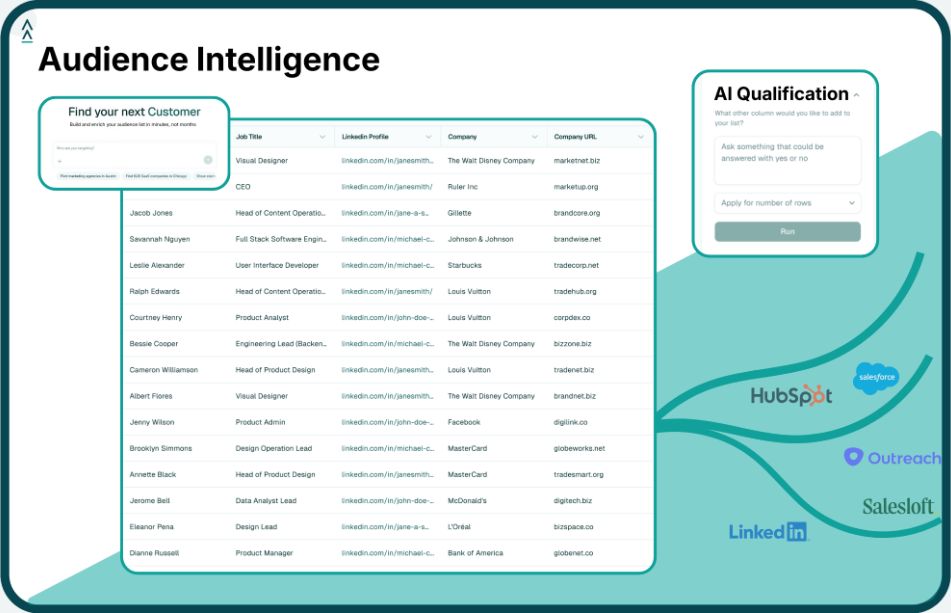
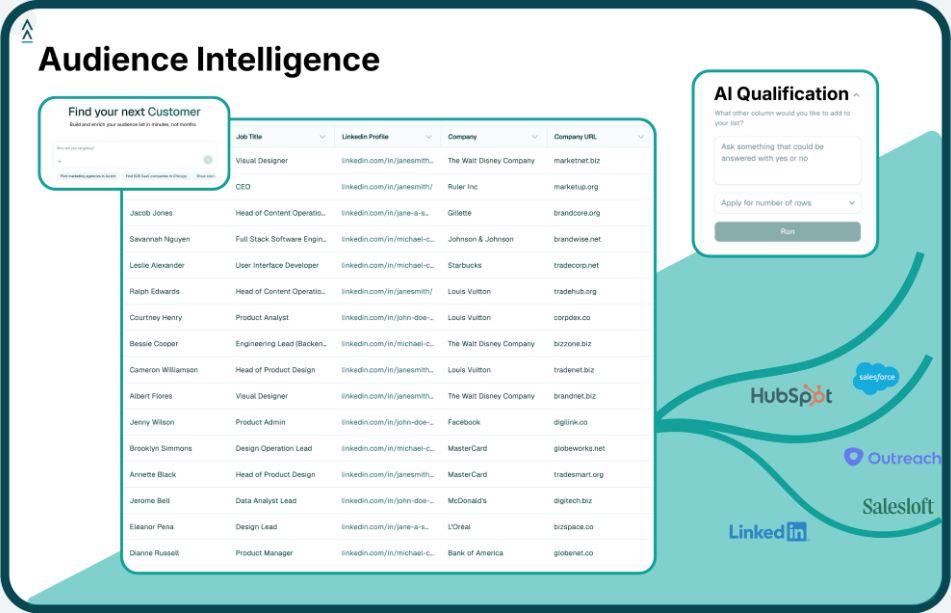
For organizations targeting the cybersecurity sector, understanding these dynamics is crucial. Decision-makers in cybersecurity companies have specific pain points around security stack complexity, compliance requirements, and risk profiles. Platforms like Landbase Intelligence can identify these companies and their leaders based on signals like recent funding rounds, technology stack changes, and hiring patterns.
This list highlights companies that demonstrate:
The cybersecurity industry presents unique targeting challenges for go-to-market teams. Security buyers require deep domain expertise and solutions that address their specific risk profiles, compliance needs, and technology stacks. Traditional database approaches often miss these nuanced requirements.
This is where agentic AI platforms excel. Instead of manually filtering through thousands of companies, sales and marketing teams can use natural language to describe their ideal cybersecurity customer: "CISOs at financial services companies researching cloud security solutions" or "Security leaders at healthcare organizations with recent funding rounds."
Landbase's platform combines 300M+ contacts with 1,500+ unique signals across firmographic, technographic, intent, hiring, and funding data. This enables precise targeting of cybersecurity decision-makers based on their actual behavior and needs, not just basic company information. For companies selling to the cybersecurity sector, this precision can mean the difference between generic outreach and highly relevant conversations that drive revenue.
Fastest-growing cybersecurity companies are defined by exceptional funding momentum in 2024-2025, strategic market importance, and clear differentiation in their technology approach. Our list prioritizes companies that raised significant capital (often $100M+ rounds), address critical security challenges like AI threats or quantum computing, and demonstrate market validation through customer adoption, strategic acquisitions, or explosive search growth like Tailscale's 99x+ increase. These metrics collectively indicate companies experiencing rapid growth and market acceptance beyond traditional measures.
Cybersecurity startups secure significant funding by demonstrating clear value propositions that address urgent market needs, particularly around AI security and autonomous operations. As Mark Sasson from Pinpoint Search Group notes, "Success in the second half of 2025 will require cybersecurity companies to demonstrate clear value propositions, strong go-to-market execution, and measurable outcomes rather than flashy features." The market rewards proven models—70% of top-funded startups have reached Series B maturity, showing they've validated both technology and go-to-market strategy. Investors prioritize companies solving critical problems with measurable customer outcomes.
New cybersecurity companies face several major challenges, including the escalating nature of weaponized AI attacks, the critical shortage of SOC analysts, and the need to demonstrate measurable outcomes rather than just features. As Louis Columbus observes, "manual security processes are now liabilities. Defending at human speed against AI-enabled attackers is untenable." This explains why automation-focused companies like Tines (saving 40+ hours weekly) and 7AI (autonomous SOC operations) are attracting massive investment. Companies must also navigate increasing competition and prove clear ROI to security buyers.
AI and automation are the most impactful technologies driving growth in cybersecurity, with six of our top 15 companies focusing specifically on AI security or agentic AI protection. Other critical technologies include post-quantum cryptography (Quantinuum), homomorphic encryption for privacy-preserving AI (Zama), cloud-native security (Upwind Security, Wiz), and developer-first security platforms (Snyk, Clover Security). The common thread is addressing emerging threats that traditional security approaches cannot handle, particularly those involving AI-powered attacks and cloud infrastructure vulnerabilities.
To identify emerging cybersecurity companies poised for success, look for those with Series B maturity (indicating market validation), significant recent funding ($100M+ rounds), and strategic investor backing from established cybersecurity leaders. Companies like Clover Security, backed by Wiz co-founders, demonstrate this pattern. Additionally, monitor search growth metrics—companies like Abnormal Security with 545% search growth show strong market adoption beyond just funding. Focus on companies addressing critical emerging threats with proven technology.
Growing cybersecurity companies have high demand for roles that bridge security expertise with AI/ML capabilities, cloud infrastructure knowledge, and developer experience. Security automation engineers, AI security specialists, cloud security architects, and DevSecOps professionals are particularly sought after. The SOC analyst shortage has created opportunities for professionals who can implement and manage automation platforms like Tines, which saves teams 40+ hours weekly. For go-to-market teams, identifying these hiring patterns through Landbase's signals can indicate companies actively scaling their security capabilities.
Tool and strategies modern teams need to help their companies grow.