.png)
.png)

Daniel Saks
Chief Executive Officer


The B2B payments landscape is undergoing a seismic transformation. While consumer payments went digital years ago, B2B payments are experiencing their own revolution—and it's happening faster than ever. With the market valued at $1.47 trillion in 2024 and forecast to reach $2.94 trillion by 2033, companies are rapidly abandoning checks for automated, AI-powered solutions. This shift has created unprecedented opportunities for innovative fintech companies that process transactions in seconds rather than days. From platforms processing $1.4 trillion annually to startups achieving 5.5× growth in just over a year, B2B payment technology has become the hottest sector in fintech. For go-to-market teams targeting this space, AI-powered platforms like Landbase's agentic search now enable teams to identify and engage with these high-growth companies using natural-language prompts like "B2B payment startups that raised Series C funding in 2024" to build targeted prospect lists instantly.
Stripe provides API-first payment infrastructure that enables businesses to accept payments, send payouts, and manage their operations globally. The platform offers a comprehensive suite including billing, fraud prevention, financial services, and embedded finance capabilities. With support for 135+ currencies, Stripe serves as the payment backbone for millions of businesses globally, including 50% of Fortune 100 companies.
Stripe achieved profitability while scaling to massive volumes, demonstrating sustainable fintech growth and setting industry standards. The company democratized payment infrastructure through developer-first API design, making enterprise-grade payment capabilities accessible to businesses of all sizes. As the most valuable private fintech globally with a $106.7 billion valuation, Stripe processes $1.4 trillion annually with 38% year-over-year growth, proving that rapid growth and profitability can coexist.
Ramp offers an all-in-one corporate spend management platform that combines corporate cards, expense management, vendor payments, and procurement in a single interface. The platform uses AI-driven cost savings optimization to help businesses reduce spending while providing real-time visibility and automated expense reporting.
Ramp demonstrates exceptional growth velocity with 5.5× payment volume growth from $10 billion to $55 billion in just over a year, representing one of the fastest expansion rates in B2B fintech history. The platform's AI-powered savings features helped customers collectively save $2 billion, proving that cost optimization can be a primary value driver. Rapid valuation increase from $2.43 billion to $22.5 billion demonstrates strong market confidence in the corporate spend management category.
Plaid provides secure, standardized access to financial data through APIs, enabling fintech applications to connect with bank accounts. The platform offers identity verification, account verification, and payment initiation capabilities with bank-level security through tokenization and encryption. Plaid serves as the critical infrastructure layer that connects financial applications to banking data.
Plaid powers 8,000+ fintech apps reaching half of all Americans, serving as the foundational infrastructure enabling the entire fintech ecosystem. The platform experienced explosive usage growth with 400% identity verification growth and a threefold payments usage increase, demonstrating expanding product-market fit. By providing reliable data connectivity, Plaid enables innovation across lending, investing, payments, and banking applications.
Brex provides corporate spend management solutions focused on corporate cards with no personal guarantee requirements, expense management, and bill pay capabilities. The platform is designed specifically for startups and enterprises, offering rewards programs and travel management integration tailored to business needs.
Brex pioneered startup-focused corporate cards with no personal guarantee requirements, removing a major barrier for founders and CFOs. The company's high valuation of $12.3 billion demonstrates market confidence despite intense competition in the corporate spend management space. As an established player with proven traction, Brex has become a standard solution for venture-backed startups and growth companies.
Wise (formerly TransferWise) provides transparent cross-border payment services with real mid-market exchange rates without markup. The platform offers multi-currency borderless accounts with debit cards and business payment solutions for international transfers, serving 16+ million customers globally.
Wise disrupted the money transfer industry with radical transparency and real exchange rates, eliminating hidden fees that cost consumers and businesses billions annually. The platform processes £100+ billion annually in cross-border transfers, demonstrating massive scale in a historically opaque market. Public company validation with $14.35 billion market valuation provides proof of sustainable business model in international payments.
Parafin provides embedded SMB financing through partnerships with major platforms like Amazon, DoorDash, Walmart, and TikTok Shop. The platform uses ML-based underwriting to deliver capital at the point of need without requiring separate applications, integrating directly into existing business workflows where SMBs already operate.
Parafin achieved 400% transaction growth since Series B, demonstrating explosive adoption of embedded financing models. By integrating at scale through partnerships with major platforms where SMBs already operate, Parafin eliminates friction in the capital access process. The company is funding $1 billion annually to SMBs through seamless integration, proving that embedded finance can achieve massive scale.
Navan (formerly TripActions) provides an all-in-one travel and expense management platform that combines travel booking, corporate cards, and expense management in a single interface. The platform offers automated expense reporting integrated with travel bookings and real-time spend visibility with policy enforcement.
Navan's fintech arm is growing 100% annually versus 40% overall revenue growth, demonstrating successful fintech integration beyond the core travel business. Travel bookings nearly doubled year-over-year, showing strong travel recovery combined with fintech innovation. The company's ability to combine travel management with corporate spend demonstrates the power of integrated solutions.
Highnote provides a modern card issuing platform for credit, debit, and prepaid programs through a unified API that combines issuing, acquiring, and credit programs. The platform enables businesses to launch card programs with real-time transaction tracking and controls, democratizing card issuing for non-bank businesses.
Highnote makes card programs accessible to non-bank businesses, democratizing card issuing capabilities that were previously limited to financial institutions. The platform achieved rapid scale with 1,000+ customers in just 4 years since founding, demonstrating strong product-market fit. Enterprise traction includes serving major financial institutions like BNY Mellon, proving the platform can handle sophisticated requirements.
Mercury provides business banking designed specifically for startups, offering business checking accounts, integrated financial tools, banking APIs, and working capital loans. The platform is built with founder needs in mind, providing modern banking infrastructure for digital-first companies.
Mercury has appeared six years consecutively on the Forbes Fintech 50 list, showing consistent recognition and growth in the competitive business banking market. The platform's startup-focused positioning addresses specific founder pain points that traditional banks overlook. With profitable operations and substantial funding, Mercury has established itself as the default banking partner for venture-backed startups.
Tipalti provides end-to-end accounts payable automation that handles everything from invoice processing to payment execution and reconciliation. The platform supports global payments to 200+ countries in 120 currencies with built-in tax compliance and W-8/W-9 collection capabilities.
Tipalti's high valuation of $8.3 billion demonstrates the substantial enterprise value in accounts payable automation. The platform's strong focus on international B2B payments and compliance automation addresses critical pain points for global businesses. Tipalti serves large companies with complex international vendor networks, providing end-to-end AP automation at scale.
Column provides B2B banking infrastructure as a developer platform, offering FDIC-insured banking-as-a-service infrastructure that is compliant by design for fintech builders. The platform was founded by William Hockey, co-founder of Plaid, and serves as modern banking infrastructure that fintechs can build on.
Column is led by William Hockey, Plaid co-founder, bringing deep fintech expertise and credibility to the banking infrastructure space. The platform appeared three consecutive years on the Forbes Fintech 50 list, showing consistent growth recognition. Column's developer-first approach and compliance-by-design architecture addresses key pain points fintech builders face when accessing banking infrastructure.
Balance provides modern B2B payments infrastructure that simplifies complex B2B payment workflows and modernizes trade finance processes. The platform helps enterprises streamline their payment operations by replacing outdated systems with digital-first solutions.
Balance was recognized in CNBC's 2025 Top Fintech Companies list for B2B payment innovation, validating its market position. The platform focuses on modernizing complex B2B payment workflows that traditional systems struggle to handle effectively. As an emerging player in B2B payment infrastructure, Balance addresses enterprise needs for streamlined payment operations.
This list highlights the fastest-growing B2B payments companies based on a rigorous evaluation methodology that prioritizes:
All data points are verified from 2024-2026 sources, ensuring currency and relevance. Companies were selected based on their demonstrated ability to scale rapidly while solving real B2B payment challenges.
For companies selling into the B2B payments space, identifying the right prospects at the right time is critical. Traditional approaches of manually filtering databases or using complex query builders are time-consuming and often miss key signals. This is where AI-powered go-to-market platforms become essential.
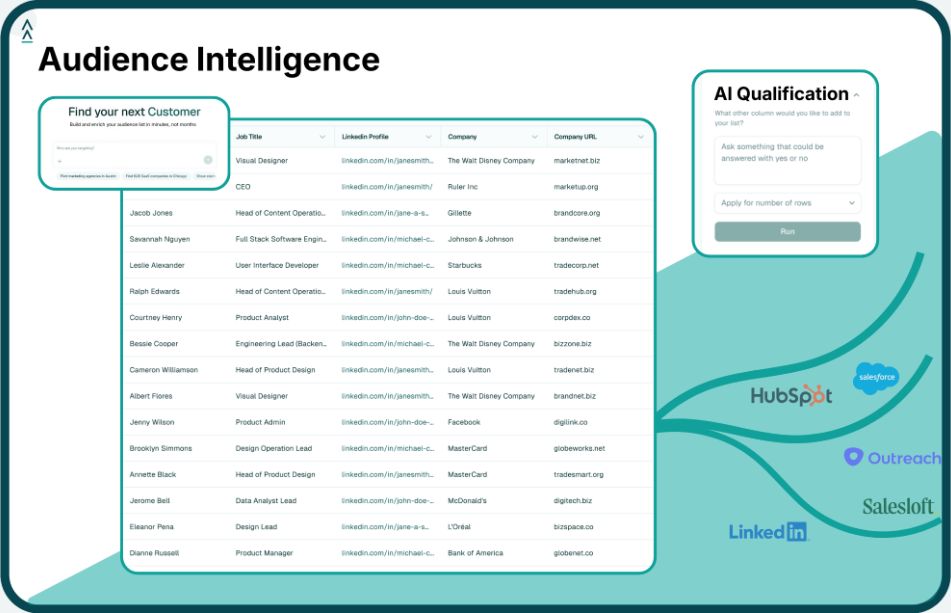
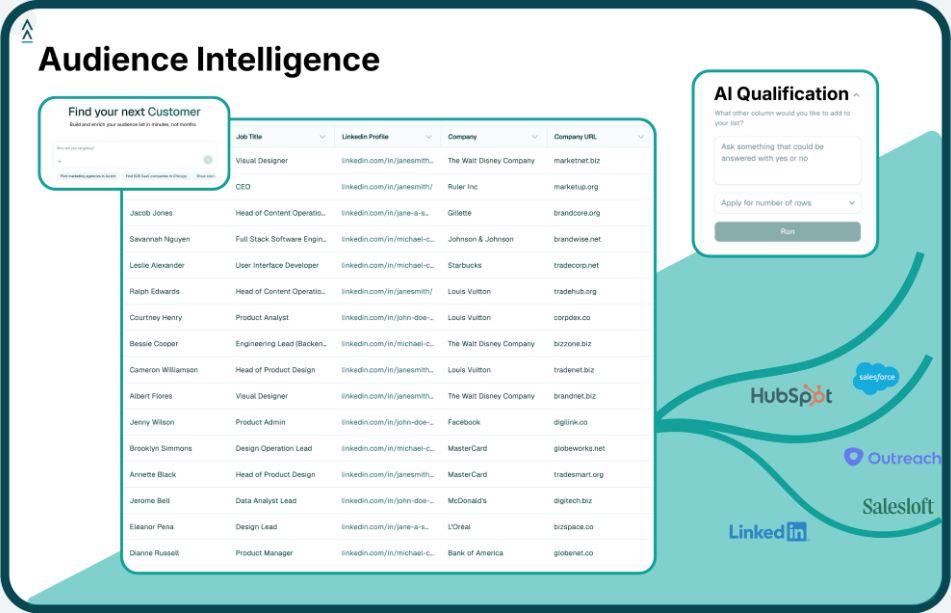
Landbase's platform leverages GTM-2 Omni, an agentic AI model trained on billions of GTM data points from 50 million+ B2B campaigns, to help teams find and qualify prospects in seconds. Using natural-language prompts like "B2B payment startups with Series C funding that are hiring for sales roles," teams can instantly generate AI-qualified audiences ready for activation.
The platform's 300 million+ contacts and 24 million+ companies are enriched with 1,500+ unique signals across firmographic, technographic, intent, hiring, and funding data. This enables sales and marketing teams to:
For B2B organizations competing in the fast-moving payments technology market, AI-powered GTM isn't just helpful—it's essential for staying competitive and reaching the right buyers at scale.
B2B payments tech companies are solving several critical problems: the slow and inefficient nature of traditional check-based payments, lack of transparency in cross-border transactions, complex accounts payable automation needs, and the demand for embedded financial services within existing business workflows. These companies are digitizing a market that still relies heavily on paper checks (32-40% of B2B payments) and creating automated, AI-powered solutions that process transactions in seconds rather than days. By replacing manual processes with intelligent automation, these platforms reduce errors, improve cash flow visibility, and enable businesses to scale their payment operations efficiently.
B2B payment startups typically secure initial funding through venture capital firms that specialize in fintech, with many raising seed rounds from angel investors and early-stage VCs before progressing to Series A and beyond. The companies on this list have collectively raised billions in funding, demonstrating strong investor confidence in the sector's growth potential. Investors are attracted to B2B payments because of the large market size, recurring revenue models, and network effects that create defensible moats. Recent mega-rounds and high valuations show that investors view B2B payments infrastructure as critical to digital transformation.
A B2B payment solution is considered 'fast-growing' based on metrics like transaction volume growth (Ramp's 5.5× growth in just over a year), strong revenue expansion, high customer adoption rates (Plaid's 400% identity verification growth), and rapid valuation increases. Companies that combine AI-powered automation with seamless user experiences tend to achieve the fastest growth rates, as they deliver immediate value while reducing friction. Fast-growing solutions typically solve critical pain points like manual data entry, slow payment processing, or lack of spending visibility while integrating seamlessly into existing workflows.
Yes, small businesses can significantly benefit from cutting-edge B2B payment technologies that were previously accessible only to large enterprises. Platforms like Ramp and Mercury are specifically designed for startups and SMBs, offering corporate cards with no personal guarantees, automated expense management, and sophisticated business banking services at accessible price points. Parafin delivers embedded capital directly through platforms where SMBs already operate like Amazon and DoorDash, eliminating complex application processes. These solutions help small businesses access the same sophisticated payment capabilities that large enterprises enjoy while saving time and reducing costs.
Landbase helps businesses identify and engage with prospects in the B2B payments sector by using natural-language targeting to build AI-qualified audience lists in seconds. The platform's 300 million+ contacts and 1,500+ unique signals enable teams to target companies based on real-time indicators like recent funding rounds, hiring activity for specific roles, technology stack changes, and conference attendance. Users can export up to 10,000 contacts instantly and activate them directly in their existing sales and marketing tools, dramatically reducing the time required to build targeted prospect lists from days to minutes.
Tool and strategies modern teams need to help their companies grow.