.png)
.png)

Daniel Saks
Chief Executive Officer


The renewable energy sector is experiencing unprecedented growth, with global clean energy investment surpassing fossil fuels in 2023. For renewable energy tech companies and startups operating in this dynamic landscape, effective B2B lead generation isn't just about filling the pipeline—it's about identifying the right partners, customers, and collaborators at precisely the right moment in their journey.
Unlike traditional industries, renewable energy technology sales involve complex stakeholder matrices, longer evaluation cycles, and technical buyer personas who demand deep domain expertise. The most successful companies in this space have moved beyond simple demographic targeting to leverage advanced data signals that indicate genuine buying intent—such as grid modernization projects, sustainability initiatives, or new regulatory compliance requirements.
AI-powered audience discovery platforms are transforming how renewable energy companies identify prospects who aren't just aligned with their ideal customer profile, but are actively investing in clean energy solutions. By analyzing signals like funding rounds for renewable projects, hiring of sustainability officers, or technology stack changes indicating infrastructure upgrades, companies can engage prospects when they're most receptive to new solutions.
The renewable energy landscape encompasses diverse sectors including solar, wind, geothermal, hydroelectric, biomass, energy storage, and grid modernization technologies. Each segment has distinct buyer profiles, purchasing processes, and decision criteria that require tailored lead generation approaches.
B2B buyers in renewable energy are typically sophisticated, technically oriented stakeholders who evaluate solutions based on performance metrics, regulatory compliance, integration capabilities, and long-term ROI rather than just price. The buying committee often includes multiple roles: sustainability officers focused on environmental impact, engineering managers evaluating technical specifications, procurement specialists negotiating contracts, and C-suite executives approving major capital expenditures.
The renewable energy market's complexity demands a nuanced approach to lead generation that goes beyond simple contact collection. Companies must identify not just organizations in the renewable energy space, but those actively expanding capacity, modernizing infrastructure, or addressing specific technical challenges that align with their solutions.
For established renewable energy tech companies, the focus should be on precision targeting of high-value accounts showing clear buying signals. Startups, meanwhile, need the agility to test different market segments and customer types quickly while conserving limited resources. Both require tools that can adapt to the specialized nature of renewable energy markets while providing actionable intelligence about buying intent.
Developing a precise Ideal Customer Profile (ICP) is particularly critical in the renewable energy sector, where solutions are often highly specialized and implementation requirements vary significantly between customer types. An effective ICP goes beyond basic firmographics to include technographic data, growth signals, and specific pain points that indicate readiness to invest in new solutions.
The renewable energy ICP should account for factors like project pipeline maturity, regulatory environment, existing technology stack, and organizational structure. For example, a company selling advanced solar monitoring technology would target different customers than one offering grid-scale energy storage solutions, even within the same broad industry category.
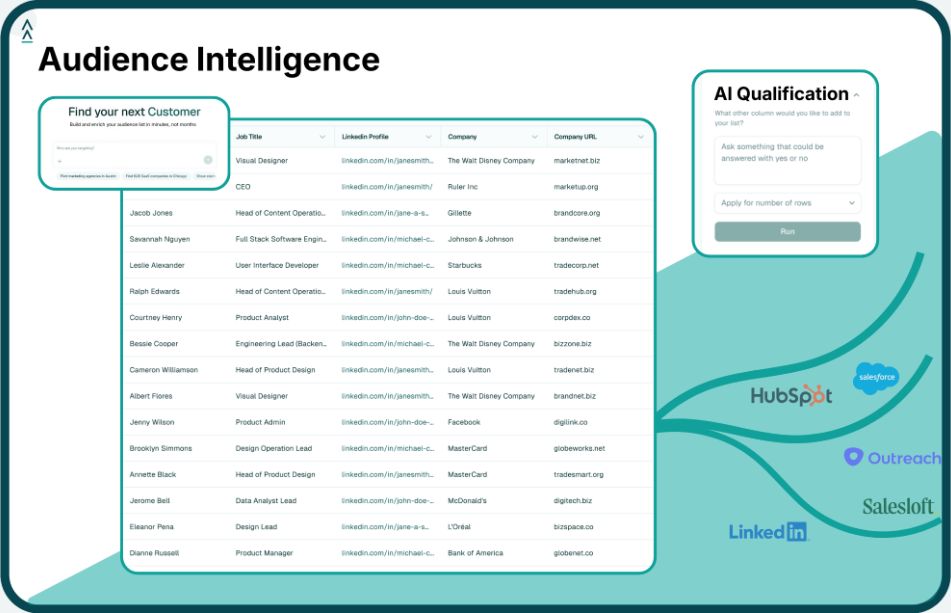
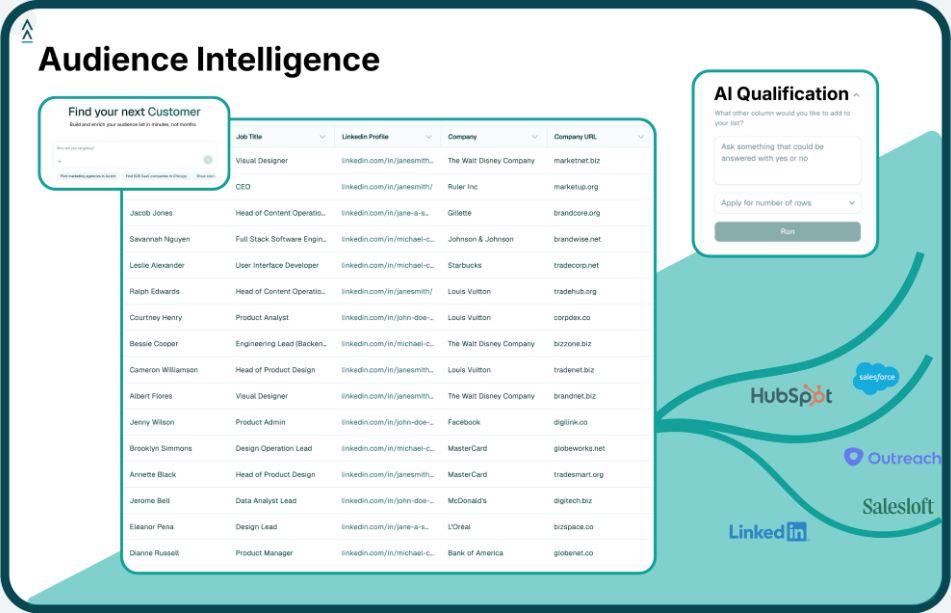
Landbase's AI-powered platform enables renewable energy companies to build highly specific ICPs using natural-language prompts that incorporate these complex criteria. Instead of manually constructing filters across multiple data dimensions, users can simply describe their target audience—for example, "Engineering managers at solar companies with 500+ MW capacity that recently announced grid modernization projects"—and receive instantly qualified prospect lists.
The precision required for renewable energy lead generation makes AI-assisted ICP development particularly valuable. Traditional approaches often result in overly broad targeting that wastes resources on prospects lacking genuine buying intent. By leveraging 1,500+ unique signals including firmographic, technographic, and growth indicators, companies can identify prospects who not only match their ideal profile but are actively demonstrating readiness to invest in new solutions.
The complexity of renewable energy markets demands sophisticated audience discovery capabilities that can navigate specialized terminology, technical requirements, and dynamic market signals. Traditional lead generation approaches often fail to capture the nuanced buying signals that indicate genuine interest in renewable energy solutions.
Agentic AI represents a breakthrough for clean energy lead generation, enabling companies to discover and qualify prospects using natural-language prompts that reflect real-world business scenarios. Rather than requiring technical expertise to build complex Boolean queries or navigate multiple filter menus, renewable energy companies can simply describe their target audience in plain English.
The GTM-2 Omni AI model is specifically trained on billions of GTM data points from 50M+ B2B campaigns, including renewable energy and clean technology sectors. This domain-specific training enables the AI to understand the unique characteristics and buying signals of renewable energy organizations, from utility-scale project developers to distributed energy startups.
For renewable energy startups with limited resources, AI-powered audience discovery provides a critical advantage by eliminating the time and expertise required for traditional prospect research. Instead of spending weeks manually identifying potential customers, founders can instantly generate AI-qualified lists that are ready for immediate outreach, accelerating time-to-revenue and conserving precious runway.
Renewable energy purchasing decisions typically involve complex stakeholder matrices with multiple decision-makers bringing different perspectives and priorities to the evaluation process. Effective B2B lead generation requires identifying and engaging the right individuals at the right time with messages that address their specific concerns and responsibilities.
The key decision-makers in renewable energy organizations vary by company type and project scope, but typically include sustainability officers, engineering managers, procurement specialists, C-suite executives, and technical evaluators. Each role requires different messaging approaches and engagement strategies that reflect their unique priorities and decision criteria.
Landbase's platform enables precise targeting of these specific roles through its comprehensive contact-level data, which includes organizational decision makers, C-level executives, and specialized technical roles. This precision targeting ensures that outreach messages reach the individuals most likely to influence or approve purchasing decisions.
The multi-stakeholder nature of renewable energy buying committees also requires coordinated outreach strategies that address different perspectives within the same organization. AI-powered platforms can help identify all relevant decision-makers within target accounts, enabling synchronized campaigns that build consensus across technical, financial, and strategic stakeholders.
Solar energy represents one of the fastest-growing segments within renewable energy, with unique buying signals and decision patterns that require specialized lead generation approaches. High-intent solar prospects can be identified through a combination of firmographic, technographic, and behavioral signals that indicate active project development or technology evaluation.
The most valuable solar lead generation signals include recent project announcements, regulatory approvals, funding rounds, hiring of solar specialists, and technology stack changes indicating infrastructure upgrades. These real-time indicators provide much higher conversion probability than simple demographic targeting based on company type or location.
Landbase Intelligence provides access to these critical signals through its 1,500+ unique data points, enabling solar companies to identify prospects at the optimal moment for engagement. The platform's real-time intent tracking and market trigger monitoring ensure that outreach efforts are perfectly timed to capitalize on active buying interest.
For solar startups and established companies alike, the ability to identify high-intent prospects based on actual project activity rather than just company type dramatically improves conversion rates and sales efficiency. Instead of cold-calling every solar company in a region, teams can focus their efforts on organizations actively developing projects or evaluating new technologies.
Renewable energy tech startups face unique challenges in lead generation, including limited resources, urgent need to prove product-market fit, and pressure to generate initial revenue quickly. Their multi-channel activation strategies must emphasize cost-effectiveness, speed, and precision while building credibility in a technically sophisticated market.
Founder-led sales often characterize the early stages of renewable energy startups, where the founding team personally handles outreach and relationship building. This approach allows for deep technical discussions and rapid product iteration based on direct customer feedback. However, founders need efficient tools that enable them to identify and engage qualified prospects without consuming excessive time on manual research.
Landbase's outbound capabilities enable startups to build targeted lists quickly and activate them across multiple channels. The platform's ability to export up to 10,000 contacts per session ensures that startups can maintain consistent pipeline development without significant upfront investment in data licenses or lead generation services.
The longer sales cycles typical in renewable energy also require sophisticated nurturing strategies that maintain engagement throughout the evaluation process. Multi-touch campaigns that provide valuable technical information, address regulatory concerns, and demonstrate ROI over time are more effective than one-time outreach attempts.
Effective B2B lead generation in renewable energy requires clear metrics and continuous optimization based on performance data that reflects the sector's unique characteristics. Traditional marketing metrics like MQL volume are less valuable than conversion rates, pipeline value, and customer lifetime value in this specialized market.
The complexity of renewable energy sales—with longer cycles, larger deal sizes, and multiple stakeholders—demands sophisticated measurement approaches that track performance across the entire customer journey. Attribution becomes particularly challenging when prospects engage across multiple channels over extended evaluation periods.
Continuous optimization requires regular feedback loops between sales and marketing teams, with shared definitions of lead quality and qualification criteria. The technical nature of renewable energy sales makes this alignment particularly important, as marketing teams need to understand the specific technical and commercial factors that influence purchasing decisions.
A/B testing becomes crucial for optimizing messaging, targeting criteria, and outreach channels in renewable energy markets. Companies should systematically test different approaches to technical content, case study presentation, and ROI demonstration to identify what resonates most effectively with different buyer personas and decision-maker roles.
Renewable energy lead generation presents unique challenges that require specialized approaches and tools to overcome effectively. The technical complexity, regulatory environment, and market dynamics of clean energy create obstacles that generic lead generation strategies cannot address.
Long sales cycles are perhaps the most significant challenge, with renewable energy projects often requiring months or even years of evaluation, approval, and implementation. This extended timeline demands sophisticated nurturing strategies and patience in measuring ROI. Technical buyer personas add another layer of complexity, requiring deep domain expertise and specific use case validation rather than generic product pitches.
Landbase's AI Qualification capabilities address many of these challenges by ensuring both fit and timing through analysis of 1,500+ unique signals. The platform's ability to understand complex renewable energy terminology and technical requirements enables more precise targeting than traditional approaches.
The specialized nature of renewable energy markets also requires flexibility in lead generation approaches. Companies must be able to quickly adapt their targeting criteria based on changing market conditions, regulatory developments, or competitive dynamics. AI-powered platforms that enable rapid audience rebuilding and refinement provide a significant advantage in this dynamic environment.
Landbase stands out as the ideal solution for renewable energy tech companies and startups seeking precision, speed, and intelligence in their B2B lead generation efforts. The platform's unique combination of agentic AI, natural-language targeting, and comprehensive signal intelligence addresses the specific challenges faced by companies operating in clean energy markets.
The core innovation lies in GTM-2 Omni, Landbase's agentic AI model trained on 50M+ B2B campaigns and sales interactions across diverse industries including renewable energy and clean technology. This enables users to simply type plain-English prompts like "Engineering managers at wind energy companies planning offshore expansion in the next 12 months" and instantly receive AI-qualified exports of up to 10,000 contacts ready for activation.
Established renewable energy tech companies benefit from Landbase's precision targeting capabilities, enabling them to focus on high-value accounts showing real-time buying signals like project announcements, funding rounds, or regulatory compliance deadlines. Startups appreciate the platform's speed and cost-effectiveness, with founder-led sales teams able to generate consistent pipeline without building complex in-house research systems.
The platform's integration with existing tools like Gmail, Outlook, and LinkedIn ensures seamless workflow adoption, while the continuous learning from user feedback improves AI performance over time. For renewable energy companies navigating technically complex markets and longer sales cycles, Landbase provides the precision, speed, and intelligence needed to find and qualify the right customers at the right time.
The most effective B2B lead generation strategies in renewable energy focus on precision targeting based on real-time buying signals rather than broad demographic approaches. Key strategies include leveraging advanced data signals like project announcements, funding rounds, and regulatory compliance deadlines; targeting specific technical decision-maker roles with domain-specific messaging; implementing multi-channel nurturing campaigns that address the longer sales cycles typical in clean energy; and using AI-powered platforms that can understand the technical complexity and specialized terminology of renewable energy markets.
AI improves lead generation accuracy for renewable energy tech companies by understanding the complex technical requirements, specialized terminology, and unique buying signals of clean energy markets. Agentic AI systems like GTM-2 Omni can interpret natural-language prompts that reflect real-world business scenarios and evaluate prospects based on 1,500+ unique signals including firmographic, technographic, intent, and behavioral indicators. This ensures both technical fit and timing, identifying prospects who not only match the ideal customer profile but are actively demonstrating readiness to invest in new renewable energy solutions. The AI can analyze project announcements, funding events, hiring patterns, and technology adoptions to predict buying intent with higher accuracy than traditional methods.
The most important data signals for clean energy lead generation include project pipeline activity (announced installations, permitting applications), funding announcements specifically for renewable energy development, hiring of technical specialists (solar engineers, wind project managers), and regulatory compliance deadlines (renewable portfolio standards, carbon reduction targets). Technology stack changes indicating infrastructure upgrades and geographic expansion into markets with favorable clean energy policies also provide strong buying signals. These real-time indicators provide much higher conversion probability than simple demographic targeting based on company type or industry classification, enabling sales teams to focus on prospects actively developing projects or evaluating new technologies.
Startups can effectively implement B2B lead generation for renewable energy by leveraging free, no-login AI-powered platforms that enable instant audience generation without significant upfront investment. Focus on founder-led sales with deep technical discussions, rapid testing of different market segments and customer types, and precise targeting based on clear buying signals rather than broad industry categories. Prioritize quality over quantity by concentrating on prospects showing genuine intent through project announcements, funding events, or technical hiring activity. Multi-channel activation through LinkedIn, email, and industry events with domain-specific content demonstrates credibility and technical expertise.
Typical challenges in renewable energy lead generation include long sales cycles requiring sophisticated nurturing, technical buyer personas demanding deep domain expertise, market volatility from policy changes, data silos between technical and commercial information, and resource constraints for startups. These challenges can be overcome by using AI-powered platforms with real-time signal monitoring, implementing multi-touch nurturing campaigns that provide technical value throughout the evaluation process, and leveraging natural-language targeting for precise audience discovery. Focus on prospects showing clear buying intent through project activity rather than just company type, and use integrated platforms that combine multiple signal types to overcome data silos and improve targeting precision.
Tool and strategies modern teams need to help their companies grow.