.png)
.png)

Daniel Saks
Chief Executive Officer


Climate tech companies face a paradox: while climate tech investment is projected to reach $6.4 trillion, generating qualified B2B leads remains extraordinarily challenging. Unlike other sectors, climate tech must simultaneously prove environmental impact and business ROI while navigating complex regulatory landscapes and combating greenwashing skepticism.
The solution lies in precision targeting powered by advanced data signals and AI-driven qualification. Rather than relying on broad demographic filters, successful climate tech companies identify prospects based on real-time buying signals—companies actively expanding renewable energy capacity, hiring sustainability officers, or seeking ESG compliance solutions. AI-powered audience discovery platforms like Landbase enable climate tech teams to find these high-intent prospects instantly using natural-language prompts, bypassing the manual research that consumes precious time and resources.
Modern B2B lead generation for climate tech has evolved beyond simple contact collection to strategic audience building that addresses the unique challenges of this sector. Companies must balance educational content that explains complex technologies with compelling business cases that demonstrate clear ROI. The most effective approaches combine human expertise with AI efficiency to navigate narrow market segments while maintaining authentic relationships built on trust and verified climate impact claims.
B2B lead generation in climate tech operates within a uniquely challenging environment defined by narrow market segments, complex technological solutions, and heightened buyer skepticism. Unlike other B2B sectors where ROI alone drives purchasing decisions, climate tech companies must demonstrate dual value propositions: measurable environmental impact alongside clear business returns. This creates a more complex buyer journey requiring extensive education and trust-building.
The modern climate tech buyer has become increasingly sophisticated and skeptical, with 73% actively avoiding suppliers who send irrelevant outreach. These buyers conduct extensive independent research before engaging with sales representatives, spending only 17% of their total buying journey in direct conversations with vendors. This shift demands precision targeting and value-driven content that addresses specific pain points rather than generic sustainability messaging.
The solution lies in moving beyond simple contact collection toward strategic audience building based on real-time buying signals and behavioral indicators. Companies that successfully navigate these challenges focus on precision rather than volume, targeting prospects who are not just demographically aligned with their ideal customer profile but actively showing buying intent through hiring signals, funding events, and technology stack changes.
A robust sales pipeline for climate tech companies requires a structured approach that accounts for longer sales cycles, multiple stakeholders, and the need for extensive education. Unlike other B2B sectors, climate tech pipelines must accommodate both technical evaluation (feasibility, integration, compliance) and financial analysis (ROI, payback periods, regulatory incentives).
The foundation of an effective climate tech pipeline starts with a clearly defined Ideal Customer Profile (ICP) that incorporates both firmographic and behavioral criteria. This ICP should identify companies with specific characteristics: those actively investing in sustainability initiatives, experiencing regulatory pressure, or seeking operational efficiency through renewable solutions. The ICP must also account for organizational readiness—companies with dedicated sustainability teams or recent ESG reporting requirements are more likely to move quickly through the pipeline.
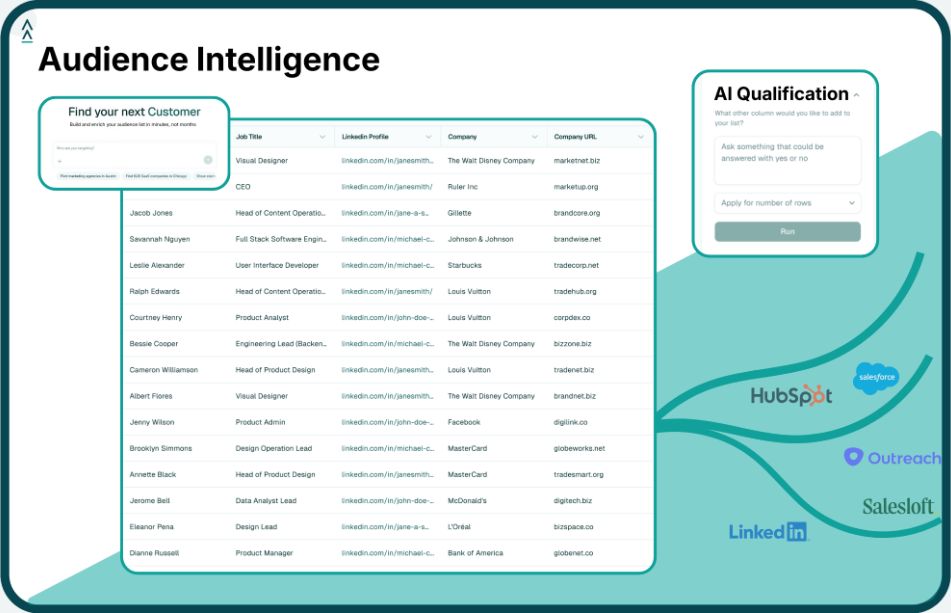
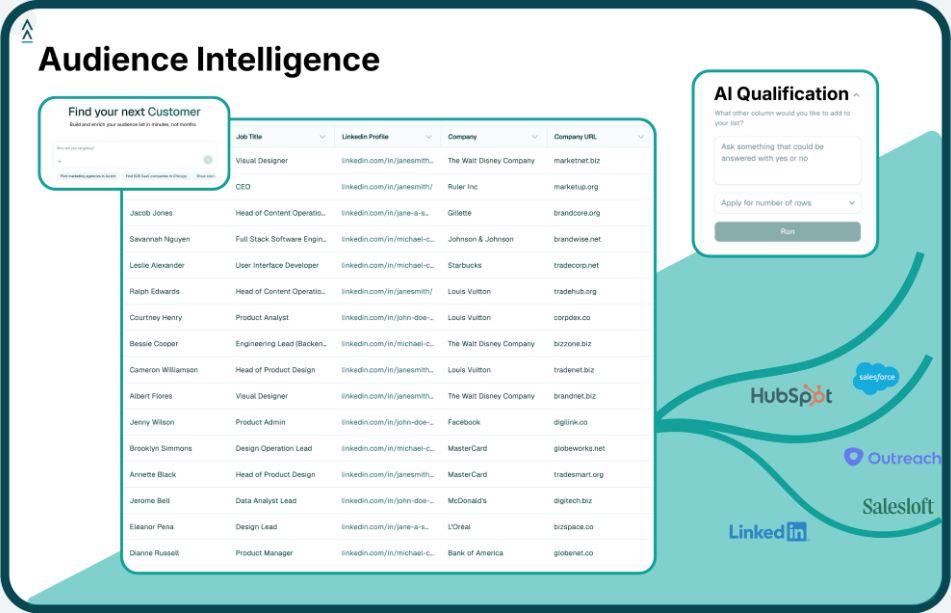
AI-qualified prospect lists become particularly valuable for pipeline development, enabling climate tech teams to instantly identify companies showing real-time buying signals. Rather than manually researching hundreds of potential accounts, teams can generate targeted lists based on natural-language prompts like "sustainability officers at manufacturing companies with 500+ employees seeking carbon accounting solutions."
The pipeline must also accommodate the reality that marketers cite lead generation as their top challenge. This means building redundancy into pipeline development strategies, with multiple lead sources feeding into different pipeline stages to ensure consistent flow even when individual channels underperform.
Agentic AI represents a paradigm shift in B2B lead generation for climate tech, moving beyond simple data aggregation to autonomous audience discovery and qualification. These systems can interpret natural-language prompts and instantly generate prospect lists that evaluate both demographic fit and real-time buying intent through analysis of thousands of unique signals.
For climate tech companies navigating narrow market segments, agentic AI provides unprecedented precision in audience targeting. Instead of relying on basic firmographic filters like company size and industry, AI systems analyze behavioral signals including hiring activity for sustainability roles, recent ESG reporting requirements, renewable energy investments, and technology stack changes indicating infrastructure modernization.
The impact of AI-powered lead generation is measurable: companies implementing AI-driven systems see 30-40% improvement in conversion rates. However, successful implementation requires human oversight—AI should handle research, scoring, and draft personalization, but humans must review and refine before sending, especially for high-value climate tech deals.
GTM-2 Omni, Landbase's agentic AI model trained on 50M+ B2B campaigns, exemplifies this approach by enabling climate tech teams to describe their target audience in plain English and instantly receive AI-qualified exports ready for outreach. This eliminates the technical barriers and time investment required for traditional audience building while maintaining the precision of advanced targeting criteria.
Climate tech startups operate under unique constraints that demand marketing strategies emphasizing speed, cost-effectiveness, and rapid iteration. With limited resources and urgent need to prove product-market fit, startups must focus on high-impact activities that generate immediate pipeline while building long-term brand credibility in a skeptical market.
The foundation of effective climate tech startup marketing is authentic storytelling that demonstrates both environmental impact and business value. Unlike established companies that can rely on brand recognition, startups must prove their credibility through transparent reporting, third-party validation, and customer success stories. This authenticity becomes particularly important in combating greenwashing skepticism, where vague sustainability claims actively harm lead generation efforts.
Content marketing becomes particularly valuable for climate tech startups, with well-optimized blog posts and educational resources generating leads for 3+ years after publication. This approach is 62% less expensive than traditional marketing while delivering continuous ROI long after initial investment.
Free access to advanced lead generation capabilities becomes crucial for startups operating with minimal budgets. Platforms offering no-login access and instant exports enable startups to maintain consistent pipeline development without significant financial commitment, allowing them to test different targeting hypotheses quickly and adjust based on real-world feedback.
Optimizing sales pipeline stages for climate tech companies requires addressing the unique challenges of longer sales cycles, multiple stakeholders, and complex technical evaluations. Each pipeline stage must accommodate the dual focus on environmental impact and business ROI that characterizes climate tech purchasing decisions.
The lead generation stage must focus on precision targeting rather than volume, identifying prospects who are actively showing buying intent through real-time signals like sustainability team hiring, ESG reporting requirements, or renewable energy investments. The qualification stage requires multi-dimensional assessment: technical feasibility, financial capacity, regulatory alignment, and organizational readiness.
Speed becomes critical in pipeline optimization, with companies that respond to leads within 60 seconds seeing 391% higher conversion rates. However, most companies take hours or days to respond, creating a significant competitive advantage for those who implement rapid response protocols.
AI-qualified audiences streamline early pipeline stages by delivering engaged buyers directly to sales teams, eliminating the manual research and qualification that typically consumes sales representatives' time. This allows climate tech sales teams to focus on high-value conversations that address specific pain points and demonstrate both environmental and financial ROI.
Advanced lead generation services for climate tech startups go beyond simple contact collection to provide strategic audience intelligence and multi-channel outreach execution. These services combine sophisticated data signals with human expertise to navigate the unique challenges of climate tech markets, including narrow segmentation, complex technologies, and regulatory compliance requirements.
The most effective advanced services leverage intent data, technographic signals, and firmographic intelligence to identify prospects at optimal engagement moments. For climate tech startups, this means targeting companies actively seeking ESG compliance solutions, investing in renewable infrastructure, or responding to new regulatory requirements—prospects who have genuine buying intent rather than just demographic alignment.
ABM delivers exceptional results for climate tech companies targeting high-value enterprise accounts, with 84% improvement in reputation scores and 19% of companies seeing 30%+ revenue growth. Cognism's own ABM program generated $700K in pipeline within 8 weeks, demonstrating the potential for climate tech startups to compete effectively against established players.
Landbase Intelligence provides the growth signals and in-market insights crucial for advanced lead generation strategies in climate tech, while Landbase Outbound & Nurture identifies and qualifies prospects along their journey to provide targeted lists for sales teams. These services enable climate tech startups to implement sophisticated lead generation strategies without building complex in-house systems.
Streamlining sales pipeline management with AI enables climate tech companies to maintain consistent growth while conserving limited resources. AI-powered pipeline management provides real-time visibility into pipeline health, identifies potential bottlenecks, and predicts conversion likelihood based on historical performance and behavioral signals.
The key to effective AI-powered pipeline management lies in integrating qualified audience intelligence into broader sales strategy. Rather than managing pipelines filled with unqualified contacts, AI systems ensure that sales teams focus on high-intent prospects who have demonstrated genuine buying interest through real-time signals like hiring activity, funding events, and technology stack changes.
Successful implementation requires maintaining human oversight—AI should augment human expertise rather than replace it, with sales leaders using AI insights to make better strategic decisions while maintaining authentic relationships.
Landbase Platform integrates AI-qualified audiences into broader sales strategy, improving pipeline management by focusing on high-intent leads. The platform's continuous learning from user feedback improves AI performance over time, ensuring that pipeline recommendations become increasingly accurate and relevant to specific climate tech use cases.
Finding the next customer for climate tech innovations requires moving beyond traditional demographic targeting to strategic audience discovery based on real-time buying signals and behavioral indicators. Climate innovators must identify companies that are not just in relevant industries but actively seeking solutions to specific climate challenges.
The most effective customer discovery strategies combine market analysis with signal-based selling, using real-time triggers like funding rounds, leadership hires, and regulatory compliance requirements to time outreach perfectly. For climate tech companies, this means targeting companies that have recently appointed sustainability officers, announced ESG reporting initiatives, or invested in renewable energy infrastructure.
The ability to instantly generate qualified prospect lists becomes particularly valuable for climate innovators testing new market hypotheses. Instead of spending weeks building complex filter combinations, teams can immediately test different targeting approaches using natural-language prompts like "operations directors at food manufacturing companies seeking water conservation solutions."
Landbase Platform enables climate innovators to "Find your next customer" in seconds by building audience lists based on natural-language prompts and AI qualification. This frictionless approach eliminates the technical barriers and time investment required for traditional audience building while maintaining the precision needed for successful climate tech outreach.
Executing targeted campaigns for climate tech lead generation requires specialized agency expertise that understands both B2B marketing fundamentals and climate sector nuances. Climate tech agencies must balance environmental impact messaging with business ROI while navigating complex regulatory landscapes and combating greenwashing skepticism.
The most effective climate tech agencies implement multi-channel strategies that coordinate messaging across email, LinkedIn, and phone with consistent value propositions. LinkedIn becomes particularly important, generating 80% of B2B social media leads with visitor-to-lead conversion rates significantly higher than other social platforms.
Agencies that partner with climate tech companies see measurable results, with case studies showing 33% more meetings booked without adding headcount. The key to success lies in combining human expertise with AI-powered tools that enable precision targeting and efficient execution.
Agencies can use Landbase Platform to build targeted lists for multi-channel campaigns, providing immediate access to AI-qualified prospects showing real-time buying intent. This enables agencies to deliver superior results for their climate tech clients while maintaining efficient operations and competitive pricing.
Scaling climate tech startups requires strategic partnerships with marketing agencies that provide specialized expertise and cutting-edge tools without significant upfront investment. These partnerships enable startups to implement sophisticated lead generation strategies while conserving limited resources for product development and customer success.
The most valuable agency partnerships combine domain expertise in climate tech with access to advanced AI-powered tools. Agencies should understand the unique challenges of climate tech markets—including narrow segmentation, complex technologies, and regulatory compliance requirements—while leveraging technology platforms that enable precision targeting and efficient execution.
Agencies that embrace AI-powered platforms can deliver superior results while maintaining competitive pricing. Landbase provides agencies with cutting-edge AI tools and discounted pricing, enabling them to "win more business" for their climate tech clients while improving team efficiency.
The partnership model becomes particularly valuable for climate tech startups operating with minimal marketing budgets. Instead of building complex in-house systems, startups can leverage agency expertise and technology platforms to implement sophisticated lead generation strategies that would otherwise be cost-prohibitive.
Landbase stands out in the B2B lead generation landscape by combining agentic AI with instant, natural-language audience discovery specifically designed for climate tech companies. The platform addresses the unique challenges faced by climate tech businesses through its frictionless approach to finding qualified prospects who are actively showing buying intent.
The core innovation lies in GTM-2 Omni, Landbase's agentic AI model trained on 50M+ B2B campaigns and sales interactions. This allows climate tech teams to simply type plain-English prompts like "sustainability officers at manufacturing companies seeking carbon accounting solutions" and instantly receive AI-qualified exports of up to 10,000 contacts ready for activation in existing tools.
Climate tech companies benefit from Landbase's precision targeting capabilities, enabling them to navigate narrow market segments with confidence. The platform's ability to identify companies actively showing buying intent—through signals like sustainability team hiring, ESG compliance requirements, and renewable energy investments—ensures that outreach efforts reach prospects who are genuinely ready to engage.
The platform's integration with existing tools like Gmail, Outlook, and LinkedIn ensures seamless workflow adoption, while the continuous learning from user feedback improves AI performance over time. For climate tech companies navigating complex markets and skeptical buyers, Landbase provides the precision, speed, and intelligence needed to find and qualify the right customers at the right time.
Climate tech faces unique lead generation challenges including narrow audience segmentation (5.4% solar penetration despite fastest growth), complex technologies requiring extensive buyer education, and the need to prove both environmental impact and financial ROI simultaneously. Climate tech companies must also navigate regulatory compliance requirements including ESG reporting and SEC climate risk rules while combating greenwashing skepticism where buyers demand verified climate claims backed by third-party data.
AI helps climate tech startups by analyzing 1,500+ unique signals to identify prospects with genuine buying intent rather than just demographic alignment. AI-powered systems can interpret natural-language prompts and instantly generate qualified prospect lists, delivering 30-40% better conversion. AI also reduces lead qualification time, allowing resource-constrained startups to focus on high-value conversations rather than manual research.
Essential pipeline components include clear Ideal Customer Profile (ICP) definition incorporating both firmographic and behavioral criteria, multi-stakeholder mapping identifying sustainability officers, CFOs, and operations leaders, and educational content addressing technical complexity while demonstrating business value. The pipeline must also include regulatory alignment showing specific compliance benefits and verified impact metrics with third-party validation. With marketers citing lead generation as their top challenge, pipelines require multiple lead sources feeding into different stages to ensure consistent flow even when individual channels underperform.
Climate tech startups should consider specialized agencies when they need to implement sophisticated lead generation strategies without building complex in-house systems. Agencies provide specialized expertise in climate tech marketing, access to advanced AI-powered tools, strategic guidance on messaging and positioning, and operational efficiency through proven processes. This becomes particularly valuable for startups operating with minimal marketing budgets who need to compete effectively against established players while conserving resources for product development and customer success.
GTM-2 Omni ensures precision targeting by analyzing 1,500+ unique signals including hiring activity for sustainability roles, ESG reporting requirements, renewable energy investments, and technology stack changes. The AI model is trained on 50M+ B2B campaigns and continuously improves through feedback from prompt performance and offline AI qualification. This enables the system to evaluate both demographic fit and real-time buying intent, ensuring that exported contacts are actively showing purchase intent through behavioral and contextual signals.
Climate tech companies investing in advanced lead generation tools can expect 30-40% improvement in conversion rates. Companies implementing account-based marketing see 19% achieving 30%+ revenue growth and 84% improvement in reputation scores. Responding to leads within 60 seconds increases conversion by 391%, creating significant competitive advantage for companies with rapid response capabilities.
Tool and strategies modern teams need to help their companies grow.