.png)
.png)

Daniel Saks
Chief Executive Officer


The clean energy sector stands at a pivotal moment, with global investment in renewable technologies reaching record highs while companies simultaneously face unprecedented competitive pressures. For clean energy technology providers and startups, effective B2B lead generation isn't just about growth—it's about accelerating the energy transition by connecting innovative solutions with organizations actively seeking to reduce their carbon footprint and operational costs. With the clean energy market becoming increasingly sophisticated, generic outreach approaches that worked during the sector's early days have become ineffective against today's discerning buyers.
Modern clean energy buyers require solutions that address specific operational challenges, regulatory compliance requirements, and integration complexities. They're no longer simply interested in "going green" but demand measurable ROI, seamless technology integration, and solutions that align with their unique infrastructure and sustainability goals. This evolution demands equally sophisticated lead generation approaches that go beyond basic firmographic targeting to identify prospects actively investing in clean energy infrastructure, navigating regulatory changes, or experiencing operational pain points that your solution can address.
AI-powered audience discovery platforms are transforming how clean energy companies identify prospects who aren't just environmentally conscious, but actively demonstrating buying intent through concrete signals like facility expansions, regulatory compliance deadlines, technology stack upgrades, and sustainability reporting requirements. The ability to pinpoint organizations at their precise moment of need—whether they're responding to new emissions regulations, planning facility modernization, or seeking to reduce energy costs—separates successful clean energy vendors from those struggling to build predictable pipelines.
The B2B buyer journey in clean energy technology differs significantly from other B2B sectors due to the convergence of environmental, economic, and regulatory considerations that influence purchasing decisions. Unlike software purchases that might focus primarily on feature comparison, clean energy solutions must demonstrate value across multiple dimensions: environmental impact reduction, operational cost savings, regulatory compliance, and long-term infrastructure compatibility.
Clean energy purchasing decisions typically involve a complex stakeholder matrix that can include sustainability officers, facility managers, CFOs evaluating ROI, CTOs assessing integration requirements, and legal teams reviewing compliance implications. Each stakeholder brings different priorities to the table—sustainability officers focus on carbon reduction metrics, facility managers prioritize operational reliability, CFOs demand clear financial returns, and legal teams ensure regulatory adherence.
The global push toward decarbonization has created both opportunity and complexity. While more organizations than ever are committed to sustainability goals, they're also more sophisticated in evaluating clean energy solutions. Generic "green" messaging no longer resonates—prospects demand specific solutions that address their unique operational challenges and integrate seamlessly with their existing infrastructure.
For established clean energy technology providers, the challenge lies in scaling outreach to match growing market demand while maintaining the precision needed for complex sales cycles. Startups face the additional challenge of proving credibility and differentiation in a crowded market while operating with limited resources for lead generation activities.
The most effective B2B lead generation for clean energy companies relies on industry-specific signals that indicate genuine buying intent rather than general environmental interest. These signals provide precise timing intelligence that enables perfectly timed outreach when prospects are most receptive to clean energy solutions.
Regulatory compliance deadlines serve as powerful buying triggers, with organizations often accelerating clean energy investments to meet emissions targets, energy efficiency requirements, or sustainability reporting obligations. Similarly, facility expansion or modernization projects frequently create immediate need for clean energy infrastructure integration, whether through solar installations, energy storage systems, or smart grid technologies.
Technology stack detection becomes particularly valuable in clean energy lead generation, as it helps identify organizations with compatible infrastructure or those using legacy systems that could benefit from modernization. For example, companies using outdated energy management systems might be prime prospects for smart grid solutions, while those already invested in IoT infrastructure might be ready for advanced energy analytics platforms.
The ability to combine these signals with traditional firmographic data creates highly targeted prospect lists that go beyond basic demographic alignment. Instead of targeting "manufacturing companies interested in sustainability," effective clean energy lead generation targets "manufacturing facilities in California with 500+ employees that recently announced expansion plans and are subject to new emissions regulations taking effect in Q2 2024."
This precision approach dramatically improves engagement rates while reducing wasted outreach effort. Organizations demonstrating multiple buying signals simultaneously—such as regulatory pressure, facility expansion, and technology stack gaps—represent the highest-value prospects with the strongest immediate need for clean energy solutions.
Established clean energy technology providers face unique challenges in scaling their lead generation efforts to match growing market demand while maintaining the precision required for complex, high-value sales cycles. Their strategies must balance broad market coverage with targeted account-based approaches that address the specific needs of enterprise prospects.
For clean energy enterprises, Account-Based Marketing (ABM) strategies prove particularly effective when focused on high-value target accounts demonstrating multiple buying signals. Rather than treating all manufacturing companies the same, successful enterprises orchestrate coordinated campaigns targeting specific facilities with known expansion plans, regulatory compliance deadlines, or infrastructure modernization needs.
The complexity of enterprise clean energy sales demands multi-channel, multi-stakeholder outreach strategies. A single email campaign to a generic "info@" address rarely succeeds in this sector. Instead, coordinated messaging across LinkedIn, email, phone, and even direct mail—tailored to each stakeholder's specific concerns—achieves significantly higher engagement rates.
Timing becomes critical in enterprise clean energy sales, with successful outreach often aligning with quarterly budget planning cycles, annual sustainability reporting periods, or regulatory compliance deadlines. Organizations that can identify and capitalize on these timing windows gain significant competitive advantage over those using generic, always-on outreach approaches.
Integration capabilities also play a crucial role in enterprise clean energy sales, with prospects increasingly demanding solutions that work seamlessly with their existing infrastructure. Lead generation strategies should therefore include technology stack analysis to identify both integration opportunities and potential barriers that need to be addressed in initial outreach.
Clean energy startups operate under fundamentally different constraints than established enterprises, with an urgent need to validate their solution-market fit while conserving limited resources. Their lead generation strategies must emphasize speed, cost-effectiveness, and rapid iteration based on real-world feedback from early prospects.
Founder-led sales often characterize the early stages of clean energy startups, where the founding team personally handles outreach and relationship building. This approach allows for deep customer understanding and rapid product iteration based on direct feedback about specific operational challenges and integration requirements. However, founders need tools that enable efficient prospect identification without consuming excessive time on manual research.
The ability to generate qualified prospect lists instantly using natural-language prompts is particularly valuable for clean energy startups. Instead of spending weeks building complex filter combinations or purchasing expensive data licenses, founders can immediately test different targeting hypotheses like "facility managers at food processing plants in Texas experiencing rising energy costs" and adjust based on response rates.
Free lead generation capabilities become crucial for startups operating with minimal budgets. Platforms offering no-login access and instant exports of up to 10,000 contacts enable startups to maintain consistent pipeline development without significant financial commitment, allowing them to focus their limited resources on product development and customer success.
Rapid experimentation is the hallmark of successful startup lead generation in clean energy. Teams should test different messaging approaches—emphasizing ROI versus environmental benefits versus regulatory compliance—and different targeting criteria quickly, measuring results and doubling down on what works while abandoning approaches that don't generate engagement. This iterative approach helps startups quickly identify their most receptive customer segments and refine their value proposition accordingly.
When evaluating B2B lead generation tools or partners, clean energy companies should prioritize capabilities that address their industry's unique requirements around regulatory intelligence, infrastructure compatibility, and multi-stakeholder decision making. Generic B2B databases often lack the industry-specific signals that indicate genuine buying intent in the clean energy sector.
Data quality and compliance remain foundational requirements, with platforms needing to maintain SOC II and GDPR compliance while providing accurate, regularly validated contact information. However, clean energy companies require additional capabilities beyond basic data quality, including real-time monitoring of regulatory changes, facility expansion announcements, and technology stack evolution.
The rise of agentic AI platforms has raised the bar for what clean energy companies should expect from lead generation tools. Modern solutions should offer natural-language targeting that allows users to describe their ideal prospect in plain English—like "facility managers at manufacturing plants in the EU subject to new carbon border adjustment mechanisms"—and instantly receive AI-qualified prospect lists ready for outreach.
Free access to advanced lead generation capabilities has become increasingly important, especially for startups and growth-stage companies in the capital-intensive clean energy sector. Platforms offering no-login, instant audience generation allow teams to test targeting hypotheses quickly without lengthy procurement processes or significant upfront investment.
Agency partnerships can provide additional value for clean energy companies lacking internal expertise in specific verticals. Partners with deep knowledge of energy markets, regulatory landscapes, and infrastructure requirements can help refine ideal customer profiles, develop targeted messaging, and optimize outreach strategies based on industry-specific insights and best practices.
The most sophisticated B2B lead generation strategies for clean energy companies leverage multiple data signals to identify prospects at their precise moment of need. This approach combines regulatory intelligence, operational indicators, and technology stack analysis to create highly targeted prospect lists with demonstrated buying intent.
Regulatory signals provide crucial timing intelligence, with organizations often accelerating clean energy investments to meet compliance deadlines. For example, companies subject to the EU's Carbon Border Adjustment Mechanism (CBAM) or California's emissions regulations may have urgent need for carbon accounting and reduction solutions. Similarly, organizations preparing for mandatory sustainability reporting under frameworks like CSRD or SEC climate disclosure rules may be actively evaluating clean energy technologies.
Look-alike modeling further enhances targeting precision by identifying organizations that share characteristics with existing successful customers. This approach leverages historical conversion data to find new prospects with similar regulatory environments, facility types, operational challenges, and technology stacks, increasing the likelihood of successful engagement.
Real-time intent tracking becomes particularly valuable for clean energy sales, where timing can be as important as fit. Identifying prospects who are actively researching clean energy solutions, visiting competitor websites, or engaging with relevant industry content allows for perfectly timed outreach that capitalizes on existing interest. Website visitor intelligence can reveal which specific clean energy topics or solutions are generating the most interest, enabling highly relevant follow-up messaging.
The integration of these advanced signals into AI-powered qualification systems enables unprecedented precision in clean energy audience targeting. Platforms with access to 1,500+ unique signals can evaluate both fit (does this prospect match our ideal customer profile?) and timing (are they actively showing buying intent through regulatory, operational, or technological indicators?).
Effective B2B lead generation in the clean energy sector requires clear metrics and continuous optimization based on performance data that reflects the industry's unique sales cycles and value propositions. Traditional lead scoring models based solely on demographic fit often fail to capture the complex buying signals that drive clean energy purchasing decisions.
Key Performance Indicators (KPIs) should align with business objectives and revenue outcomes specific to clean energy sales cycles. While lead volume might indicate marketing activity, conversion rates, sales cycle length, and customer lifetime value provide more meaningful insights into lead generation effectiveness. Clean energy companies should also track metrics specific to their value proposition, such as carbon reduction achieved, energy cost savings delivered, or regulatory compliance improvements enabled.
The complexity of clean energy buyer journeys—with prospects often engaging across multiple channels and stakeholder roles before purchase—makes attribution challenging but essential. Multi-touch attribution models that distribute credit across all interactions provide more accurate ROI measurement than last-touch models that only credit the final interaction.
Continuous optimization requires regular feedback loops between sales and marketing teams, with shared definitions of lead quality and unified metrics. Sales teams should provide feedback on which signal combinations and targeting approaches yield the most qualified prospects, while marketing teams should share insights on which messaging themes and value propositions resonate most strongly with different stakeholder roles.
A/B testing becomes crucial for optimizing clean energy messaging, with companies systematically testing different value proposition emphases—ROI versus environmental benefits versus regulatory compliance—and different targeting criteria. This data-driven approach to optimization ensures that lead generation efforts continuously improve over time, adapting to changing market conditions, regulatory landscapes, and customer priorities.
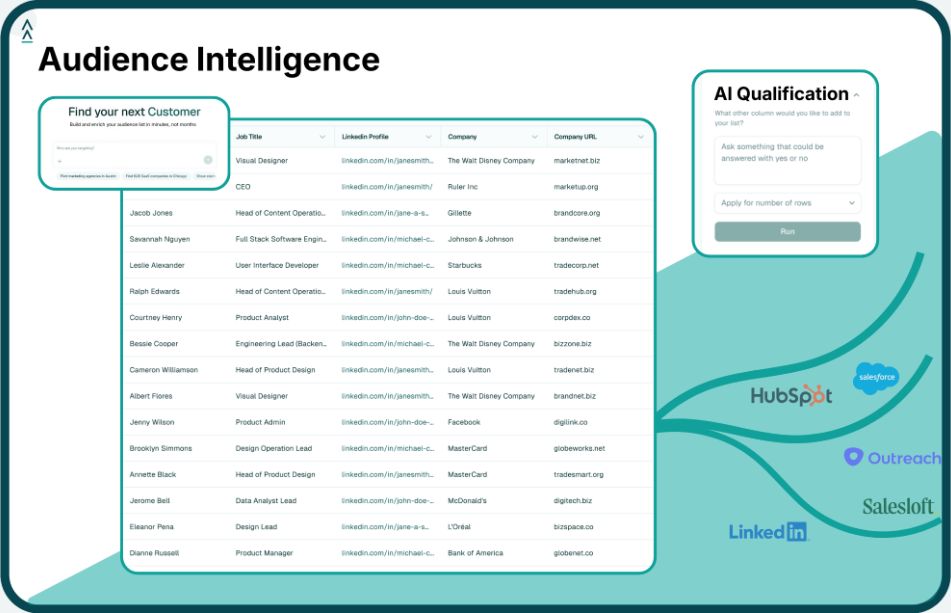
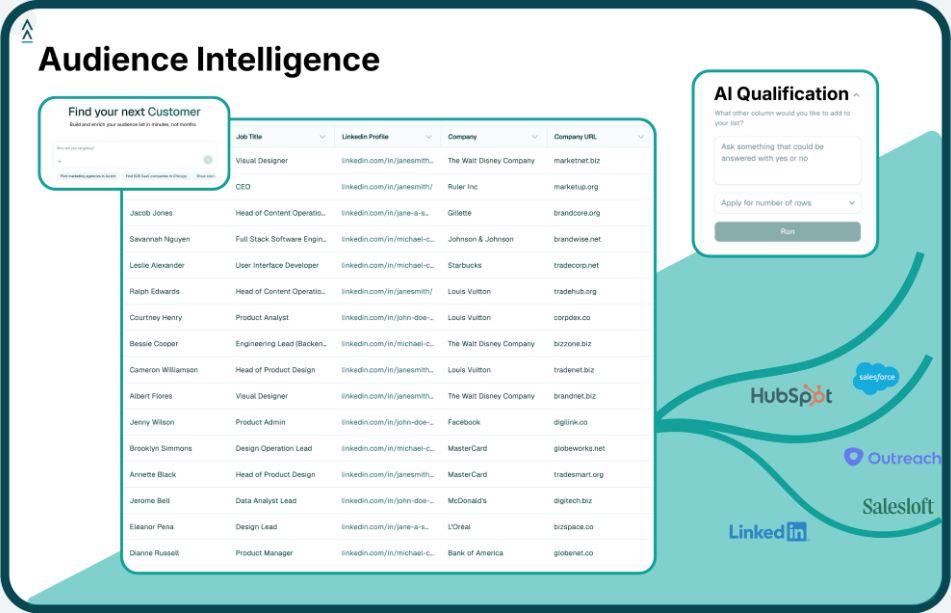
Landbase stands out in the B2B lead generation landscape by combining agentic AI with instant, natural-language audience discovery specifically designed to address the unique challenges faced by clean energy technology companies and startups. The platform's ability to interpret industry-specific signals and generate precisely targeted prospect lists makes it particularly valuable for organizations navigating the complex clean energy market.
The core innovation lies in GTM-2 Omni, Landbase's agentic AI model trained on 50M+ B2B campaigns and sales interactions. This allows clean energy companies to simply type plain-English prompts like "facility managers at manufacturing plants in California subject to new emissions regulations" or "sustainability officers at Fortune 500 companies with upcoming CSRD reporting deadlines" and instantly receive AI-qualified exports of up to 10,000 contacts ready for activation in existing tools.
Enterprise clean energy companies benefit from Landbase's precision targeting capabilities, enabling ABM strategies that focus on high-value accounts demonstrating multiple buying signals. Startups appreciate the speed and cost-effectiveness, with founder-led sales teams able to generate a consistent pipeline without building complex in-house systems or making significant financial commitments.
The platform's integration with existing tools like Gmail, Outlook, and LinkedIn ensures seamless workflow adoption, while the continuous learning from user feedback improves AI performance over time. For clean energy companies navigating complex regulatory landscapes, multi-stakeholder buying processes, and infrastructure integration challenges, Landbase provides the precision, speed, and intelligence needed to find and qualify the right customers at their exact moment of need.
Clean energy startups can compete effectively by leveraging speed, precision, and cost-effective tools that don't require significant upfront investment. Focus on niche market segments where your solution offers unique advantages, using platforms that enable instant audience generation through natural-language prompts. Emphasize specific ROI metrics and integration capabilities rather than generic environmental benefits, and concentrate on early adopter characteristics like regulatory compliance pressure or facility modernization needs. Free tools that provide immediate access to qualified prospect lists allow startups to maintain consistent pipeline development while conserving limited resources.
The most important buying signals include regulatory compliance deadlines (like CSRD reporting requirements or emissions regulations), facility expansion or modernization announcements, public sustainability commitments with specific targets, rising energy costs in operations-intensive industries, and technology stack changes indicating infrastructure modernization. Organizations demonstrating multiple signals simultaneously—such as regulatory pressure combined with facility expansion—represent the highest-value prospects with the strongest immediate need for clean energy solutions. Timing your outreach around these signals significantly improves engagement rates. Monitoring these indicators in real-time allows for perfectly timed, highly relevant outreach that capitalizes on immediate business needs.
Natural-language targeting eliminates the technical barriers and time investment required for traditional filter-based audience building in the complex clean energy sector. Instead of spending hours constructing complex Boolean queries to identify prospects subject to specific regulations or with particular infrastructure characteristics, users can simply describe their target audience in plain English and instantly receive AI-qualified results. This approach democratizes sophisticated audience discovery, making it accessible to non-technical users while maintaining the precision needed for effective clean energy outreach. It enables rapid testing of different targeting hypotheses, allowing teams to quickly identify their most receptive customer segments and refine their approach based on real-world engagement data.
Clean energy companies should track metrics that reflect their unique value propositions and sales cycles, including lead-to-opportunity conversion rates by regulatory environment and facility type, sales cycle length by solution complexity, customer acquisition cost by targeting approach, and implementation success rates. Companies should also measure the specific outcomes their solutions deliver, such as carbon reduction achieved, energy cost savings delivered, or regulatory compliance improvements enabled, as these metrics demonstrate the real-world impact that drives customer satisfaction and referral business. Multi-touch attribution models provide more accurate ROI measurement by distributing credit across all customer interactions. Continuous optimization through A/B testing of messaging and targeting approaches ensures lead generation efforts improve over time.
Landbase addresses complex clean energy stakeholder matrices through its comprehensive contact database of 300M+ contacts and sophisticated role identification capabilities. The platform can identify multiple decision-makers within target organizations, including sustainability officers, facility managers, CFOs, CTOs, and legal teams, allowing for coordinated multi-stakeholder outreach campaigns. Users can create targeted lists for specific roles or generate comprehensive stakeholder maps for account-based marketing strategies, ensuring that each decision-maker receives messaging tailored to their specific concerns and priorities. This multi-stakeholder approach significantly improves engagement rates in complex enterprise sales cycles where purchasing decisions require alignment across multiple departments.
Tool and strategies modern teams need to help their companies grow.